Definition and Purpose of the Ophthalmology Referral Form
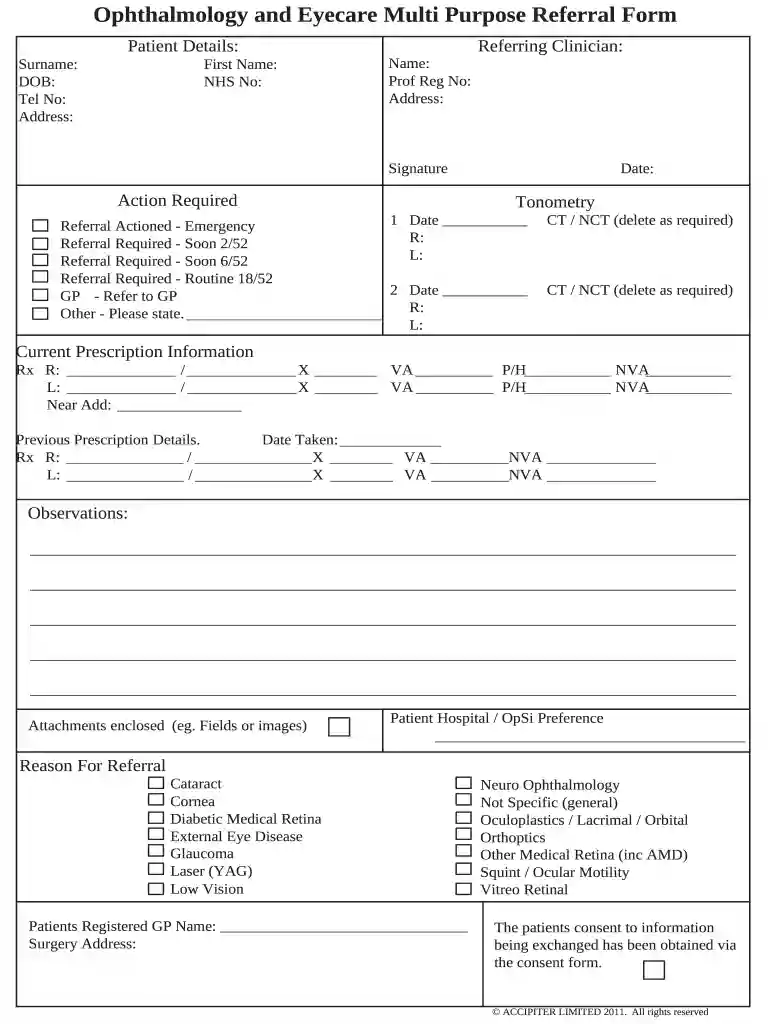
The Ophthalmology Referral Form is a crucial document used in healthcare settings to facilitate the transfer of patient care from a general practitioner or other healthcare provider to an ophthalmology specialist. This form ensures that all pertinent patient information, such as medical history, current symptoms, and any previous treatments, are clearly communicated to the specialist. It plays an essential role in maintaining continuity of care and enabling precise diagnosis and treatment.
Key Elements of the Ophthalmology Referral Form
- Patient Information: Includes patient’s full name, date of birth, contact details, and insurance information to correctly identify and manage the patient’s records.
- Referring Clinician Details: Contains the referring doctor's name, contact information, and practice address, ensuring effective communication between practitioners.
- Medical History: Summarizes the patient’s relevant medical background, including chronic conditions, previous surgeries, and ongoing treatments, to inform the specialist's assessment.
- Symptoms and Concerns: Details current symptoms or concerns that necessitate the referral, allowing the specialist to focus on specific diagnostic procedures.
- Referral Actions Required: Enumerates the specific actions or tests required from the specialist, streamlining the care process and avoiding unnecessary procedures.
Steps to Complete the Ophthalmology Referral Form
- Gather Patient Information: Collect all necessary personal and contact details from the patient, ensuring accuracy and up-to-date records.
- Document Medical History: Review and note any relevant past medical history, including ongoing medications, allergies, and previous diagnostics, to give the specialist a comprehensive view.
- Specify Referral Reasons: Clearly describe the specific reasons for referral, including presenting symptoms and any preliminary diagnostic outcomes needed for continued care.
- Complete Clinician Details: Accurately fill out the referring clinician's details for seamless communication between healthcare professionals.
Practical Tips for Accuracy
- Verification: Double-check patient and referral details for accuracy to prevent miscommunications.
- Clarity: Use clear and concise language to avoid misunderstandings in the information provided.
How to Obtain the Ophthalmology Referral Form
Ophthalmology Referral Forms can be acquired from several sources depending on the healthcare setting:
- Healthcare Practice: Most general practitioner offices will have standardized forms readily available.
- Hospital System: Larger healthcare networks may offer their referral forms accessible through electronic medical records systems.
- Online Services: Forms may also be downloaded from healthcare institution websites, ensuring easy access and convenience.
Using the Ophthalmology Referral Form in Practice
The Ophthalmology Referral Form is commonly used by various healthcare providers:
- General Practitioners: To refer patients requiring specialized eye care.
- Optometrists: When identifying conditions needing further investigation by an ophthalmologist.
- Emergency Room Physicians: For acute eye injuries or sudden vision changes requiring expert evaluation.
Example Scenarios
- Routine Checks: Following an eye examination that reveals potential issues such as glaucoma or cataracts.
- Emergency Situations: When a patient experiences sudden vision loss or trauma to the eye, necessitating immediate specialist intervention.
Legal and Compliance Aspects
The use of Ophthalmology Referral Forms must adhere to legal guidelines, particularly concerning patient privacy and data protection. Ensuring compliance with HIPAA regulations is critical to protect sensitive patient information during the referral process.
Legal Considerations
- Data Protection: Maintain secure handling of forms to safeguard patient privacy.
- Consent: Ensure that patient consent for information sharing is obtained and documented as per legal requirements.
Digital vs. Paper Version
With advancing technology, referral forms are increasingly handled digitally:
Advantages of Digital Forms
- Efficiency: Streamlines the referral process and reduces paper use.
- Accessibility: Easily shared and accessed through electronic medical records, enhancing coordination between healthcare providers.
Paper Form Considerations
- Alternative Use: Remains useful in settings lacking digital infrastructure or during system downtimes.
Variations and Alternatives to the Ophthalmology Referral Form
In some cases, alternative or supplemental forms may be used based on specific needs:
- Specialist Referral Forms: May be tailored for referrals to sub-specialists within ophthalmology.
- Telemedicine Referrals: Adapted forms for virtual consultations, particularly useful in remote or rural areas.
Importance of the Ophthalmology Referral Form
The Ophthalmology Referral Form is not merely a means of requesting specialist advice but a crucial component in ensuring comprehensive and cohesive patient care. By clearly communicating pertinent information, this form helps align treatment strategies, improve patient outcomes, and enhance the overall healthcare experience.