






Definition and Purpose of the NDIS Allied Health Referral Form
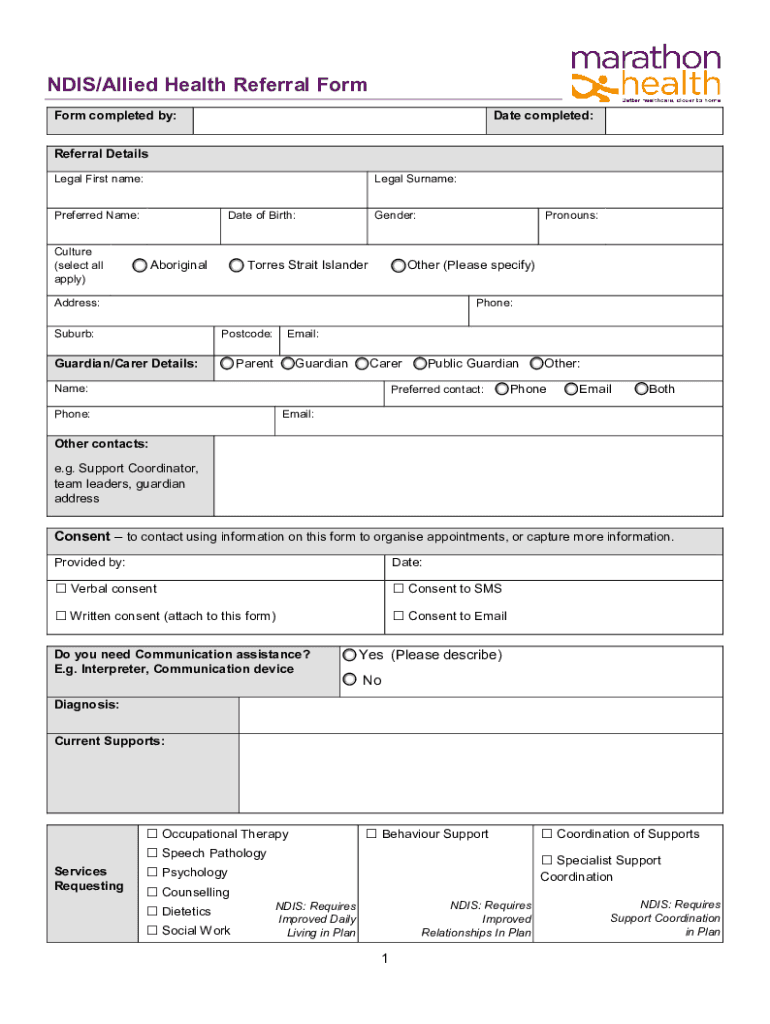
The NDIS Allied Health Referral Form is a crucial document utilized within the healthcare sector to facilitate the referral of individuals eligible for the National Disability Insurance Scheme (NDIS) to allied health services. These include services from professionals such as physiotherapists, occupational therapists, speech pathologists, and other specialists—essential for supporting individuals with disabilities. This form allows healthcare practitioners to efficiently communicate patient details and required services to allied health providers, ensuring a streamlined process for initiating care.
Key Elements of the NDIS Allied Health Referral Form
The form contains several critical sections that ensure accurate data collection and referral management:
- Patient Information: Collects personal details including legal first and surname, date of birth, and gender.
- Referral Details: Specifies the referring practitioner and includes the date the form is completed.
- Service Type: Identifies the type of allied health services being requested.
- Preferred Name and Cultural Background: Optional fields for a more personalized and culturally sensitive referral process.
How to Use the NDIS Allied Health Referral Form
The effective use of the NDIS Allied Health Referral Form involves a series of steps designed to ensure complete and accurate data is captured:
- Fill in Patient Details: Ensure all personal and demographic details are entered correctly, as this information is critical for matching services to the individual’s needs.
- Specify Referral Information: Clearly state the objective for the referral, detailing any specific health conditions or priorities.
- Identify Required Services: Indicate the allied health services required, outlining the scope of service provision.
- Verify and Submit: Double-check the form for completeness, ensuring mandatory fields are filled, and submit it through the designated channel—online for quick processing, or via mail if necessary.
How to Obtain the NDIS Allied Health Referral Form
Securing the NDIS Allied Health Referral Form can be done through several channels:
- Online Platforms: Most healthcare facilities and NDIS portals offer downloadable versions of the form for ease of access.
- Healthcare Facilities: A copy of the form can be requested from hospitals, clinics, or a general practitioner’s office.
- NDIS Agencies: Direct contact with NDIS service centers can provide additional guidance on obtaining and filling out the form.
Steps to Complete the NDIS Allied Health Referral Form
Completing the form involves a straightforward, multi-step approach:
- Download or Retrieve the Form: Access the form through an official NDIS page or affiliated healthcare provider.
- Complete Personal Details Section: Fill out the patient’s full name, date of birth, and other demographic information.
- Detail Referral Information: Enter specifics about the reason for referral and any pertinent medical history.
- Sign and Date: Ensure both the referring practitioner and patient (or guardian) sign the form to validate consent and accuracy.
- Submit for Processing: Send the completed form to the destination service provider.
Example Scenarios of Using the Form
- A speech pathologist uses the form to refer a child with speech delays to occupational therapy.
- A general practitioner refers an adult with mobility issues to a physiotherapist to create a tailored exercise program.
Who Typically Uses the NDIS Allied Health Referral Form
The primary users of the form include:
- General Practitioners: Often the first point of contact, responsible for referring patients to specialized allied health services.
- NDIS Participants: Individuals eligible for NDIS seeking comprehensive healthcare support.
- Allied Health Professionals: Utilize the form to receive referrals and plan appropriate care strategies.

Importance of Proper Usage
Proper use of this form ensures that patients receive timely and appropriate care, enhancing the efficacy of the allied health services provided under NDIS.
Digital vs. Paper Version: Advantages and Challenges
Both digital and paper versions of the NDIS Allied Health Referral Form have their specific benefits and limitations:
-
Digital Version:
- Advantages: Faster processing, easy to store and share, and environmentally friendly.
- Challenges: Requires access to technology and familiarity with digital platforms.
-
Paper Version:
- Advantages: No technological skills required, familiar to some older practitioners.
- Challenges: Prone to delays and storage issues, less secure than digital formats.
Legal Use and Compliance
The legal use of the NDIS Allied Health Referral Form extends beyond practical referrals to include compliance with data protection laws:
- Confidentiality: Patient information must be handled according to HIPAA and other data protection regulations to maintain patient privacy.
- Authorization: Proper authorization through signatures from both patient (or guardian) and healthcare provider ensures the legal standing of the referral.
Penalties for Non-Compliance
Failure to comply with required guidelines and confidentiality standards can result in penalties, ranging from fines to suspension of license, depending on the jurisdiction and severity of the breach.
State-Specific Rules for the NDIS Allied Health Referral Form
While the form is standardized, some states may have specific guidelines concerning its usage:
- Local Regulations: Certain states may impose additional requirements, such as state-specific consent forms or additional endorsements by local health agencies.
- Training and Certification: Practitioners may be required to undergo training or hold certifications specific to state legislation regarding the use of NDIS forms.
Variations to Consider
Variations in the form's application could include specific accommodations or modifications for use with distinct disability groups or healthcare needs.
Conclusion
The NDIS Allied Health Referral Form plays a pivotal role in ensuring individuals with disabilities receive the appropriate healthcare services promptly and efficiently. Proper understanding and utilization of this form not only streamline the referral process but also uphold the legal and ethical standards inherent in patient care.