
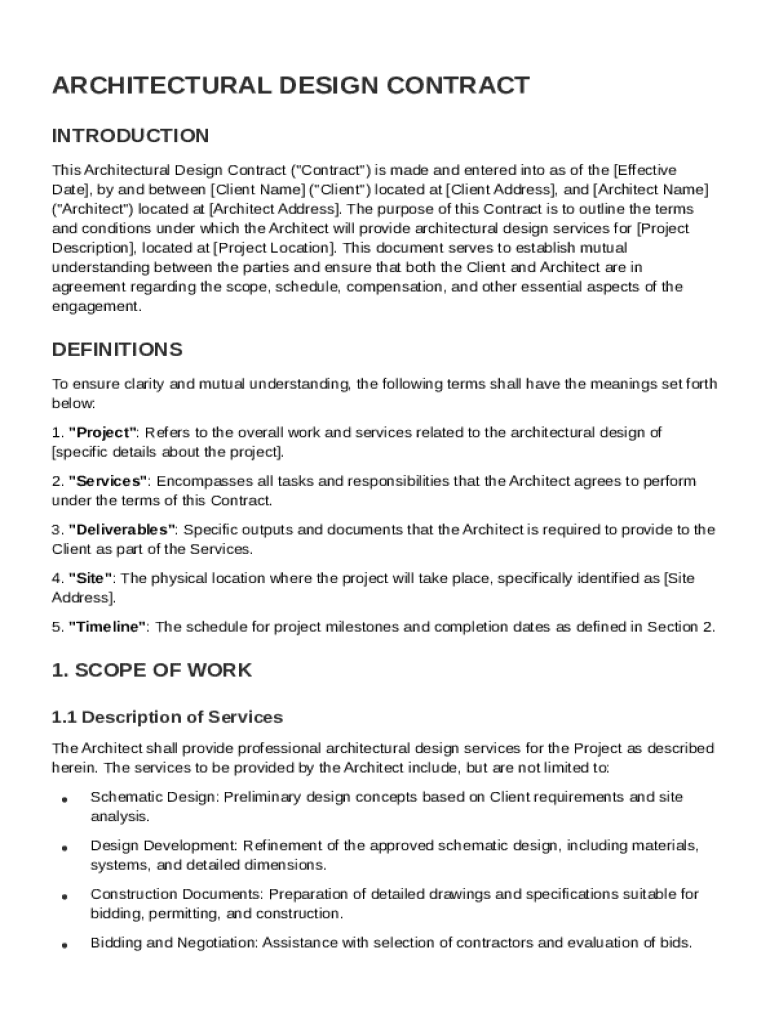







Definition and Meaning of the Architectural Design Contract Template
The Architectural Design Contract Template serves as a formal agreement between a client and an architect. It outlines the scope of architectural services for a specific project, setting clear expectations and providing legal protections for both parties. This contract includes critical elements such as schematic design, construction documents, and project administration. It also specifies exclusions and responsibilities, ensuring all parties understand their obligations. By detailing compensation structures, whether through a fixed fee, percentage of construction cost, or hourly rates, this template provides clarity on financial terms.
How to Use the Architectural Design Contract Template
Using the Architectural Design Contract Template begins with customizing it to fit the specific needs of the project. This involves filling out the project's basic details, including the client's and architect's information. Next, the scope of work must be defined, which involves specifying the tasks the architect will perform. It's important to outline the timeline, detailing key milestones and deadlines. Don't forget to adjust the compensation section as per the agreed terms and clarify responsibilities, project exclusions, and termination clauses to avoid potential disputes.
Step-by-Step Completion Process
- Identification Information: Enter the full names and contact details of both the client and the architect.
- Project Description: Clearly describe the project, including the location and specific deliverables.
- Scope of Work: Detail the architectural services to be provided, along with any exclusions.
- Compensation Terms: Indicate the payment structure, whether it's a fixed fee, hourly rate, or percentage of construction costs.
- Schedule and Milestones: Set out the timeline, including the start date, completion date, and critical milestones.
- Responsibilities: Define the duties and responsibilities of both parties.
- Termination Clauses: State the conditions under which the contract can be terminated.
- Signatures: Ensure that both parties sign and date the contract to validate the agreement.
Key Elements of the Architectural Design Contract Template
The Architectural Design Contract Template is comprised of several key components that ensure a comprehensive and binding agreement.
- Scope of Work: Defines the specific services to be performed by the architect.
- Compensation Structure: Outlines the payment terms, ensuring financial transparency and agreement.
- Project Timeline: Provides a framework for project scheduling, including start and end dates.
- Responsibilities: Clarifies the duties of each party involved in the contract.
- Change Procedures: Sets guidelines for modifications to the original agreement.
- Termination Clauses: Lists conditions that allow for the cessation of the contract.
- Ownership of Documents: Addresses who retains rights to the architectural designs and documents.
- Dispute Resolution: Outlines how conflicts will be managed if they arise.
Legal Use of the Architectural Design Contract Template
This template is designed to ensure compliance with the legal requirements pertinent to architectural agreements. It incorporates standard clauses for indemnification and liability, ensuring that risks are appropriately managed. By including a section on governing law, it specifies the judicial jurisdiction applicable to the agreement. To further enhance its legal robustness, parties can decide on a dispute resolution process, such as mediation or arbitration, thereby reducing potential litigation risks.
Who Typically Uses the Architectural Design Contract Template
This contract template is primarily used by professionals and entities engaged in architectural projects:
- Architects: To define the terms of service and establish legal protections.
- Clients: Such as property owners or developers engaged in construction or renovation projects.
- Construction Firms: When hiring architects for design services.
- Legal Teams: For drafting, reviewing, or negotiating terms in architectural agreements.


Important Terms Related to the Architectural Design Contract Template
Understanding the terminology within the Architectural Design Contract Template is crucial for accurately interpreting the document:
- Schematic Design: An initial phase of design focused on concept development.
- Construction Documents: Detailed drawings and specifications required for construction.
- Fixed Fee: A lump-sum payment method for architect’s services.
- Percentage of Construction Cost: A payment basis tied to the total cost of a project.
- Indemnification: A clause to protect against potential losses or damages.
- Liability Limits: Establishes maximum financial exposure for the architect.
Steps to Obtain the Architectural Design Contract Template
Acquiring the Architectural Design Contract Template can be done through various means. Professional organizations, such as the American Institute of Architects (AIA), provide standardized contract templates. Additionally, online platforms, including DocHub, offer customizable templates that allow users to adapt the document for specific project needs. Users can download these templates and modify them accordingly, or they can collaborate with legal professionals to tailor the contract to meet specific requirements and legal standards.
Examples of Using the Architectural Design Contract Template
Practical applications of this contract template are numerous:
- Residential Projects: When homeowners hire architects for new builds or renovations.
- Commercial Developments: For companies constructing new office spaces or retail environments.
- Public Sector: Governing bodies employing architects for infrastructure projects like schools or hospitals.
- Non-Profit Operations: Organizations engaging architects for the construction of community service facilities.
Each use case will involve specific customizations to the template to reflect the unique requirements and goals of the project.




