




Definition and Purpose of Rule 17 200 Form 206
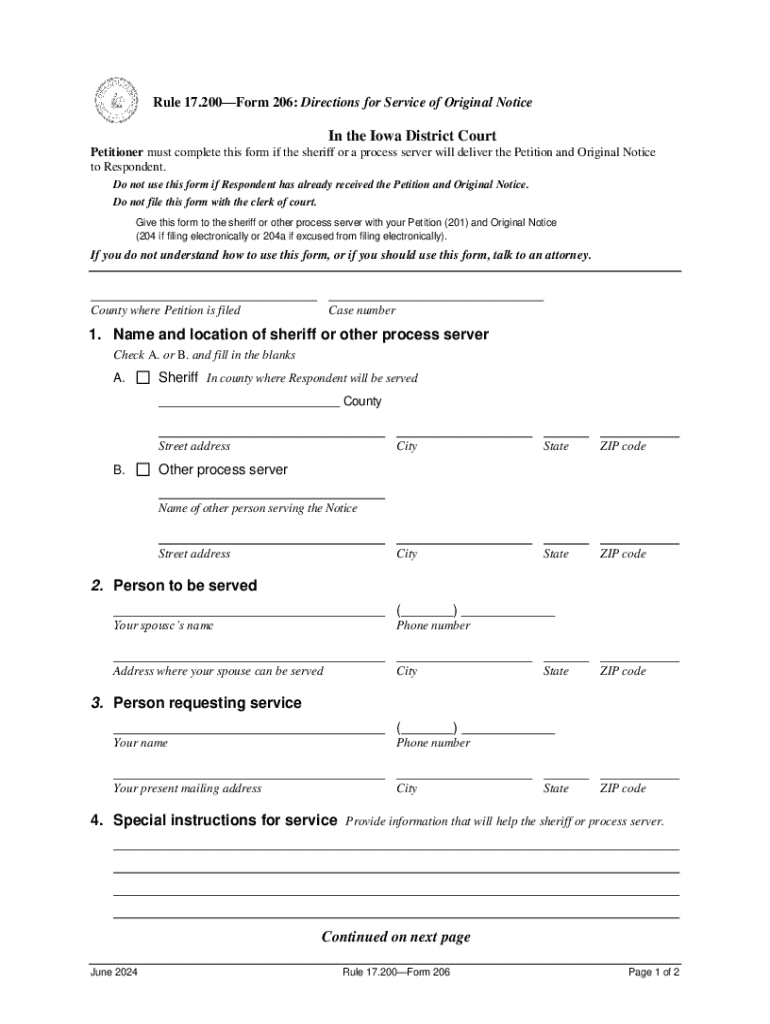
Rule 17 200 Form 206, commonly referred to as the Directions for Service of Original Notice, is a legal document primarily used in the Iowa District Court. This form facilitates the process of officially notifying a respondent about a pending legal action. The form ensures legal compliance in delivering the notice by specifying who is authorized to serve the documents, such as a sheriff or designated process server. This procedure ensures that all parties involved receive the necessary information regarding a legal proceeding in a timely and formal manner, safeguarding the rights of both the issuer and the recipient.
How to Obtain Rule 17 200 Form 206
Securing a copy of Rule 17 200 Form 206 involves a straightforward process that can be accomplished through various channels:
- Court Clerk’s Office: Visit your local Iowa District Court Clerk’s office to request a copy of the form.
- Online Resources: Check the official website of the Iowa Judicial Branch for downloadable PDF versions of the form. This option provides ease of access and can be printed immediately.
- Legal Assistance Providers: Legal aid organizations and professionals often offer access to essential legal forms, including Form 206, as part of their client services.
- Libraries: Some public libraries maintain legal form repositories, allowing the general public to access and copy necessary legal documents.
Steps to Complete Rule 17 200 Form 206
Completing Rule 17 200 Form 206 requires attention to detail and adherence to the following steps:
- Identify the Parties Involved: Clearly enter the names and contact information of both the issuer and the respondent.
- Detail the Legal Action: Provide a concise summary of the legal action associated with the original notice.
- Specify the Service Method: Indicate the chosen method for serving the notice, whether through sheriff or process server.
- Include Case Information: Fill in relevant case details such as the case number and type of court handling the proceedings.
- Signature and Date: Both the issuer and authorized server must sign and date the form to verify its authenticity.
Completely review the form for accuracy to prevent any delays or complications in serving the notice.
Key Elements of Rule 17 200 Form 206
Understanding the primary elements of Rule 17 200 Form 206 ensures compliance and efficiency:
- Party Details: Accurate identification of the plaintiff and defendant, along with any legal representatives.
- Method of Service: Declaration of the chosen method for delivering the original notice.
- Cost and Payment Details: Information related to the fees involved and instructions for payment to the process server or sheriff.
- Official Signatures: All necessary parties, including the server, must provide signatures to authenticate the document.
These components are critical to the validity and enforcement of the form within the legal process.
Legal Use and Compliance
Rule 17 200 Form 206 ensures legal compliance by mandating the appropriate service of notice to respondents. This guarantees that all parties have fair knowledge of legal actions and can prepare their case accordingly. Non-compliance, such as failing to serve the notice properly, can result in legal setbacks, including delays in court proceedings or dismissal of the case. Adherence to the form instructions and guidelines is paramount to uphold justice and maintain court efficiency.
Who Typically Uses Rule 17 200 Form 206
Rule 17 200 Form 206 is generally utilized by:
- Attorneys: Legal professionals preparing to initiate court proceedings against a party.
- Plaintiffs: Individuals or entities seeking legal remedy through court intervention.
- Legal Aids and Paralegals: These professionals often manage and oversee the preparation and submission of legal forms for clients.
- Process Servers: Authorized individuals tasked with delivering the legal notice to the respondent.
The consistent use of this form by these roles emphasizes its importance in the legal notification process.
Important Terms Related to Rule 17 200 Form 206
Familiarity with legal terminology associated with Rule 17 200 Form 206 is vital:
- Respondent: The individual or entity against whom the legal action is directed.
- Original Notice: The initial official notice informing the respondent of the legal proceedings.
- Process Server: A person legally authorized to serve court documents to involved parties.
- Sheriff: A government official who may be tasked with serving legal notices if designated.
- Service of Process: The legal procedure of notifying a party of their involvement in a legal proceeding.
Understanding these terms facilitates the accurate completion and execution of the form.
Variants or Alternatives to Rule 17 200 Form 206
While Rule 17 200 Form 206 is specific to the Iowa District Court, other jurisdictions may employ similar forms with different titles:
- Notice of Intent: Used in various states to initiate legal proceedings.
- Summons: A general term for documents used to notify individuals of court actions.
- Alternative Service Forms: Employed when traditional service methods are ineffective; however, these require court approval or adherence to specific legal guidelines.
These alternative forms share similarities with Rule 17 200 Form 206 but must be chosen according to jurisdictional requirements.