






Definition and Purpose
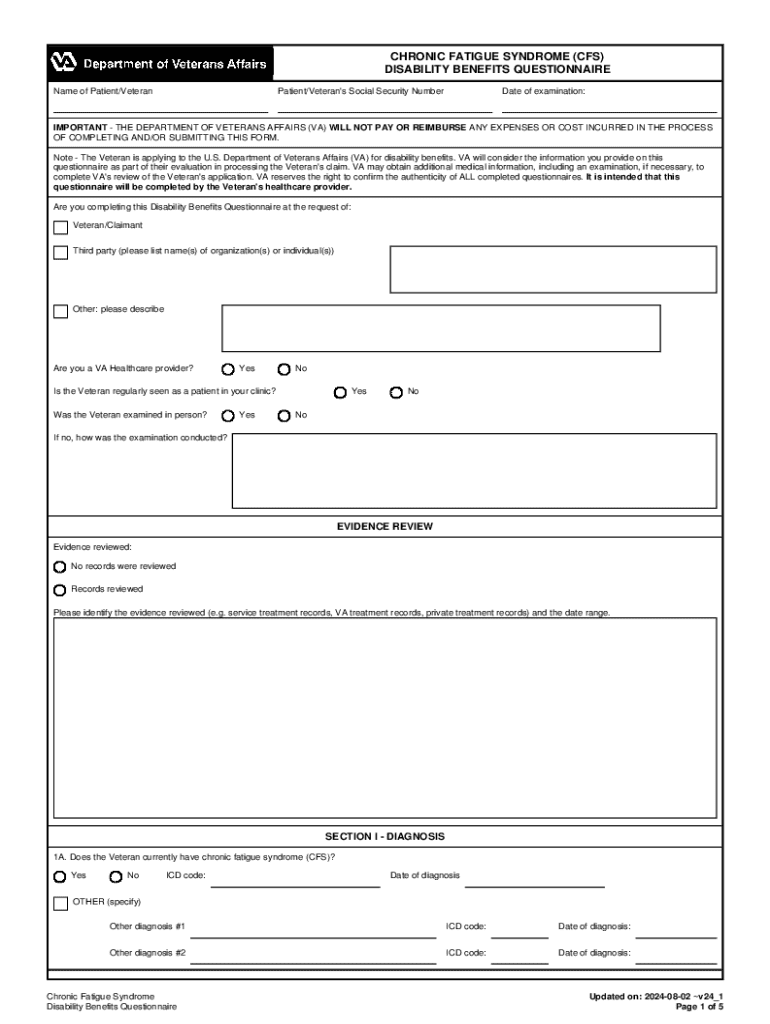
The Disability Benefits Questionnaire (DBQ) for Chronic Fatigue Syndrome (CFS) is a specialized document designed to support Veterans applying for disability benefits through the U.S. Department of Veterans Affairs (VA). It plays a crucial role in systematically gathering information required to evaluate the impact of CFS on a Veteran's daily life and functional capacity. The questionnaire serves as a standardized tool for healthcare providers to assess and report the nature and severity of CFS in a structured manner. It includes details about the diagnosis, medical history, symptoms, and the condition's influence on employability and everyday activities.
How to Use the DBQ for Chronic Fatigue Syndrome
Document Overview
The DBQ must be filled out by a qualified healthcare provider who is familiar with the Veteran's medical history and the specifics of CFS. The form is structured to cover various aspects essential for the evaluation, including:
- Comprehensive medical history related to CFS
- Detailed symptom reporting
- Functional impact assessment
Step-by-Step Completion
- Diagnosis Confirmation: Ensure that the Veteran has been formally diagnosed with CFS by a healthcare professional.
- Medical History Documentation: Include all relevant medical history related to CFS, such as prior treatments, hospitalizations, and symptom evolution.
- Symptom Evaluation: Provide detailed accounts of symptoms, their frequency, severity, and impact on the Veteran's quality of life.
- Functional Impact Assessment: Describe how CFS affects the Veteran's ability to perform daily tasks, including employment activities.
Obtaining the Disability Benefits Questionnaire
Accessing the Form
Veterans can obtain the DBQ for Chronic Fatigue Syndrome through several channels:
- VA Medical Centers: Often have copies of the form available for healthcare providers.
- VA Website: The form can be downloaded from the official VA website as a printable document.
- Healthcare Providers: Providers who work frequently with Veterans may have copies on hand or direct access to download the form.
Steps to Complete the DBQ
Detailed Instructions
- Initiate with Personal Information: Begin by filling in the Veteran's personal identification details, such as name and VA file number.
- Healthcare Provider Details: The provider's name, credentials, and contact information should be entered accurately.
- Medical Diagnostic Section: Provide a detailed diagnosis, including any ICD-10 codes applicable to CFS.
- Symptom Report: Use this section to elaborate on the symptoms the Veteran experiences, with emphasis on those most debilitating.
- Functional Evaluation: Assess and document the extent to which CFS affects the Veteran's ability to function in various aspects of life.
Key Elements of the DBQ
Components of the Form
- Diagnosis Criteria: Criteria and methods used to arrive at a CFS diagnosis.
- Symptomatology: Exhaustive symptom listing, including fatigue, cognitive impairment, and physical limitations.
- Impact on Work and Daily Life: Specific examples demonstrating how CFS impacts routine work tasks and daily responsibilities.
- Validation and Certification of Accuracy: Certification from the healthcare provider affirming the correctness of the information provided.
Legal Use of the DBQ
Compliance and Security
The DBQ must be completed accurately and truthfully to ensure it serves its purpose in the claims process. Legal implications of submitting incorrect information can affect benefit eligibility.
- Privacy and Confidentiality: Information provided in the DBQ is sensitive, requiring strict adherence to privacy laws and regulations, including HIPAA.
- Authentication: The healthcare provider's signature serves as an official attestation to the validity of the completed questionnaire.
Eligibility Criteria


Veteran Requirements
To qualify for disability benefits related to CFS using the DBQ:
- Service Connection: The Veteran must establish that CFS is linked to their military service.
- Clinical Diagnosis: A qualified healthcare professional must confirm a CFS diagnosis.
- Evidence Submission: Supporting documents, such as medical records and treatment notes, should accompany the DBQ for a robust application.
Digital vs. Paper Version
Format Advantages
- Digital Version: Offers easy access, editing, and submission, suitable for tech-savvy Veterans and providers.
- Paper Version: Provides a tactile option, potentially preferred by those less comfortable with digital formats.
Choosing between digital and paper depends on personal preference, accessibility, and any specific submission requirements set forth by the VA.