







Definition & Meaning
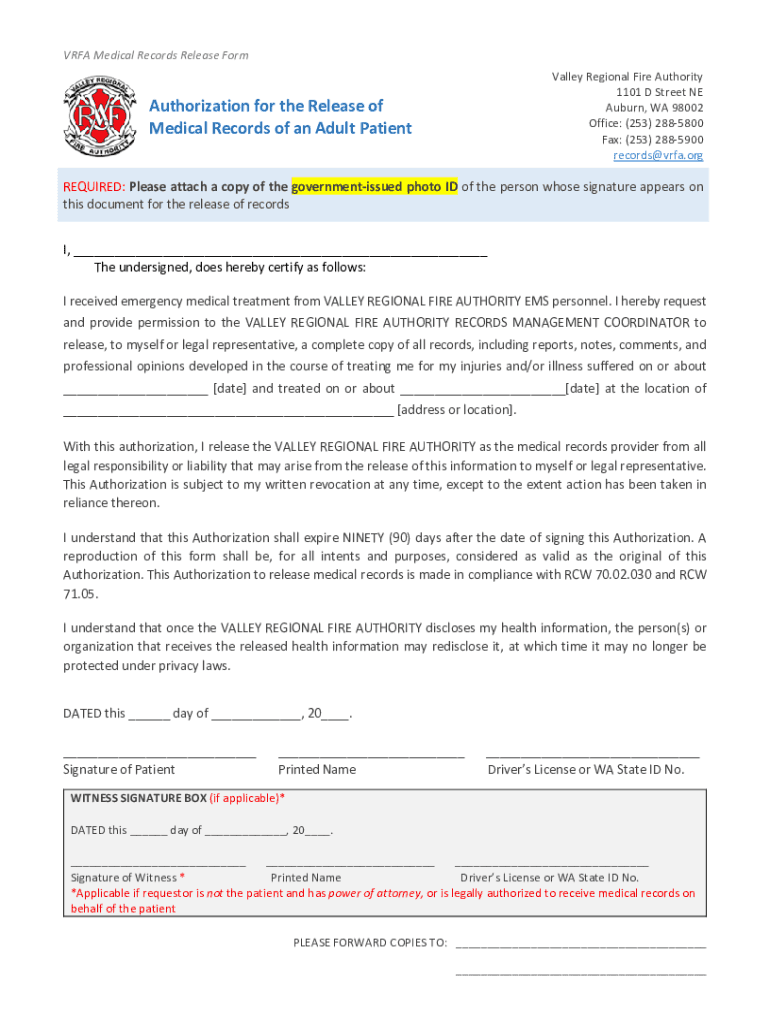
The VRFA Medical Authorization Form - Adult Patient is a crucial document utilized by the Valley Regional Fire Authority for the disclosure of medical records. It provides a legal mechanism for adult patients to authorize the release and sharing of their medical information, particularly following emergency treatment. This form ensures that both the healthcare providers and the patients comply with privacy regulations while facilitating the necessary exchange of medical data. By understanding its definition and purpose, users can appreciate the importance of this document in managing personal health information.
Key Elements of the Form
- Patient Identification: Includes the patient's name, date of birth, and contact information.
- Authorized Information: Specifies which medical records can be released, ensuring clarity on what information will be shared.
- Recipient Details: Identifies the parties authorized to receive the medical records.
- Duration of Authorization: Outlines the period for which the authorization is valid, giving both parties a clear timeframe.
- Patient's Signature and Date: Ensures that the patient consents to the release of their information.
How to Use the VRFA Medical Authorization Form - Adult Patient
Utilizing the VRFA Medical Authorization Form - Adult Patient involves several steps to ensure accuracy and compliance. This guide will help users understand the complete process.
Steps for Effective Use
-
Fill Out Personal Information: Complete the sections requiring your personal details, such as your full name and contact information. The accuracy of this data is critical for the form's validity.
-
Specify the Medical Records: Clearly indicate the specific medical documents you permit to be released. This can include treatment records, medications, or test results related to emergency care.
-
Identify the Recipient: List the names and contact details of individuals or entities authorized to receive your medical information. Ensure this matches the intended recipients to prevent unauthorized disclosure.
-
Set the Duration: Define the expiration date for the authorization. This prevents misuse of your medical records and maintains control over your information.
-
Sign the Form: Provide your signature and the date to affirm your consent. Unsigned forms are invalid and cannot be processed.
Examples of Use
- Emergency Situations: Useful when transferring medical details to physicians after emergency interventions.
- Insurance Claims: Enables the sharing of necessary documents with insurance companies to expedite claims and reimbursements.
How to Obtain the VRFA Medical Authorization Form - Adult Patient
Securing the VRFA Medical Authorization Form - Adult Patient is straightforward. This section will cover the various methods available for obtaining the form.
Methods of Acquisition
- Online Download: Visit the Valley Regional Fire Authority’s official website to download a printable version of the form directly.
- In-Person: Request a copy at any Valley Regional Fire Authority office or participating healthcare facilities.
- Mail Request: Some users may request the form by mail. Contact the appropriate department to initiate this process.
Important Considerations
- Check for the Latest Version: Always use the newest edition of the form to ensure compliance with current regulations and practices.
- Accessibility: Confirm the form's availability in accessible formats if required, accommodating all users’ needs.
Steps to Complete the VRFA Medical Authorization Form - Adult Patient
Completing the VRFA Medical Authorization Form - Adult Patient requires attention to detail across each section. Follow this comprehensive step-by-step guide.
Step-by-Step Completion Guide
-
Patient Information: Provide accurate personal details, including your full name, date of birth, and contact information.
-
Medical Details: Specify which medical records are authorized for release. Use precise language to avoid any misinterpretation.
-
Recipient Identification: Clearly write the full names and addresses of all individuals or organizations receiving the medical information.
-
Authorization Timeframe: Record the start and expiration dates for the authorization, ensuring they align with your needs.
-
Legal Affirmation: Sign and date the form to legally authorize the release of the specified medical information. This signature is crucial for the form's validity.
Common Mistakes to Avoid
- Incomplete Information: Ensure all required fields are filled out accurately.
- Unauthorized Recipients: Double-check names and addresses to avoid releasing information to unintended parties.
Legal Use of the VRFA Medical Authorization Form - Adult Patient
The legal use of the VRFA Medical Authorization Form - Adult Patient involves understanding its role within health information regulations. This section addresses how the form functions within the legal framework.
Legal Implications
- HIPAA Compliance: This form complies with the Health Insurance Portability and Accountability Act (HIPAA), ensuring that all patient data is managed in accordance with privacy laws.
- Informed Consent: Through this form, the patient grants informed consent for the release of their medical records to specified parties.
Scenarios Needing Legal Uses
- Legal Proceedings: Use the form to release medical information in legal cases involving personal injury claims.
- Personal Records: Patients may use the form to obtain their medical records for personal verification or archival purposes.
Who Typically Uses the VRFA Medical Authorization Form - Adult Patient
Understanding who uses the VRFA Medical Authorization Form - Adult Patient helps clarify its importance across different contexts.


Typical Users
- Patients: The primary users are adult patients who need to authorize the release of their medical information after emergency care.
- Healthcare Providers: Doctors and nursing staff might assist patients in completing the form to ensure proper documentation.
- Legal Representatives: Attorneys may use the form when securing medical records for client cases involving healthcare claims.
Practical Use Cases
- Routine Healthcare Transitions: Facilitate the transition of care between providers by releasing necessary medical records.
- Third-Party Evaluations: Permit external organizations to assess medical histories when determining eligibility for services or programs.
Required Documents
To complete the VRFA Medical Authorization Form - Adult Patient, certain documents are necessary. Ensuring you have these on hand streamlines the process and increases form accuracy.
Essential Documents
- Government-Issued ID: A valid form of identification, such as a driver’s license or passport, is necessary to verify the patient’s identity.
- Insurance Information: Providing insurance details can facilitate quicker processing and response from healthcare providers.
- Previous Medical Records: Any prior documentation related to earlier authorizations might be required for comparison or clarification purposes.
Additional Documentation
- Emergency Contact Information: Including up-to-date emergency contacts helps ensure continuity of care.
Examples of Using the VRFA Medical Authorization Form - Adult Patient
Real-world implementations of the VRFA Medical Authorization Form - Adult Patient showcase its utility across various situations.
Case Studies
- Unscheduled Emergency Transfers: When a patient moves to a new healthcare facility following an emergency, the form ensures that crucial medical records accompany them.
- Interagency Communication: Agencies coordinating patient services across different medical departments can use the form to access necessary information promptly.
Utility in Everyday Life
- Family Medical Management: Families managing a relative's healthcare can use the form for coordinating treatment plans with multiple providers.
- Professional Record Keeping: Medical facilities use documented forms for auditing and ensuring compliance with regional healthcare standards.




