




Here's how it works

01. Edit your connecticut standing orders online
Type text, add images, blackout confidential details, add comments, highlights and more.

02. Sign it in a few clicks
Draw your signature, type it, upload its image, or use your mobile device as a signature pad.

03. Share your form with others
Send ct foreclosure standing orders via email, link, or fax. You can also download it, export it or print it out.
How to use or fill out Connecticut Standing Orders with our platform

- Click ‘Get Form’ to open the Connecticut Standing Orders in the editor.
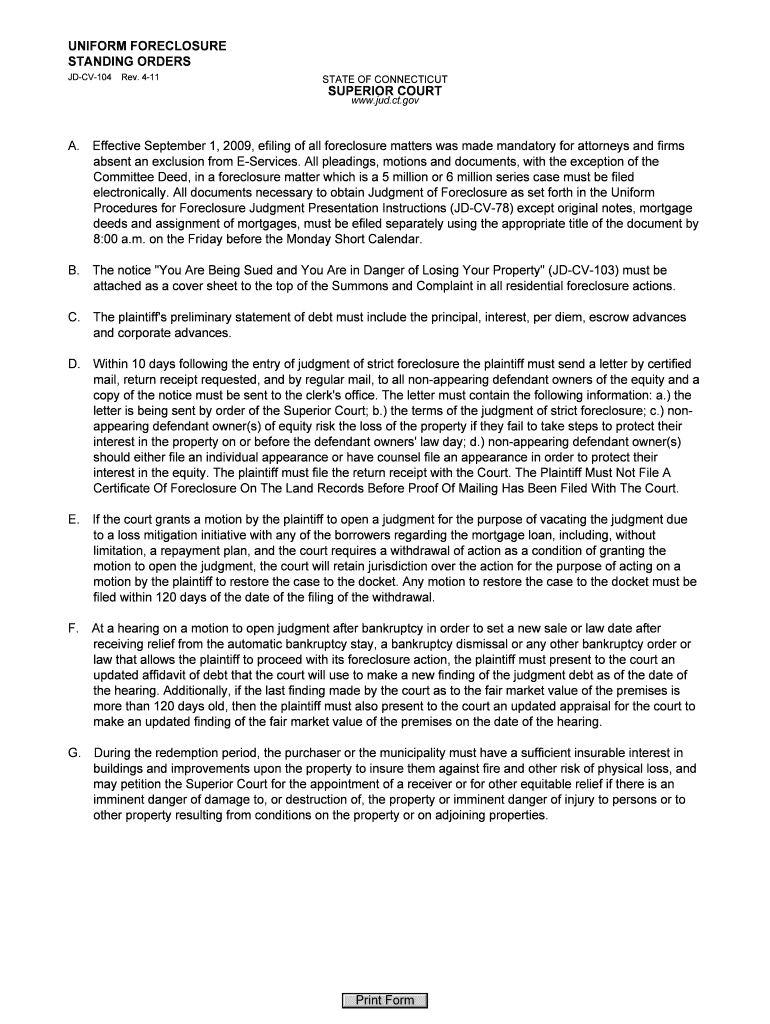
- Begin by reviewing the effective date and e-filing requirements. Ensure you understand that all foreclosure matters must be filed electronically unless exempt.
- Attach the required notice 'You Are Being Sued and You Are in Danger of Losing Your Property' as a cover sheet to your Summons and Complaint.
- Fill in the plaintiff's preliminary statement of debt, detailing principal, interest, per diem, escrow advances, and corporate advances accurately.
- Prepare a letter for non-appearing defendants within 10 days post-judgment entry. Include necessary information about the judgment terms and risks involved.
- If applicable, ensure any motions regarding opening judgments due to loss mitigation initiatives are documented correctly within the specified time frame.
- During hearings on motions to open judgments after bankruptcy, present updated affidavits and appraisals as required by the court.
Start using our platform today for free to streamline your document editing and form completion!
Fill out connecticut standing orders online
It's free
See more connecticut standing orders versions
We've got more versions of the connecticut standing orders form. Select the right connecticut standing orders version from the list and start editing it straight away!
| Versions | Form popularity | Fillable & printable |
|---|---|---|
| 2011 | 4.8 Satisfied (120 Votes) |
Got questions?
We have answers to the most popular questions from our customers. If you can't find an answer to your question, please contact us.
Contact us
Do standing orders still exist?
Any person or company with a current account can set up a standing order, either online, over the phone or in person at a branch of their bank. A standing order is different from a Direct Debit payment. A standing order is an instruction from the payer to their bank.
When were the fundamental orders of Connecticut?
Common language in standing orders includes language prohibiting one party from removing the other party from health insurance coverage prior to filing for divorce, for example. Another example, in a custody case, might involve language prohibiting withdrawing a child from the current school in which they are enrolled.
What are common standing orders?
Standing orders often set rules for purely courtroom conduct, such as eating and drinking in the courtroom, courtroom hours, whether lawyers should question witnesses from a podium or from counsel table, and whether lawyers must deliver courtesy copies to chambers.
Security and compliance
At DocHub, your data security is our priority. We follow HIPAA, SOC2, GDPR, and other standards, so you can work on your documents with confidence.
Learn more


