
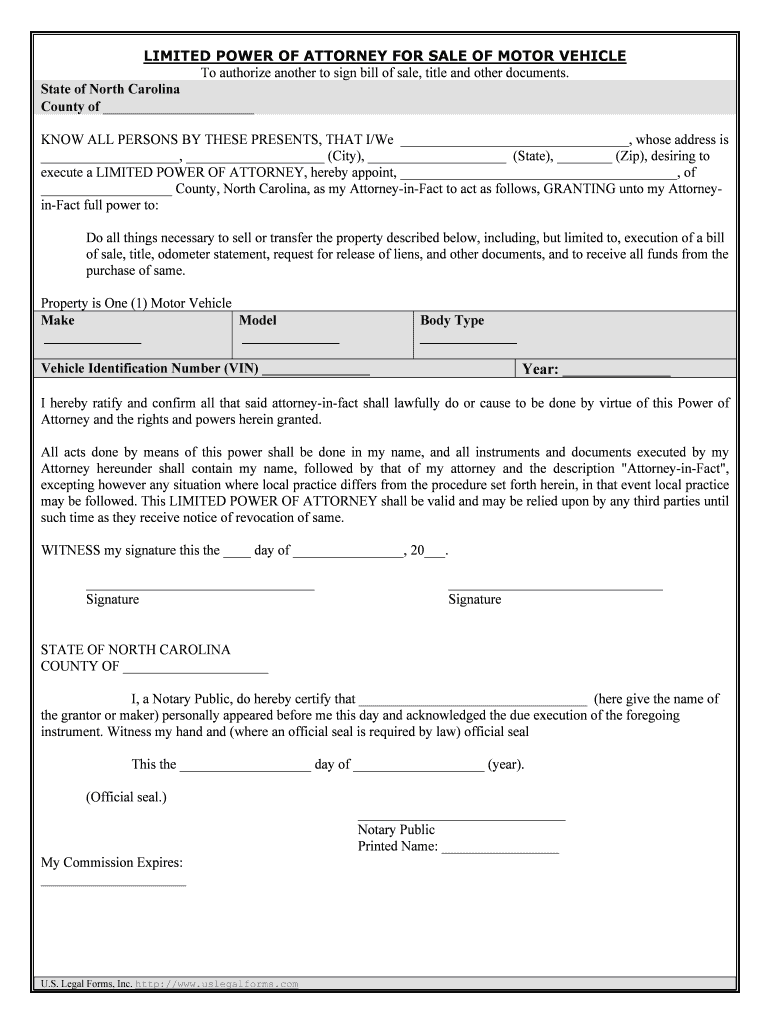







Definition and Meaning of the NC Sale Vehicle Form
The NC Sale Vehicle form, a Limited Power of Attorney for the sale of a motor vehicle in North Carolina, authorizes an appointed Attorney-in-Fact to handle the sale of a vehicle. This legal document permits the attorney to sign necessary documents, transfer titles, and receive funds from the transaction on behalf of the vehicle's owner. Such a delegation is necessary when the owner cannot be present to finalize the sale or wishes to streamline the process through representation.
How to Use the NC Sale Vehicle Form
Using this form involves several steps that ensure the proper delegation of power and the smooth execution of a vehicle sale. First, fill out the owner's and Attorney-in-Fact's information along with the vehicle details. It's important to include make, model, year, VIN, and other identifying information. Both the vehicle owner and the Attorney-in-Fact must sign the form in the presence of a notary to validate. Once notarized, the Attorney-in-Fact can perform the duties outlined in the form, such as signing titles and receiving proceeds from the sale.
How to Obtain the NC Sale Vehicle Form
Obtaining the NC Sale Vehicle form typically involves visiting a local DMV office or their website. It may also be provided by legal services or an attorney, particularly if modifications are needed to suit specific situations. In some cases, a downloadable version may be available online on government or legal assistance websites, allowing for easy access and completion.
Steps to Complete the NC Sale Vehicle Form
- Fill in Personal Information: Include full names, addresses, and contact details of both the vehicle owner and the Attorney-in-Fact.
- Vehicle Details: Accurately describe the vehicle, including the details such as make, model, year, and VIN.
- Signatures: Both the owner and the Attorney-in-Fact must sign the document.
- Notarization: Arrange for a notary public to witness the signing and notarize the document. This step ensures the form's legality.
- Verification and Submission: Ensure all information is accurate and submit the form, along with any necessary fees, to the appropriate DMV office if required.
Key Elements of the NC Sale Vehicle Form
- Principal’s Information: Details about the vehicle owner or the person granting power.
- Attorney-in-Fact’s Information: Details about the person authorized to act on the owner's behalf.
- Vehicle Information: Comprehensive details about the vehicle in question.
- Authorization Clause: A section that explicitly outlines the powers granted to the Attorney-in-Fact.
- Signature and Notarization: Mandatory signatures from all parties involved, along with a notary public's signature to legalize the document.
Legal Use of the NC Sale Vehicle Form
The NC Sale Vehicle form is a legally-binding document that must comply with North Carolina state laws. It allows for the lawful transfer of owner responsibilities concerning the sale of a motor vehicle. The attorney-in-fact acquires the right to sign all necessary paperwork as specified, perform tasks related to the sale, and receive sale proceeds. Legal implications mean the attorney-in-fact should act in the principal's best interest, and misrepresentation or fraudulent acts could lead to legal consequences.
Important Terms Related to the NC Sale Vehicle Form
- Attorney-in-Fact: An individual designated to act on behalf of another person in legal or business matters.
- Principal: The vehicle owner who grants authority to the attorney-in-fact.
- Notary Public: An official authorized to identify signers, administer oaths, and affirmations.
- VIN (Vehicle Identification Number): A unique code used to identify motor vehicles.
- Title Transfer: The process of officially changing ownership of a vehicle.
State-Specific Rules for the NC Sale Vehicle Form
North Carolina has specific requirements for using a Limited Power of Attorney in vehicle sales. Notably, all forms must be completed according to state laws requiring notarization for legitimacy. The state's DMV processes should be consulted for any additional requirements, like payment of fees or supporting documents that might apply. North Carolina DMV offices or their official website can provide more detailed guidelines for proper compliance.
Examples of Using the NC Sale Vehicle Form
Consider a scenario in which a vehicle owner resides out-of-state but wishes to sell his car located in North Carolina. By appointing a trusted family member as an attorney-in-fact, he can ensure the transaction concludes efficiently. Similarly, a busy professional might use this form to authorize an assistant to handle the sale process, addressing all the formalities while they focus on other commitments. Such examples illustrate the utility of the NC Sale Vehicle form in providing flexibility and support in diverse scenarios.
These sections provide comprehensive guidance and insight into using and understanding the NC Sale Vehicle form, ensuring legal compliance and streamlined execution.


