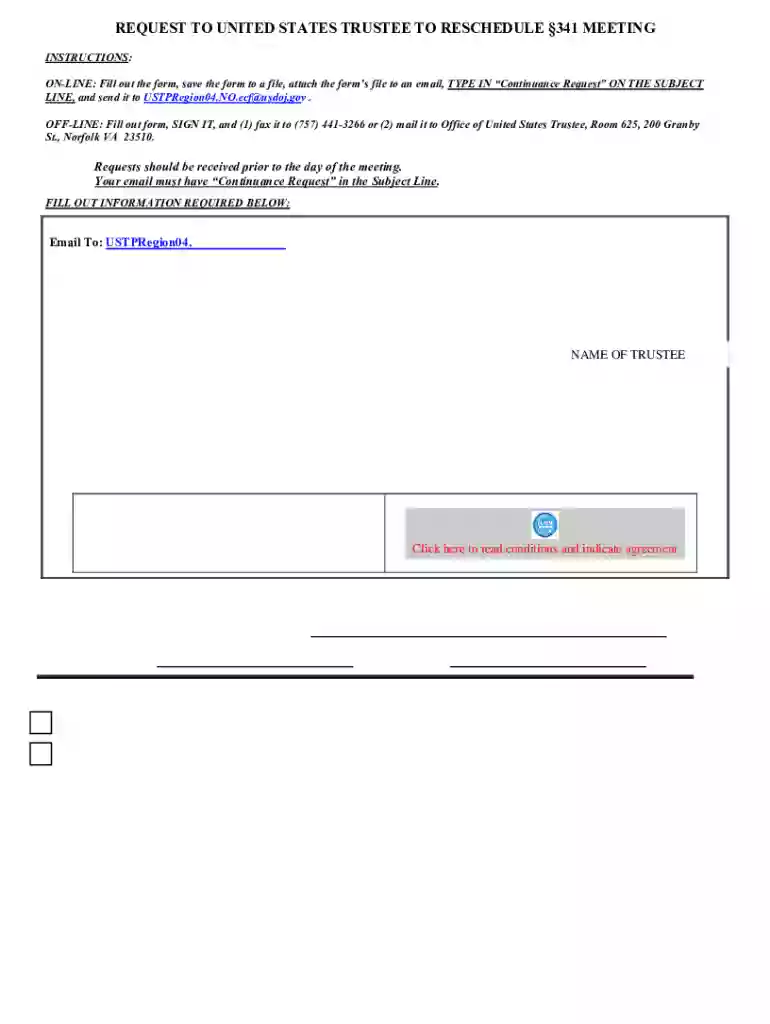
Definition and Meaning of the Request 341 Form
The request 341 form, commonly known as the "341 meeting of creditors rescheduling request," is a crucial document used in bankruptcy proceedings. This form allows individuals under bankruptcy protection to formally request a change in the schedule of their §341 meeting with the United States Trustee. The §341 meeting, often called the creditors' meeting, is an obligatory part of bankruptcy processes where creditors have the opportunity to ask debtors about their financial status and bankruptcy plans. Understanding this form is essential for those seeking adjustments to their meeting dates to ensure compliance and proper communication with the trustee and creditors.
Steps to Complete the Request 341 Form
Proper completion of the request 341 form involves several critical steps that must be adhered to for the request to be validly processed.
- Gather Required Information: Start by collecting all necessary personal details such as your full name, case number, and the date of the originally scheduled §341 meeting.
- Provide a Reason for Rescheduling: Clearly state the reasons for requesting a change in the meeting date. Acceptable reasons may include personal emergencies, medical issues, or unavoidable scheduling conflicts.
- Complete the Form Fields Accurately: Fill out the form with precise details, ensuring all fields are completed correctly to avoid delays in processing.
- Attach Supporting Documentation: If applicable, attach any supporting documents that justify your need to reschedule, such as doctor's notes or evidence of travel commitments.
- Review for Accuracy: Before submission, double-check all entries for accuracy to prevent the rejection of your request.
- Submit the Form: After completing the form, submit it through the prescribed method which could be online, via mail, or in person, as directed by the United States Trustee office handling your case.
How to Obtain the Request 341 Form
Obtaining the request 341 form is a straightforward process, accessible to those engaged in bankruptcy proceedings.
- Visit the Court's Website: The most direct method is to download the form from the official website of the bankruptcy court overseeing your case.
- Contact the Trustee's Office: You may request a copy directly from the United States Trustee's office either by phone or in person.
- Legal Representation: If you have legal representation, your attorney can provide you with the necessary form and assist with its completion and submission.
Who Typically Uses the Request 341 Form
The primary users of the request 341 form are individuals or entities going through bankruptcy proceedings under Chapter 7, Chapter 11, or Chapter 13 of the United States Bankruptcy Code.

- Debtors: Individuals who have filed for bankruptcy and need to reschedule their mandatory §341 meeting.
- Attorneys: Legal representatives who manage bankruptcy cases for clients.
- Corporate Entities: Businesses under financial restructuring that require adjustments to their creditors' meeting schedule.
Key Elements of the Request 341 Form
The request 341 form contains several critical elements that must be precisely completed to ensure valid processing.
- Personal and Case Information: Includes debtor's name, address, and bankruptcy case number.
- Original Meeting Details: Information regarding the initially scheduled date and time of the §341 meeting.
- Rescheduling Justification: A detailed explanation for why the rescheduling is necessary.
- Signature Section: An area for the debtor's signature or their authorized representative's signature to verify the request.
Legal Use of the Request 341 Form
In the context of bankruptcy, the legal use of the request 341 form is to seek an official rescheduling of the §341 creditors' meeting.
- Formal Request: The form serves as an official plea for changing the meeting schedule.
- Compliance with Bankruptcy Code: By submitting this form, debtors adhere to the procedural requirements outlined in the United States Bankruptcy Code.
State-Specific Rules for the Request 341 Form
While the use of the request 341 form is standardized under federal bankruptcy laws, specific procedural rules may vary slightly from state to state.
- Submission Requirements: Certain states might require additional documentation or have distinct submission protocols.
- Clerical Practices: State-specific guidelines may dictate the acceptable methods of form submission or the formats required for accompanying documentation.
Examples of Using the Request 341 Form
Understanding real-world applications of the request 341 form can provide deeper insights into its utility.
- Medical Emergencies: A debtor who encounters a sudden health crisis might use this form to request a later date for their §341 meeting.
- Unexpected Conflicts: When business or family commitments coincide with the scheduled creditors' meeting, filing a request can accommodate these unavoidable situations.
- Travel Obligations: Debtors engaged in necessary travel, either for work or urgent personal reasons, might file this form to ensure they can attend the meeting at a more suitable time.
Form Submission Methods: Online, Mail, In-Person
Various submission methods are available for filing the request 341 form, catering to different preferences and situations.
- Online Submission: Many bankruptcy courts offer electronic filing options, providing a fast and efficient way to submit the form.
- Mail Submission: Sending the completed form via postal mail is a traditional method that ensures physical documentation.
- In-Person Submission: Direct submission at the court or trustee’s office might be preferred for those who seek confirmation of receipt and processing in real-time.
Required Documents for the Request 341 Form
Completing the request 341 form might require supporting documents to validate the request for rescheduling.
- Proof of Conflict: Documentation like work schedules, travel itineraries, or medical appointments that corroborate the stated reasons for rescheduling.
- Identification: A copy of a government-issued ID may be required to authenticate the debtor's identity and ensure the legitimacy of the request.
- Legal Notices: Any legal notices that might influence the scheduling of the §341 meeting can be relevant to the submission.