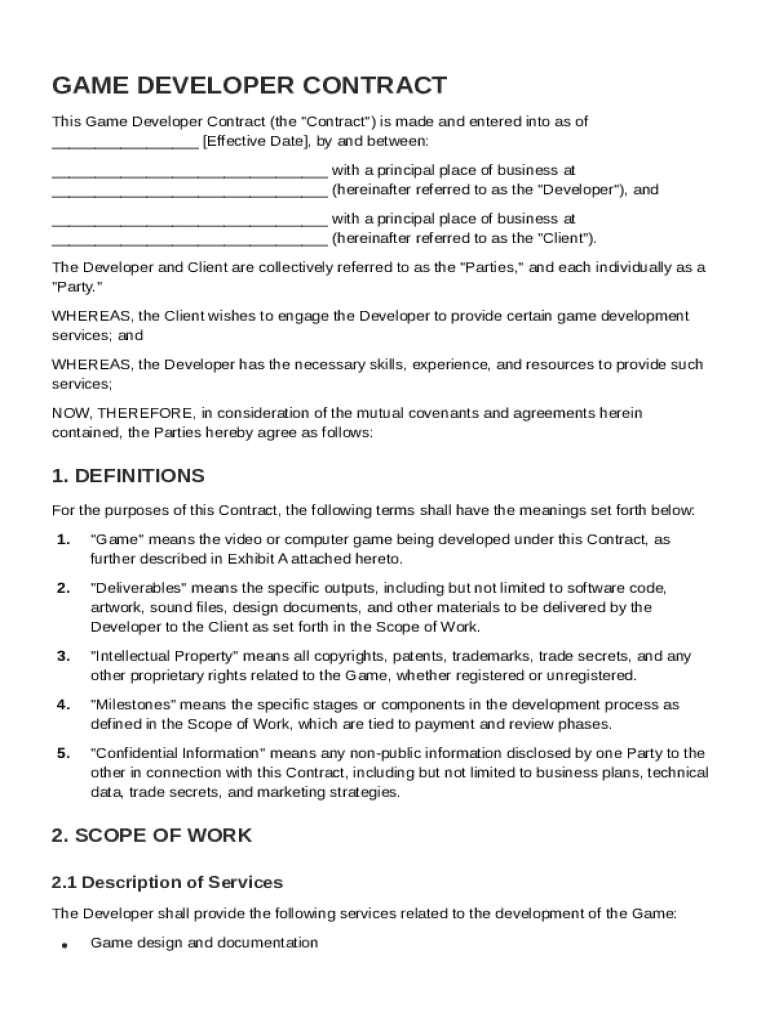







Definition & Meaning
The Game Developer Contract Template is a legal document outlining the agreement between a game developer and a client for the creation of a video game. It serves as a comprehensive guide for both parties, delineating key aspects such as responsibilities, timelines, payment terms, and intellectual property rights. This template helps prevent misunderstandings by ensuring all critical elements are clearly defined from the outset. With sections covering confidentiality obligations, warranties, and dispute resolution, the document provides a robust framework for professional collaboration in game development.
How to Use the Game Developer Contract Template
Using the Game Developer Contract Template involves several straightforward steps. First, review the template to understand its structure and content. Then, gather all relevant information about the project, including the scope of work and payment details. Fill in the respective sections of the template with this information, ensuring accuracy and clarity. Before finalizing, both parties should review the document together to confirm mutual understanding and agreement. Any modifications or additional clauses can be discussed and incorporated as needed. Finally, signatures from both the developer and the client validate the contract, making it legally binding.
Steps to Complete the Game Developer Contract Template
-
Review the Template: Familiarize yourself with the layout and sections.
-
Gather Information: Collect details regarding the project's scope, responsibilities, financial terms, and deadlines.
-
Populate the Template: Fill sections like developer responsibilities, client obligations, and payment schedules with precise information.
-
Include Specific Terms: Add clauses related to intellectual property rights, confidentiality, and warranties.
-
Review with All Parties: Both parties should carefully review the document to ensure all terms are acceptable.
-
Finalize and Sign: Acquire signatures from both parties, rendering the contract official and enforceable.
Key Elements of the Game Developer Contract Template
-
Scope of Work: Clearly defines the developmental tasks, timelines, and deliverables expected from the developer.
-
Payment Terms: Specifies the amount, schedule, and method of payment from the client to the developer.
-
Ownership and Intellectual Property Rights: Details who retains ownership of the game's content and code after the project is completed.
-
Confidentiality Clauses: Ensures that both parties keep all project-related information private and secure.
-
Warranties and Indemnifications: Outlines the guarantees provided by the developer regarding the quality of work and the conditions under which the client may seek remedies.
Important Terms Related to the Game Developer Contract Template
Understanding the terminology used in the Game Developer Contract Template is pivotal for all parties involved. Terms like "intellectual property rights" refer to legal entitlements concerning the creation of the game, while "scope of work" pertains to the specific tasks and services the developer is responsible for. "Confidentiality obligations" ensure project details remain private, and "termination conditions" describe circumstances under which the contract can be ended prematurely. Familiarity with these terms can help clarify the expectations and obligations of both parties.
Legal Use of the Game Developer Contract Template
The legal use of this template ensures that all aspects of the agreement adhere to applicable laws and regulations. It provides a solid legal foundation by including sections on dispute resolution and modification protocols. It is important for both parties to understand that any alterations made to the template should be reviewed for compliance with local laws to avoid legal repercussions. Consulting with a legal professional can provide additional assurance that the contract conforms to legal standards and effectively protects both parties’ interests.
Real-World Examples of Using the Game Developer Contract Template
Consider a scenario where a small indie developer is contracted by a tech startup to create an educational game. The Game Developer Contract Template helps set clear deadlines and deliverables, preventing delays in the company’s product launch. In another case, a gaming studio might use the template to secure intellectual property rights for a unique gameplay mechanic. These examples demonstrate the template's ability to provide structure and legal safeguarding, ensuring smooth collaboration and protecting creative assets.
Who Typically Uses the Game Developer Contract Template
This template is commonly utilized by independent game developers, game development companies, and clients commissioning game projects. Freelance developers and startups find it particularly useful for ensuring project goals are aligned from the start. Companies that frequently outsource development work can use the template to streamline their contracting processes, while game publishers may employ it when partnering with other studios to produce new titles. This broad applicability makes the template a valuable tool in the game development industry.