






Definition and Meaning of Contrato Compraventa Vehiculus
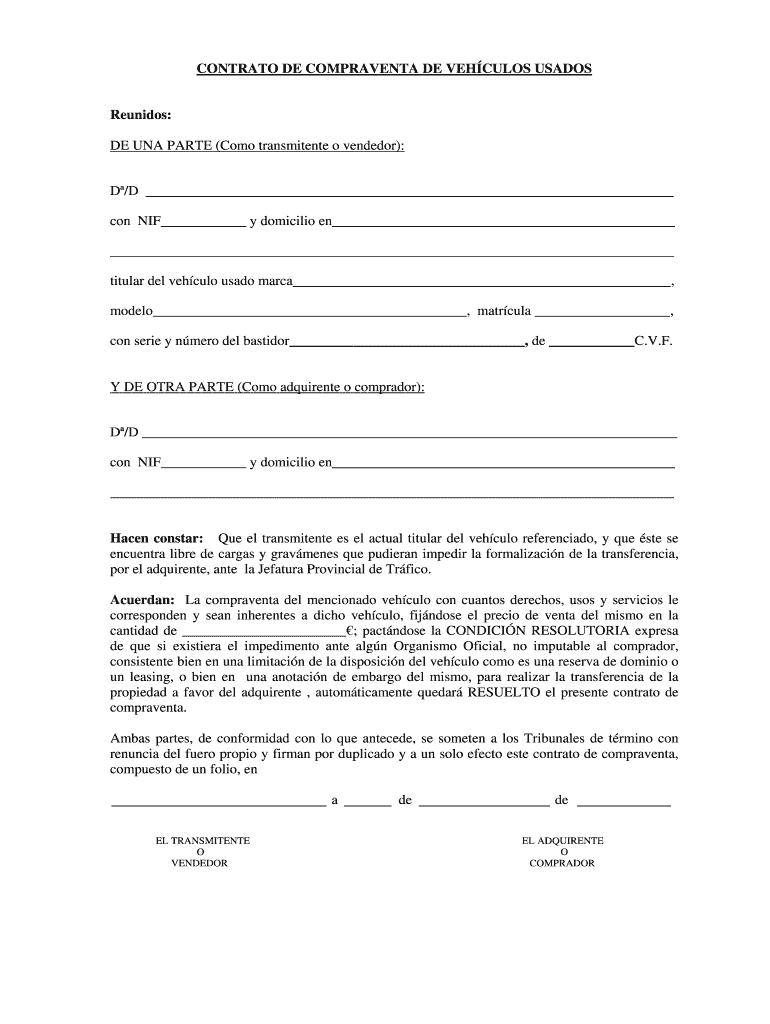
The contrato compraventa vehiculus is a legally binding contract specifically designed for the sale of vehicles. This document serves to protect both the buyer and the seller during the transaction process by clearly outlining the terms of sale, including the vehicle's identification, price, and any pertinent conditions. In essence, this contract formalizes the agreement between the two parties, ensuring transparency and legal recourse if disputes arise.
- Purpose: To provide a clear framework for the vehicle transfer.
- Parties Involved: Typically involves a seller (individual or dealer) and a buyer.
- Content Requirements: Information about the vehicle, such as make, model, VIN (Vehicle Identification Number), and the agreed sale price.
Legal frameworks, such as consumer protection laws, often govern the conditions laid out in the contrato compraventa vehiculus, ensuring that both parties comply with regional regulations and standards.
Key Elements of the Contrato Compraventa Vehiculus
A comprehensive contrato compraventa vehiculus includes critical elements that ensure clarity and protection for both parties involved in the vehicle sale process. Understanding these elements helps prevent misunderstandings and legal disputes.
-
Vehicle Information:
- Make, model, year, and VIN are essential to identify the specific vehicle.
- Odometer reading at the time of sale should be recorded for accurate records.
-
Parties Involved:
- Complete names and addresses of the buyer and seller.
- Contact information to facilitate communication.
-
Sale Price and Payment Terms:
- Total sale price of the vehicle, including any deposits or down payments.
- Payment method and schedule (e.g., cash, bank transfer, installment).
-
Condition of the Vehicle:
- A statement about the vehicle's mechanical and cosmetic condition.
- Disclosure of any known defects or issues affecting performance.
-
Transfer of Ownership:
- Conditions under which ownership will be transferred from the seller to the buyer, including any necessary paperwork.
- Any limitations on the transfer, such as liens or financing agreements.
-
Signatures:
- Signature lines for both parties, indicating agreement to the terms.
- Date of signing to establish the timeline of the transaction.
Steps to Complete the Contrato Compraventa Vehiculus
Completing a contrato compraventa vehiculus involves specific steps that ensure all necessary information is included and both parties fully understand their responsibilities. These steps should be followed diligently to avoid later complications.
-
Gather Required Information:
- Collect key details about the vehicle (make, model, VIN, etc.).
- Obtain personal information of both buyer and seller.
-
Fill Out the Contract:
- Use a template or draft to include all critical elements identified earlier.
- Ensure clarity in wording to avoid ambiguity.
-
Review the Document:
- Both parties should read through the entire contract.
- Clarify any doubts or questions before moving forward.
-
Negotiate Terms:
- Discuss and agree on the sale price and any conditions related to the transaction.
- Make adjustments to the contract as necessary.
-
Sign the Contract:
- Both parties must sign and date the contract to make it legally binding.
- Consider having a witness or notarization for additional legal protection.
-
Distribute Copies:
- Provide each party with a signed copy of the contract for their records.
- Store the document in a safe place to reference it later, if necessary.
Important Terms Related to Contrato Compraventa Vehiculus
Understanding key terminology related to the contrato compraventa vehiculus can help both buyers and sellers navigate the vehicle sales process more effectively.
- VIN (Vehicle Identification Number): Unique code assigned to every motor vehicle when it's manufactured. This number is critical for identifying the specific vehicle in legal documents.
- Odometer Reading: The total number of miles driven, which is important for determining the vehicle's condition and value.
- Encumbrance: Any claim or lien on the vehicle, which must be disclosed to the buyer.
- Notarization: The act of having a document certified by a notary public, providing an additional layer of legal credibility.
Understanding these terms can clarify the expectations and responsibilities each party has during the sale.
Legal Use of the Contrato Compraventa Vehiculus
The contrato compraventa vehiculus is governed by laws that vary by state in the U.S. This legal framework is vital to ensure the contract's enforceability and protect the interests of both parties.
- Consumer Protection Laws: Many states have laws that protect consumers during vehicle sales, mandating disclosure of specific information by the seller.
- State-Specific Regulations: Requirements for the sale of vehicles may differ by state, including the manner of documenting sales and registering the vehicle with the appropriate authorities.
- Dispute Resolution: The contract may establish how disputes will be handled (e.g., local jurisdiction, mediation) in the event of a disagreement.
Being aware of these legal considerations can aid individuals in making informed decisions and avoiding potential pitfalls during the automotive sale process.