




01. Edit your 12 panel drug test result form online
Type text, add images, blackout confidential details, add comments, highlights and more.

Type text, add images, blackout confidential details, add comments, highlights and more.

Draw your signature, type it, upload its image, or use your mobile device as a signature pad.

Send ডোপ টেস্ট ফরম pdf via email, link, or fax. You can also download it, export it or print it out.
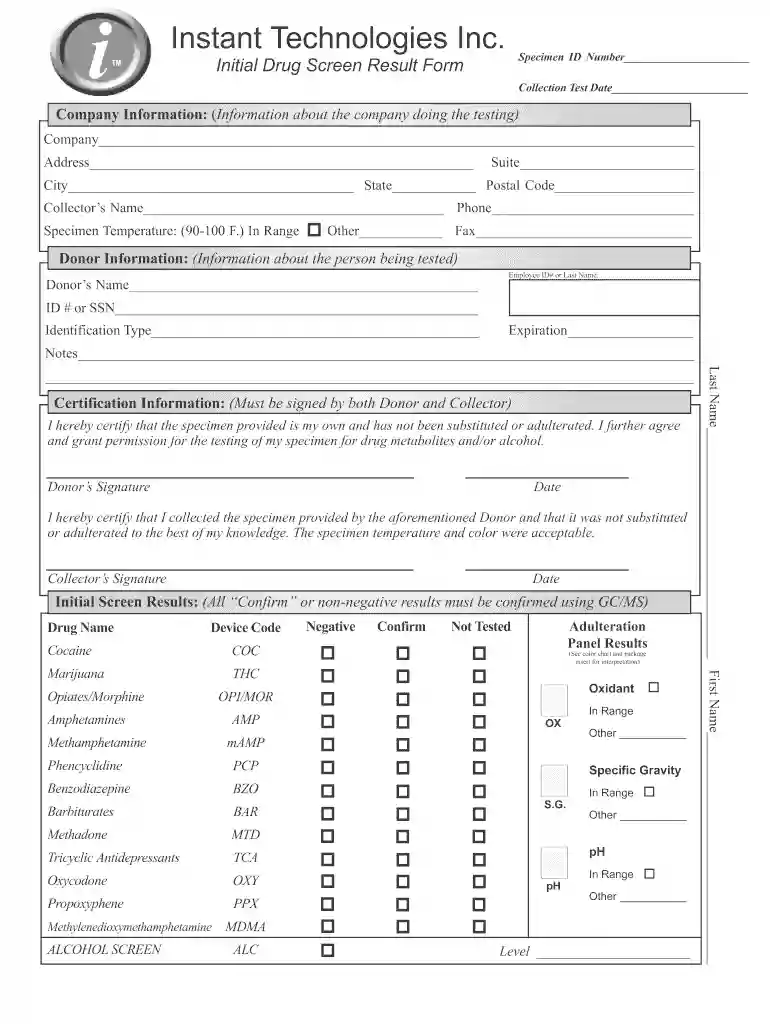
The 12 panel drug test result form is a critical document used in the drug testing process to record the results of a comprehensive urine drug screening. This testing method screens for the presence of twelve specific substances, including but not limited to cannabis, cocaine, opiates, amphetamines, and benzodiazepines. The main purpose of the form is to provide documented evidence of the results, ensuring that both the donor and the collection facilities possess a clear record of the testing outcome.
The 12 panel drug test is widely utilized in various sectors, including employment settings, rehabilitation programs, and legal circumstances. The results are essential for making informed decisions regarding employment eligibility, insurance claims, or legal obligations. The form typically includes sections detailing the donor's information, the testing facility's certification, and the specific results for each substance tested.
Completing the 12 panel drug test result form involves several essential steps that ensure accuracy and compliance with testing regulations. Adhering to these steps is crucial for collecting valid results.
Gather Required Information: The first step is to ensure you have all necessary details related to the donor, including their full name, identification number, and relevant contact information. Additionally, verify the testing facility's details.
Fill Out the Form's Sections: Start by entering the donor's information in the designated sections. Each field must be completed accurately to avoid any issues with the validity of the test results.
Testing Details: Include specifics such as the date of the test, the name of the collector, and the method of collection. This information is vital for tracking and establishing a chain of custody.
Record Test Results: After the drug screening is performed, record the results for each of the twelve substances. Typically, results are categorized as positive, negative, or not detected. Annotations may be necessary for certain substances if further confirmation is required.
Signature and Certification: The form must be signed by both the donor and the collector, certifying that the information is accurate and that both parties understand the implications of the results.
Submission: Once completed, the form should be submitted to the appropriate authority for processing or storage, based on the organization's protocol for maintaining drug testing records.
Following these steps ensures that the 12 panel drug test result form is completed accurately and is legally compliant, minimizing the risk of disputes or misunderstandings regarding the test outcomes.
Understanding the key components of the 12 panel drug test result form is essential for effective use and compliance with drug testing protocols. The form is structured to provide clear, organized information regarding the testing process and results.
Donor Information: This section captures personal data about the individual being tested, including name, identification details, and contact numbers. Accurate documentation is critical for identification purposes.
Testing Facility Information: Details about the laboratory conducting the test, including name, address, and certification number, ensure the validity and reliability of the results.
Substance Results: The most critical element of the form pertains to the results of the tests for each of the twelve drugs. This section usually includes:
Certification Signatures: Spaces for signatures from both the donor and the collector confirm that the testing process was completed correctly and that both parties agree to the results provided.
Comments or Additional Notes: This area allows for any necessary explanations about the results, including reasons for positive findings or the need for retesting.
Having an in-depth understanding of these key elements of the 12 panel drug test result form helps ensure that the testing process adheres to required standards and regulations.
Familiarity with essential terminology associated with the 12 panel drug test result form is crucial for anyone involved in the drug testing process. Here are some key terms:
Chain of Custody: This is a process that tracks the handling of the specimen from collection through testing to ensure that it has not been tampered with.
Confirmation Test: If an initial screen yields a positive result, a confirmation test (e.g., gas chromatography) is often conducted to verify the initial findings.
False Positive: A situation where the test indicates a positive result for a drug that is not actually present. This can occur due to cross-reactivity with other substances.
Specimen Validity Testing: Procedures that check whether the urine sample has been diluted or adulterated, ensuring accurate results.
Donor: The individual providing the urine specimen for testing.
Collector: The trained professional responsible for overseeing the sample collection to ensure compliance with testing standards.
Cut-off Level: The minimum concentration of a drug in a specimen that must be present for a test result to be considered positive.
Understanding these terms is fundamental for effectively navigating the complexities of drug testing and interpreting the results appropriately.
Several scenarios highlight the application of the 12 panel drug test result form in real-world situations. These examples illustrate the form's versatility and importance across various contexts.
Employment Screening: An employer conducts mandatory drug testing for new hires. After administering the 12 panel drug test, the results are recorded on the form. The HR department reviews the form to ensure compliance with corporate policy before making employment decisions.
Post-Accident Testing: Following a workplace incident, an employer may need to perform a drug screening. The form documents the collection, testing results, and any relevant observations, serving as an essential part of the incident report for potential liability evaluations.
Legal Requirements: In legal scenarios, such as custody evaluations or parole considerations, the 12 panel drug test result form acts as formal evidence of an individual’s drug use history. Attorneys can reference the documented results during hearings to establish a case.
Rehabilitation Programs: Individuals enrolled in drug rehabilitation may be subjected to routine testing. The use of the 12 panel drug test result form allows the program coordinators to track compliance with sobriety expectations and to document progress accurately.
These examples demonstrate how the 12 panel drug test result form serves diverse purposes in ensuring the integrity of drug testing processes across various professional and social settings.
At DocHub, your data security is our priority. We follow HIPAA, SOC2, GDPR, and other standards, so you can work on your documents with confidence.



This test provides visual qualitative results and is intended for over-the-counter and prescription point-of-care use. The McKesson Consult. Drugs of Abuse TestRead more
Required immunization documentation should be submitted on a State Public. Health Form 121, easily accessible to all clinics and health departments. PhysicalRead more
I DocHub that the split specimen identified on this form was examined upon receipt, handled using chain of custody procedures, analyzed, and reported inRead more


