






Definition & Meaning
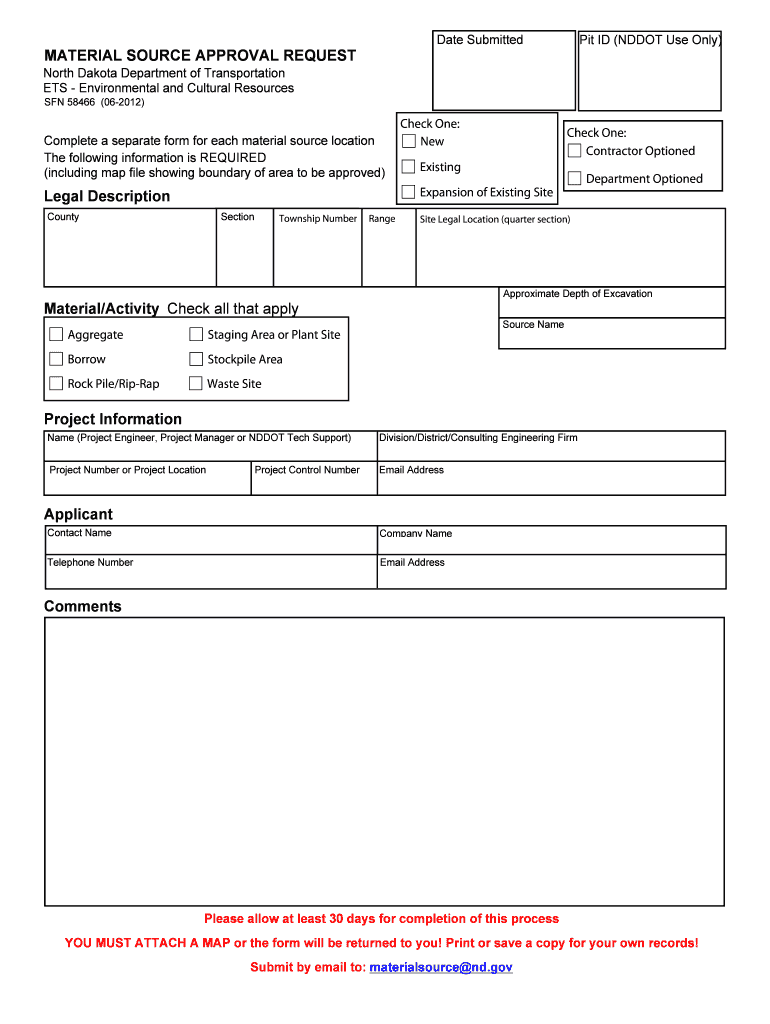
The "Material Source Approval Request" is a formal document used primarily in construction and civil engineering to review and approve materials being sourced for a project. This ensures that all materials comply with design specifications and standards before their use in the project. It serves as a safeguard to maintain the quality of work and protect public interests.
Core Objectives
- To verify that the materials meet the project's technical and environmental requirements.
- To ensure that materials comply with specific safety and regulatory standards.
- To provide a formal record of approvals to facilitate transparent project evaluations.
Practical Applications
This form is typically utilized in large-scale infrastructure projects where regulatory compliance is rigorous. For example, the construction of highways, bridges, and public buildings often mandates the use of this form to ensure all sourced materials adhere to strict guidelines set by relevant authorities.
How to Use the Material Source Approval Request
Using the Material Source Approval Request involves several steps, including submission, evaluation, and approval of materials. This process is pivotal to project continuity.
Essential Steps
- Identification: Determine the material types that need approval based on project specifications.
- Documentation: Gather all necessary supporting documents, such as test reports and certifications.
- Submission: Send the filled request form along with the supporting documents to the relevant authority.
- Review: Await review and feedback, which may involve additional tests or revisions.
- Approval: Receive official approval, allowing materials to be incorporated into the project.
Real-World Scenario
Consider a scenario where a construction firm needs to source concrete for a municipal construction project. The firm initiates a Material Source Approval Request to ensure the concrete meets local building codes and environmental regulations.
Steps to Complete the Material Source Approval Request
Proper completion of the Material Source Approval Request requires attention to detail and accurate information. Each section of the form caters to specific data points.
Detailed Instructions
- Project Details: Provide basic information about the project, including name, location, and identification numbers.
- Material Information: List the materials for which approval is sought, including technical names and specification references.
- Supplier Details: Include contact information and credentials of the suppliers providing the materials.
- Testing Information: Attach laboratory test results and compliance certificates, ensuring all tests align with regulatory requirements.
- Signatures: Signatories from the requesting firm and possibly a third-party consultant may be required.
Comprehensive Example
A firm, during the construction of a university campus, details the specific type of steel reinforcement bars being used, attaches mill certificates, and provides proof of compliance with ASTM standards in their Material Source Approval Request.
Why You Need a Material Source Approval Request
The Material Source Approval Request is critical for a myriad of reasons, significantly affecting the project's integrity and compliance.
Key Benefits
- Quality Assurance: Verifies that materials used meet required standards and specifications.
- Regulatory Compliance: Ensures adherence to local and national building standards, helping to avoid sanctions or delays.
- Risk Mitigation: Reduces the likelihood of project failures due to substandard materials, which can lead to safety concerns and additional costs.
Industry Insights
In industries like transportation infrastructure, the approval of materials like asphalt or concrete is crucial. Using unapproved materials could lead to premature degradation or safety issues, which this process aims to prevent.
Who Typically Uses the Material Source Approval Request
The users of the Material Source Approval Request range across different sectors but are predominantly found in construction and engineering fields.


Typical Users
- Construction Firms: Companies engaged in building infrastructure, whether public or private sector projects.
- Engineering Consultants: Professionals who validate material choices to ensure they align with project specifications.
- Government Agencies: Entities that oversee public works projects, ensuring all materials comply with established regulations.
User Scenario
A construction company involved in highway construction must ensure that all aggregate sources have been pre-approved. They use the Material Source Approval Request to submit for this necessary validation.
Key Elements of the Material Source Approval Request
The form comprises various critical sections, each requiring specific details to be completed accurately.
Main Components
- Project Identification: Essential details that uniquely identify the project.
- Material Specifications: Detailed descriptions of the materials being requested for approval.
- Supplier Credentials: Information regarding the vendors or manufacturers from whom the materials are sourced.
- Compliance Verification: Results from independent laboratories confirming that materials meet standards.
- Signatures and Dates: Authentication of the form's details by appropriate parties, necessary for traceability.
Critical Considerations
Accurate completion of these sections is vital. Errors or omissions could lead to rejections, delaying project timelines and increasing costs due to re-evaluation processes.
Important Terms Related to Material Source Approval Request
Comprehending specific terms related to the Material Source Approval Request is vital for accurate completion and submission.
Glossary of Terms
- ASTM Standards: Refers to a set of international standards that ensure material quality.
- Mill Certificate: A document from the manufacturer vouching for the steel's quality and compliance.
- Environmental Compliance: Ensuring materials do not violate environmental regulations or standards.
Applied Understanding
Understanding terms like "ASTM Standards" helps stakeholders ensure the materials align with recognized standards, a crucial aspect of the approval process.
State-Specific Rules for the Material Source Approval Request
Variations may exist in how the form is processed based on state-specific regulations, reflecting diverse regional compliance needs.
Regional Considerations
- Material Standards: Some states may impose stricter standards on specific materials due to geographic challenges or historical issues.
- Regulatory Bodies: State agencies may have distinct procedures for form submission and approval.
- Environmental Regulations: Requirements can vary widely, reflecting local environmental concerns and priorities.
Scenario Example
For a project in California, strict air quality standards might necessitate additional documentation verifying that materials meet emissions standards, a requirement that could differ from other states.
Digital vs. Paper Version
The evolution of the Material Source Approval Request from paper to digital form has modernized the process, improving efficiency and accessibility.
Comparison Overview
- Digital Version: Allows for quick submission, better tracking, and reduced paper usage.
- Paper Version: May still be used for traditional submissions or in regions with limited digital infrastructure.
Advantages of Digital Submission
Moving to digital can speed up processing times significantly, as data can be easily stored, accessed, and shared. This reduces the possibility of lost paperwork or delays due to postal submissions.
Through detailed breakdowns and insights, the Material Source Approval Request plays a crucial role in ensuring that projects maintain high standards of material quality and compliance. By understanding its components and processes, professionals can effectively manage the material approval process, thereby safeguarding the integrity and success of their projects.