






Definition & Meaning
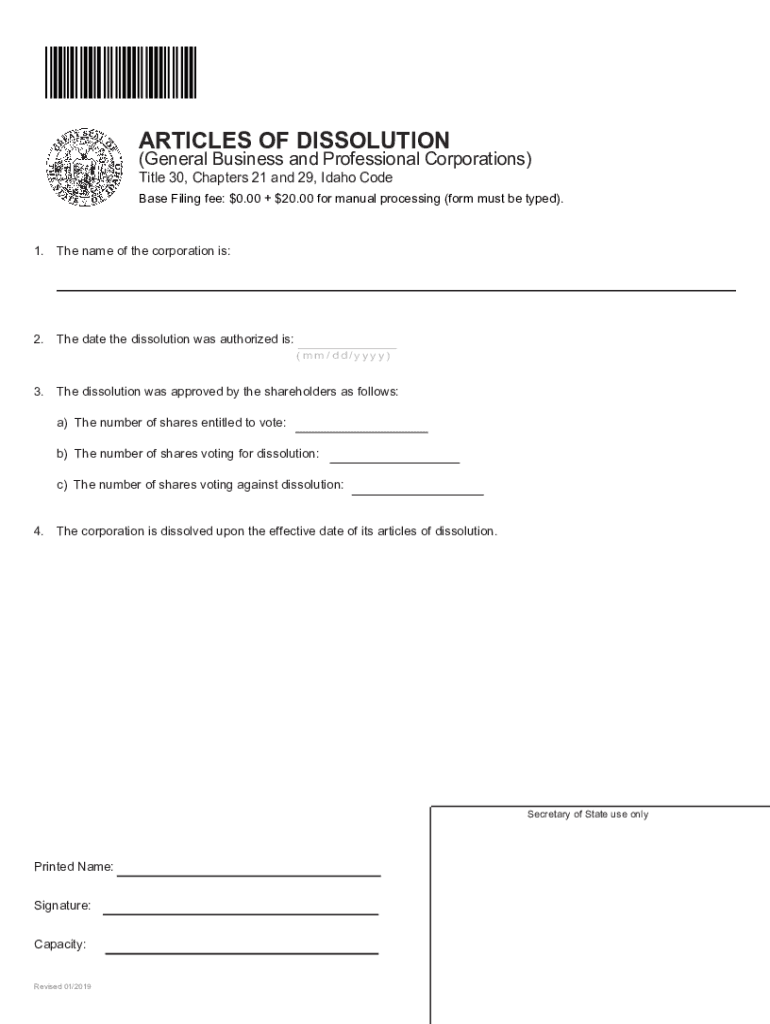
Articles of Dissolution are formal documents filed with a state's Secretary of State to dissolve a corporation or LLC legally. This process marks the official end of a business entity, allowing it to cease operations and settle any outstanding obligations. Filing these articles affirms that the company's directors or members have agreed to terminate the business and that the necessary steps to do so have been taken.
Key Components of Articles of Dissolution
- Business Name: The official name of the corporation or LLC being dissolved.
- Approval Date: The date on which the dissolution was approved, usually by the board of directors or members.
- Shareholder or Member Approval: Documentation of votes or consents required from shareholders or members approving the dissolution.
- Effective Date: The date the dissolution becomes effective, which can be immediate or set for a future date.
- Final Tax Clearance: Confirmation that the business has fulfilled all tax obligations.
Steps to Complete the Articles of Dissolution
-
Board or Member Approval: Obtain approval from the board of directors or members. Record this in meeting minutes or through written consent if required by state law.
-
Settle Obligations: Ensure all financial obligations, including debts and taxes, are satisfied. Inform creditors of the dissolution plan.
-
Prepare the Articles: Complete the Articles of Dissolution form, including the business name, approval date, and any other required information. Pay attention to detail to avoid delays in processing.
-
File the Articles: Submit the completed form to the state's Secretary of State. This can often be done online, by mail, or in person, depending on the state's procedures.
-
Notify Interested Parties: Inform employees, vendors, customers, and any governmental entities of the dissolution to prevent misunderstandings.
-
Keep Records: Maintain all documentation related to the dissolution process, including approvals and filed articles, for future reference.
Important Terms Related to Articles of Dissolution
-
Dissolution: The legal process of ending a corporation's or LLC's existence.
-
Liabilities: Financial obligations a company needs to settle before dissolving, such as debts to creditors and pending taxes.
-
Resolution: A formal corporate decision made by the directors or members authorizing the dissolution.
-
Taxes Clearance: A document indicating that the dissolved entity has paid all due taxes, often required by states to finalize dissolution.
State-Specific Rules for Articles of Dissolution
Different states have varied requirements for filing Articles of Dissolution. It's crucial to be aware of these state-specific rules to ensure compliance:
-
Filing Fees: States may charge a fee for processing the dissolution. Fees can vary significantly.
-
Notification Requirements: Some states require that a notice be published in a local newspaper before or after filing.
-
Additional Forms: States may require additional documentation, such as tax clearance certificates or final annual reports.
Legal Use of Articles of Dissolution
Articles of Dissolution serve several legal purposes:
-
Formal Legal Requirement: Legally ends the corporation’s or LLC's existence and liability for ongoing compliance like filing annual reports.
-
Asset Distribution: Facilitates a lawful distribution of remaining assets according to state laws and company bylaws or operating agreements.
-
Protection from Future Claims: Once dissolution is complete and notices are properly sent, the business may be shielded from future claims.
Examples of Using Articles of Dissolution
Consider a business facing declining profitability or whose owners wish to retire. The Articles of Dissolution can be used to legally secure their exit by:
-
Avoiding Ongoing Liabilities: By filing these articles, the owners ensure they won't have to bear future business obligations.
-
Satisfying Legal Requirements: Completing the dissolution process per state statutes protects owners from penalties.
-
Facilitating Retirement or Business Closure: It's an effective way to officially end a business, allowing owners to liquidate and distribute assets.
Filing Deadlines / Important Dates
Each state sets deadlines for the required filings related to dissolution. Failing to adhere to these can result in penalties or extended liability:
-
Early Notification: Typically, states require dissolution filings before the end of the fiscal year to avoid another year of taxation.
-
Post-Approval Filing: After internal approval, states may provide a limited timeframe—often 30 to 90 days—to file the articles.
Who Issues the Form
The Articles of Dissolution form is usually issued by the state’s Secretary of State office. They provide guidelines detailing filing procedures, associated fees, and deadlines.
Accessing Forms
-
State Websites: Most states offer downloadable forms through their official website's business section.
-
Business Service Providers: Professional service providers often assist with preparing and filing the documents to ensure compliance with state requirements.
Penalties for Non-Compliance
Not complying with the rules for filing Articles of Dissolution can lead to:
-
Continued Taxation: Businesses that fail to dissolve properly can face taxation as if they were still active.
-
Fines and Fees: States may levy fines for past-due filings or non-compliance with dissolution procedures.
-
Legal Obligations: Failure to dissolve properly might expose business owners to ongoing liabilities and legal claims.
Required Documents
Alongside the Articles of Dissolution, several documents might be necessary to complete the process:
-
Internal Approvals: Documentation like meeting minutes or resolutions showing member or board approval.
-
Tax Clearance: Some states require a certificate or proof of final tax payments before accepting the dissolution.