






Definition and Purpose of the Fence Application (Non-Barrier)
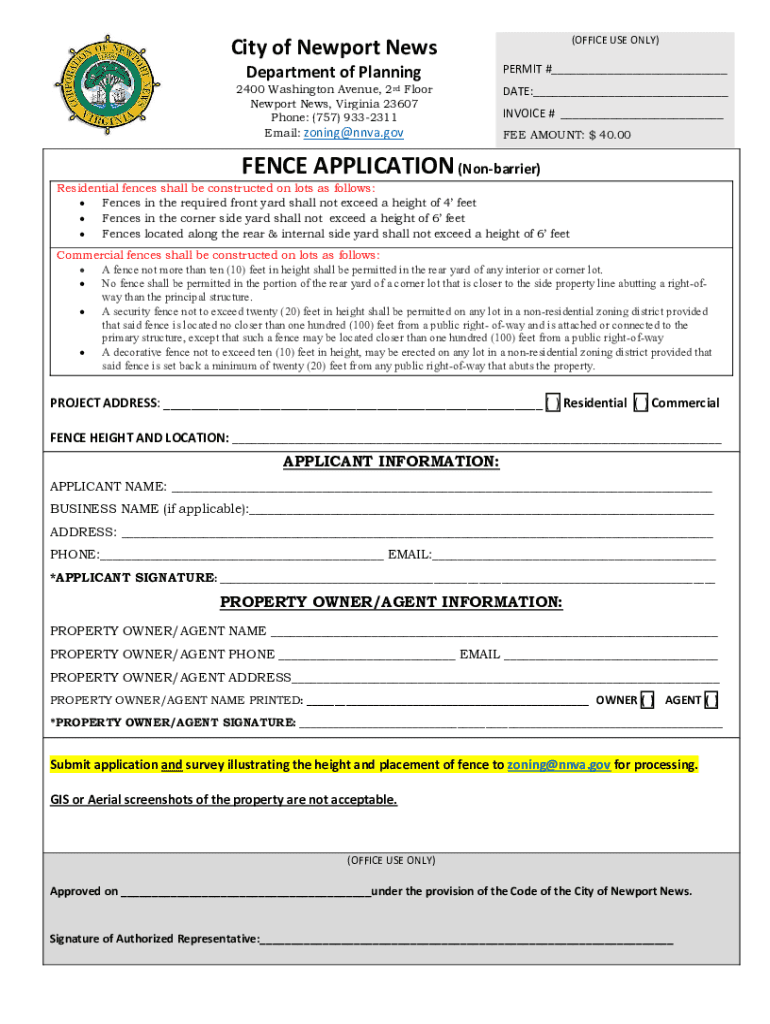
The Fence Application (non-barrier) serves as a crucial document for individuals or businesses intending to construct or modify fences that are not intended to act as barriers in specific regions, such as residential neighborhoods or commercial settings. This form is primarily used to ensure that the proposed fence complies with local zoning laws, building codes, and community guidelines. The definition of a non-barrier fence typically includes fences that do not obstruct views or access, making them suitable for ornamental or boundary-marking purposes. Understanding this classification is vital, as it distinguishes the application from permits related to barrier fences, which serve different functions and usually require additional compliance requirements.
How to Use the Fence Application (Non-Barrier)
Successfully using the Fence Application involves several key steps. First, identify whether your project requires a non-barrier fence and check local regulations to ensure you're using the correct form. Gather necessary details about the proposed fence, including dimensions, materials, and location. Complete the application by accurately filling out both personal and project-related information. Attach any required supporting documents, such as site plans or permission from any governing bodies if applicable. Always double-check the form for completeness and accuracy before submission, as errors can lead to delays in processing.
Obtaining the Fence Application (Non-Barrier)
To secure a copy of the Fence Application, start by visiting the local planning department's website or office in the area where the fence will be erected. Many municipalities provide downloadable PDF versions of the form for convenience. Alternatively, you can request a physical copy in person or via mail. It's advisable to contact the relevant department directly if you're unsure about the correct procedure or form version required. For specific regions like Newport News, Virginia, local ordinances might provide additional guidance on how to obtain and submit the form accurately.
Steps to Complete the Fence Application (Non-Barrier)
- Read the Instructions: Begin by thoroughly reading the instructions included with the application to understand all requirements.
- Provide Personal Information: Fill in your contact details, including name, address, and phone number.
- Describe the Project: Include specifics about the fence, such as size, material, and purpose, ensuring alignment with non-barrier definitions.
- Attach Supporting Documents: Provide necessary documents, such as site plans, to support your application.
- Review Application: Double-check all entries for accuracy to reduce the likelihood of delays.
- Submit the Form: Follow prescribed submission methods, such as online, mail, or in-person delivery, based on local guidelines.
Key Elements of the Fence Application (Non-Barrier)
The Fence Application consists of several critical components that must be accurately completed to avoid rejection. These include applicant information, a detailed description of the fence project, documentation of property boundaries, and any necessary permissions or exemptions. Moreover, it is essential to ensure that the proposed fence meets the specific material and height criteria specified in the local jurisdiction's zoning laws. Providing comprehensive and accurate information in each section is crucial to facilitate approval and avoid compliance issues.
Legal Use of the Fence Application (Non-Barrier)
Legal compliance is integral to the use of the Fence Application. This document ensures that the fence project abides by local zoning laws, building codes, and land-use regulations. The legal standing of the application also means that any misrepresentation or omission of required information can lead to penalties, including fines or mandated removal of the constructed fence. It’s important to consult with local authorities or legal professionals if there are uncertainties about the application of laws in specific areas, as they often have the latest insights into regional legal requirements.
Examples of Using the Fence Application (Non-Barrier)
Several scenarios illustrate the practical use of the Fence Application. For instance, a homeowner wishing to add a decorative metal fence around their garden would need this application to ensure compliance with aesthetic guidelines and structural regulations. Similarly, a business seeking to install a low boundary fence for landscaping purposes would use this form to align the project with local zoning requirements. In both cases, the application ensures that the project does not interfere with community standards or neighboring properties, maintaining harmony within the environment.
Required Documents for the Fence Application (Non-Barrier)
Accompanying the Fence Application are several necessary documents. These typically include a site plan showing the intended location of the fence, property owner consent (if not the applicant), and any required zoning permits or variances. Some jurisdictions may also require proof of property boundaries through a land survey or documentation indicating compliance with homeowners association regulations. Providing all required documents upfront is essential for a smooth application process, reducing potential delays related to incomplete submissions.