
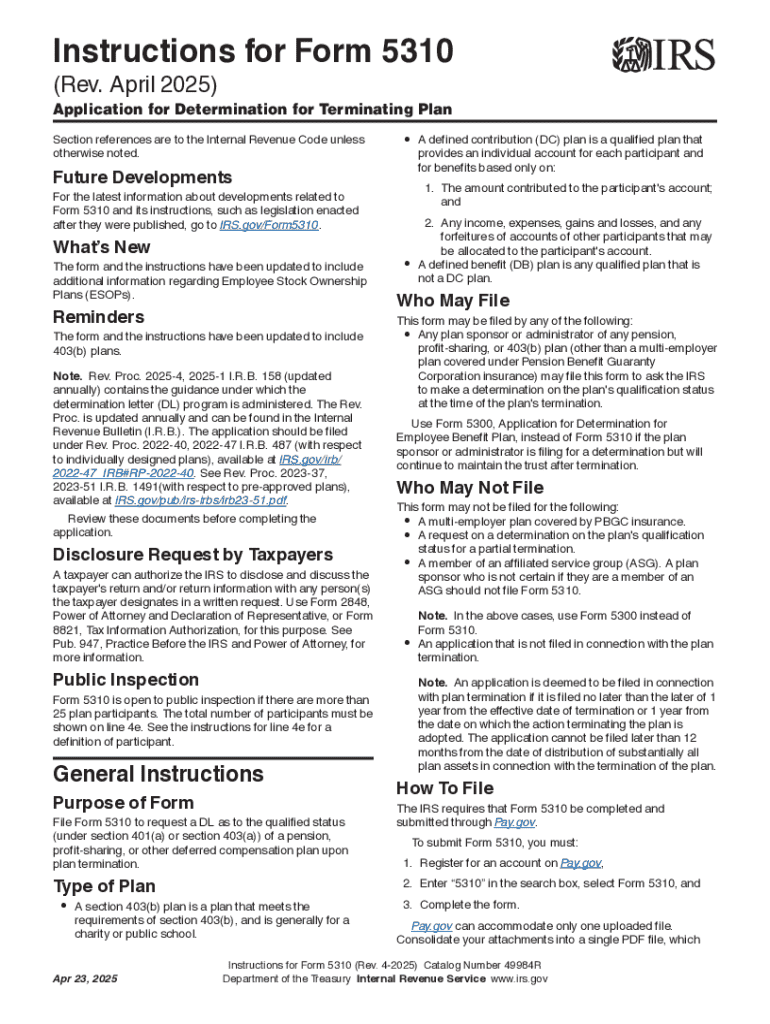







Definition & Meaning
The IRS Form 5310 Application is utilized to request a determination letter from the Internal Revenue Service (IRS) regarding the tax-qualified status of a pension, profit-sharing, or other deferred compensation plan upon termination. This determination ensures that the retirement plan remains compliant with applicable federal tax laws and regulations at the point of termination. The primary purpose of the form is to safeguard both the interests of the plan's participants and beneficiaries by ensuring the plan is terminated in a manner consistent with the requirements of the Internal Revenue Code.
Steps to Complete the IRS Form 5310 Application
Completing Form 5310 involves a series of steps designed to ensure that all pertinent information is accurately reported. The process begins by providing the plan's identifying information, such as the plan name, number, and employer details. The applicant must detail the plan's history, including amendments and previous IRS determinations. Financial data, such as the fair market value of plan assets, must also be included. It's important to check for all required attachments, including statements of compliance and any necessary schedules. Verification of the employer's and plan administrator's signatures is required to finalize the submission.
Why Use the IRS Form 5310 Application
The use of IRS Form 5310 can provide certainty that the retirement plan termination adheres to federal tax rules, thereby protecting it from potential compliance issues that could affect its tax-favored status. By obtaining an IRS determination letter, employers can offer assurance to plan participants that their benefits will be distributed according to IRS guidelines, ensuring tax advantages are preserved. This precautionary step is crucial for avoiding disputes or future liabilities related to the plan's compliance upon termination.
Who Typically Uses the IRS Form 5310 Application
The primary users of Form 5310 are employers and plan administrators responsible for managing the termination of retirement plans, such as pension or profit-sharing plans. These entities range from small businesses to large corporations seeking assurance that their plans comply with federal regulations at the end of their lifecycle. Financial advisors, retirement plan consultants, and legal professionals may also engage with this form on behalf of their clients to ensure proper completion and submission.


Key Elements of the IRS Form 5310 Application
Form 5310 comprises several essential components. Applicants must include details about the plan's operation, demonstrating compliance with standards set forth in the Internal Revenue Code. This includes information on plan amendments, the disposition of assets, and any actions taken to correct operational errors. A crucial element is the documentation of the plan's adherence to discrimination testing rules. Each component requires precise documentation and alignment with the IRS checklist for accurate submission.
IRS Guidelines
Guidelines for completing IRS Form 5310 are detailed in the IRS instructions accompanying the form. These guidelines cover how to fill out each section of the form, including definitions of specific terms and criteria. Understanding these instructions helps ensure that the form is completed correctly and decreases the likelihood of processing delays or the need for additional information. The IRS provides resources and updates on procedural changes that may impact the filing process.
Filing Deadlines / Important Dates
Timing is a vital aspect of submitting Form 5310, as it is typically filed after the decision to terminate a retirement plan but before the final distribution of assets. Employers should be aware of any specific deadlines imposed by the IRS, which may vary depending on the plan type and circumstances of termination. Adhering to these timelines is crucial for maintaining the tax-qualified status of the plan throughout the termination process.
Required Documents
Several documents accompany the IRS Form 5310 application to support the request for a determination letter. These include the plan document and all amendments, summary plan descriptions, actuarial valuations, and financial statements. In situations where the plan has undergone prior corrective actions or modifications, additional documentation may be necessary to demonstrate resolution of compliance issues. Properly organizing and submitting these documents alongside the form is instrumental in facilitating a smooth review process by the IRS.
Form Submission Methods (Online / Mail / In-Person)
While traditionally submitted through mail, IRS Form 5310 can potentially be filed through electronic submission methods if applicable. Mailing remains the predominant method, with the IRS specifying the address to which forms should be sent. For certain scenarios, in-person submission might be an option, although this is not common. It is essential to verify the submission method that applies to each situation, as the IRS may update procedures based on efficiency, technological advancements, and policy changes.
Penalties for Non-Compliance
Failing to comply with the requirements of Form 5310 and the determination letter process can result in significant penalties. These may include the retroactive loss of tax-qualified status for the plan, leading to taxable distributions for participants and potential excise taxes for the employer. The IRS may also impose fines for delayed or incomplete submissions. Understanding compliance obligations and ensuring complete adherence is critical for avoiding these adverse outcomes.
Eligibility Criteria
Eligibility to file IRS Form 5310 generally extends to any employers who sponsor pension, profit-sharing, or other deferred compensation plans subject to termination. Specific criteria apply concerning the plan's adherence to prior compliance requirements and its operational history. It is important for employers to review the IRS criteria thoroughly to confirm eligibility and ensure that all necessary modifications or corrections are implemented prior to submission.

Application Process & Approval Time
The application process for Form 5310 begins with ensuring that all sections are meticulously completed and requisite documents are ready for submission. After filing, the IRS will review the form and supporting materials, a process that can vary in length depending on the complexity of the plan and the IRS's workload. Employers should be prepared for potential inquiries or requests for additional information from the IRS to clarify aspects of the termination. Approval times can range from weeks to several months, with timely responses to IRS inquiries being instrumental in expediting the process.




