
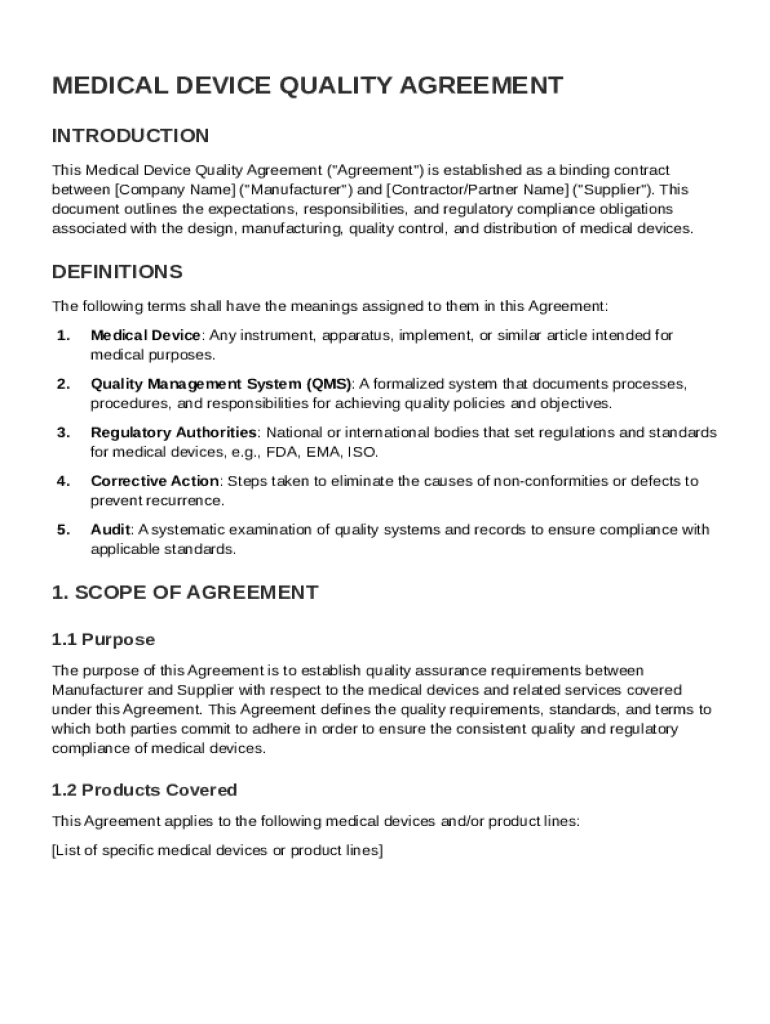







Definition and Meaning
A Medical Device Quality Agreement Template is a comprehensive legal document used between a Manufacturer and a Supplier. This template specifies the responsibilities, expectations, and regulatory compliance obligations concerning the design, manufacturing, quality control, and distribution of medical devices. Essential terms such as Medical Device, Quality Management System (QMS), and Corrective Action are defined within the agreement. This agreement is vital in ensuring both parties adhere to established standards and regulations, facilitating the production of high-quality medical devices that meet the industry's stringent requirements.
Key Components
- Manufacturer and Supplier Roles: Clarifies the roles of each party in the production and supply chain.
- Regulatory Compliance: Details the need for adherence to regulations like FDA standards.
- Quality Assurance Processes: Sets forth the procedures for maintaining product quality.
- Change Management: Outlines the process for implementing changes in design or production.
Key Elements of the Medical Device Quality Agreement Template
A well-crafted Medical Device Quality Agreement encompasses several key elements to ensure comprehensive coverage of all aspects of medical device production and supply.
Quality Management System
The template details the structure and implementation of a Quality Management System (QMS), which both parties must maintain. The QMS ensures consistent quality by outlining processes for monitoring, evaluating, and improving product performance and safety.
Corrective and Preventive Actions (CAPA)
CAPA processes are crucial for identifying and mitigating any deficiencies in the manufacturing process. The agreement specifies the protocols for initiating corrective measures in response to product or process non-conformance.
Confidentiality and Data Protection
Medical Device Quality Agreements include strict confidentiality clauses to protect proprietary information. Both parties are obligated to safeguard sensitive data, aligning with regulations like HIPAA when applicable.
How to Use the Medical Device Quality Agreement Template
Utilizing the Medical Device Quality Agreement Template requires careful attention to detail to ensure that all regulatory and business requirements are met effectively.
Initial Preparation
- Gather Necessary Information: Collect detailed information about both parties, intended products, and relevant regulatory requirements.
- Review Existing Policies: Examine the current quality control and regulatory compliance policies of both parties to identify any gaps.
Customization and Finalization
- Tailor the Template: Modify sections to reflect specific agreements, roles, and responsibilities unique to the business relationship.
- Review with Legal Counsel: Ensure that a legal professional reviews the agreement to confirm its compliance with all relevant laws and regulations.
Important Terms Related to the Medical Device Quality Agreement Template
Several terms are critical to the understanding and execution of a Medical Device Quality Agreement.
Medical Device
Defined typically as any instrument, apparatus, implement, or component intended for use in the diagnosis, treatment, or prevention of disease.
Quality Management System (QMS)
A set of policies and procedures for ensuring the consistent production of safe and effective medical devices.
Corrective Action
Steps taken to rectify and prevent recurrence of a non-conformity or undesirable situation in the production process.
Steps to Complete the Medical Device Quality Agreement Template
Completing the Medical Device Quality Agreement Template involves several detailed steps to ensure comprehensiveness and compliance.
Drafting and Review
- Populate Template Fields: Include detailed information relevant to the contract, such as company names, product specifications, and quality standards.
- Conduct a Thorough Review: Ensure all sections are complete, accurate, and align with existing agreements.
Execution and Implementation
- Obtain Required Signatures: Ensure that authorized representatives from both parties sign the document.
- Implement Monitoring Systems: Set up processes for ongoing monitoring and compliance assurance.
Legal Use of the Medical Device Quality Agreement Template
This section explores the specific legal requirements and considerations in utilizing the Medical Device Quality Agreement Template effectively.
Regulatory Compliance
Medical Device Quality Agreements must adhere to U.S. regulatory bodies such as the FDA. Compliance ensures legal protection and operational integrity.
Enforcement and Dispute Resolution
The agreement typically includes clauses detailing the methods for resolving disputes, whether through arbitration, mediation, or legal proceedings. Understanding these mechanisms is crucial for addressing any disagreements that may arise during the contract term.
Why Should You Use a Medical Device Quality Agreement Template?
Using a Medical Device Quality Agreement Template facilitates a structured and legally compliant approach to managing manufacturer-supplier relationships.
Benefits
- Clarity and Consistency: Provides a clear framework and standardizes quality expectations.
- Risk Mitigation: Helps prevent potential legal issues and ensures regulatory compliance.
- Efficiency: Streamlines communication and operations, reducing the risk of misunderstandings.
Who Typically Uses the Medical Device Quality Agreement Template?
The Medical Device Quality Agreement Template is leveraged primarily by manufacturers and suppliers in the medical device industry.


Typical Users
- Medical Device Manufacturers: Companies involved in producing medical devices that meet strict regulatory standards.
- Component Suppliers: Businesses supplying parts or services essential to the production of medical devices.
Digital vs. Paper Version
The format in which the Medical Device Quality Agreement Template is used can impact its efficiency and accessibility.
Digital Advantages
- Easy Edits and Sharing: Digital formats like PDFs enable quick modifications and distribution.
- Secure Storage: Documents can be securely stored and retrieved with encryption protections.
Paper Considerations
While digital versions offer many conveniences, some parties may still prefer paper agreements for signature authenticity or traditional record-keeping practices.




