
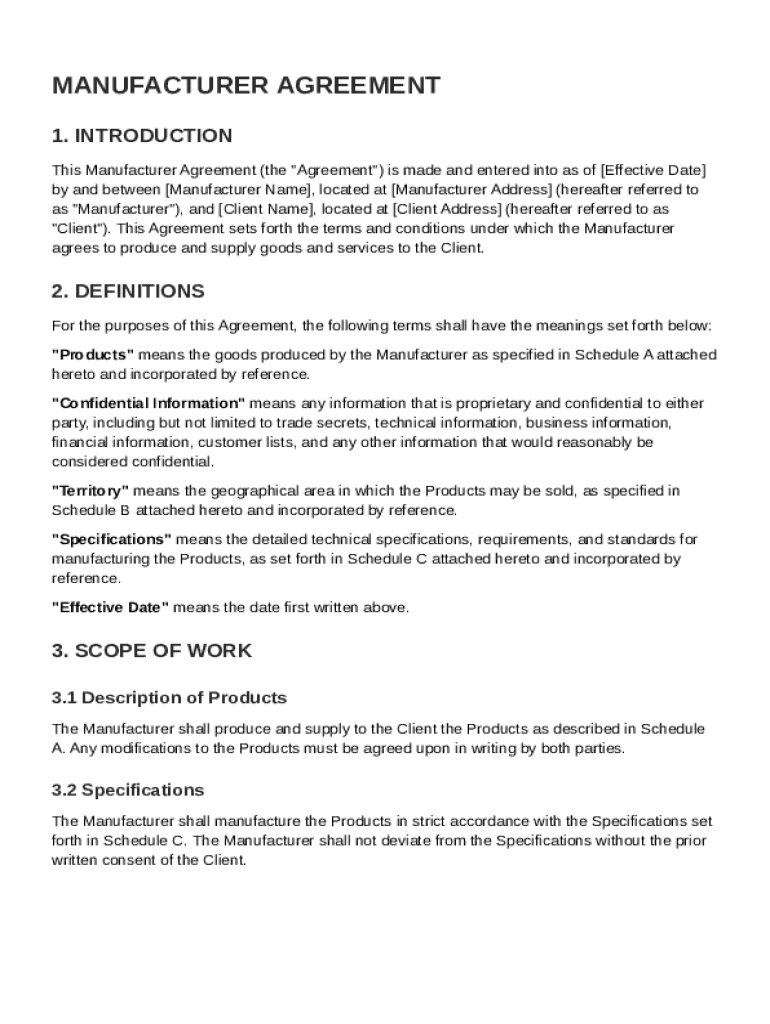







Understanding the Manufacturer Agreement Template
A Manufacturer Agreement Template is a pivotal document used to outline the terms and conditions between a manufacturer and a client for the production and supply of goods. This template serves as a comprehensive guide to ensure mutual understanding, setting a clear framework for collaboration. It includes essential sections such as definitions, scope of work, responsibilities, pricing, and payment terms. Having a well-structured manufacturer agreement template aids in protecting the interests of both parties involved, reducing potential conflicts and disputes.
Step-by-Step Guide to Completing the Template
-
Define Parties Involved: Clearly state the names and contact information of the client and manufacturer. This establishes the parties to the agreement.
-
Outline Scope of Work: Specify the goods to be manufactured, including any specific requirements or standards that must be met. This section ensures that both parties have a clear understanding of the deliverables.
-
Set Responsibilities: List the duties of each party, ensuring clarity on roles and accountability. This can include provisions for quality control, delivery, and timelines.
-
Detail Pricing and Payment Terms: Include the pricing structure, payment schedule, and methods of payment. Define terms for handling late payments or changes in pricing.
-
Specify Duration and Termination Clauses: Outline the length of the agreement and conditions under which it can be terminated. This can include breach of contract or other significant issues.
-
Include Confidentiality Obligations: Protect sensitive information by detailing confidentiality terms. Specify how confidential information should be handled and the repercussions of breaches.
-
List Warranties and Indemnification Provisions: Define any warranties provided by the manufacturer and any indemnity clauses to protect against losses or damages.
Legal Aspects of Using the Manufacturer Agreement Template
The legal significance of a Manufacturer Agreement Template lies in its ability to form a binding contract between parties. In the U.S., such agreements are reinforced by contract law principles. Parties are obliged to adhere to terms once an agreement is signed, with potential legal consequences for non-compliance. Sections covering dispute resolution mechanisms are crucial, often specifying mediation or arbitration as preferred methods over litigation.
Key Elements of the Manufacturer Agreement Template
- Definitions: Clear definitions ensure that all terms are understood consistently by both parties.
- Confidentiality: Protects the proprietary information exchanged during the course of the agreement.
- Dispute Resolution: Provides mechanisms to address conflicts, often preventing them from escalating to costly legal proceedings.
- Miscellaneous Provisions: Includes clauses like force majeure, which covers unforeseen events that might prevent contractual obligations from being met.
Who Typically Uses the Manufacturer Agreement Template
This template is predominantly used by businesses involved in manufacturing and supply chain activities. It holds significant value for companies needing to ensure quality control, timely delivery, and cost management in their supply operations. Startups engaging in new manufacturing agreements or established corporations formalizing existing supplier relationships also benefit from this document.


Software Compatibility and Integration
In today's digital landscape, ensuring compatibility with standard business software is crucial for operational efficiency. The Manufacturer Agreement Template can be easily integrated with software platforms like DocHub, Google Workspace, and other document management tools. These platforms allow seamless editing, sharing, and storing of digital agreements, keeping them secure and easily accessible to authorized users.
Examples of Using the Manufacturer Agreement Template
An apparel company, for example, may use the Manufacturer Agreement Template when contracting with a factory to produce a new clothing line. By clearly detailing design specifications, fabric quality, and delivery schedules in the agreement, the company can mitigate risks and ensure that production aligns with their strategic business objectives.
Tech companies might also use this template when outsourcing the production of hardware components, outlining specifics like quality standards, testing procedures, and deadlines to safeguard product integrity.
Importance of State-Specific Rules
When dealing with Manufacturer Agreement Templates within the United States, it is important to consider state-specific rules and regulations. States may impose varying requirements concerning business contracts, including specific language that must be included or clauses that are void. Addressing these distinctions within the agreement ensures compliance with local laws and enhances the enforceability of the contract.
State-by-State Differences in Agreements
Different states may have varied stipulations regarding enforceability, such as requirements for electronic signatures. Businesses should tailor their Manufacturer Agreement Templates to address these differences. Consulting with legal professionals familiar with the state laws can provide guidance in ensuring the agreement adheres to the necessary regulations, thus reducing potential issues in interstate business operations.




