






Definition & Meaning
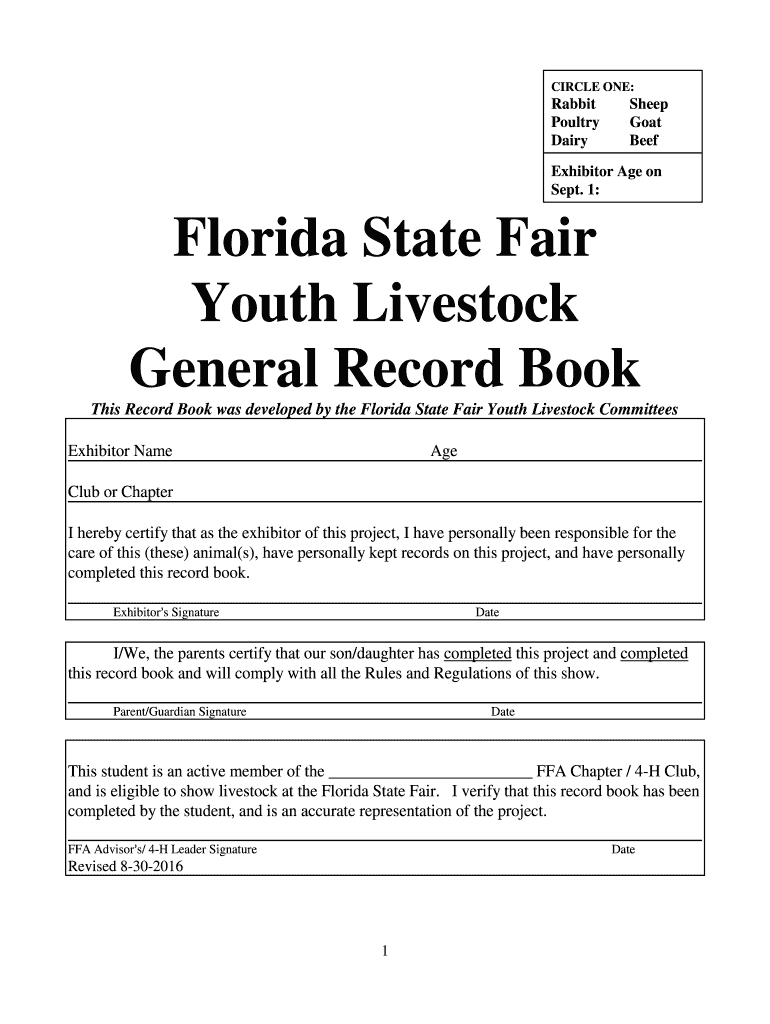
The Florida State Fair Youth Livestock Record Book is a comprehensive guide aimed at young agricultural enthusiasts participating in the Florida State Fair livestock competitions. This record book serves as both an educational tool and a documentation system to help youth exhibitors track the progress and health of their livestock projects. It captures essential information such as animal health records, feed consumption, financial details, and competition results. This ensures participants not only practice responsible livestock management but also learn valuable skills in record-keeping and project evaluation. By providing a structured format, the record book supports exhibitors in presenting their livestock projects professionally at the fair.
How to Use the Florida State Fair Youth Livestock Record Book
Efficient use of the Florida State Fair Youth Livestock Record Book entails understanding its layout and purpose. The book guides exhibitors step-by-step through the various sections:
-
Animal Information: Document specifics about each animal, including breed, age, weight, and any health considerations. This section helps track the growth and changes in your livestock over time.
-
Health Records: Keep a record of vaccinations, veterinary visits, and medications administered. This practice is crucial for maintaining animal welfare and ensuring compliance with fair regulations.
-
Feed Chart: Monitor daily and weekly feed consumption to optimize nutrition. This section supports the analysis of growth trends and financial implications relating to feed expenses.
-
Financial Ledger: Record all expenses related to the care and maintenance of livestock, such as feed, equipment, and registration fees. This transparency is instrumental in understanding the financial commitment involved in livestock rearing.
-
Event Participation: Include notes on shows, contests, and workshops attended. Document feedback and results from these events to evaluate improvement over time.
-
Reflective Entry: Write personal reflections on learning experiences, challenges faced, and achievements. This is crucial for developing a growth mindset and setting future goals.
Steps to Complete the Florida State Fair Youth Livestock Record Book
Completing the Florida State Fair Youth Livestock Record Book requires rigorous attention to detail and consistent participation in record-keeping activities:
-
Initial Setup: Begin by filling out basic information about your livestock projects, including species, breed, and participant details.
-
Regular Updates: Weekly or bi-weekly updates are recommended for entries relating to feed consumption, health records, and financial transactions.
-
Event Documentation: Record observations and outcomes immediately following participation in fairs or competitions to ensure accuracy.
-
Reflective Processes: Periodically review and reflect upon your entries to assess progress and determine areas of improvement.
-
Final Review: Before submitting your record book to fair officials, verify for completeness and correctness to ensure all required information has been diligently documented.
Who Typically Uses the Florida State Fair Youth Livestock Record Book
The primary users of the Florida State Fair Youth Livestock Record Book are young individuals participating in the livestock competitions at the Florida State Fair. This includes students involved in agricultural education programs, members of 4-H clubs, and Future Farmers of America (FFA) participants. The record book is an instrumental resource for these youth, aiding them in developing skills in animal husbandry, time management, and financial literacy.


Key Elements of the Florida State Fair Youth Livestock Record Book
Several vital elements form the backbone of the Florida State Fair Youth Livestock Record Book, ensuring its effectiveness in meeting its educational goals:
- Identification Details: Accurate identification of each animal to establish ownership and accountability.
- Daily Care Logs: Systematic documentation of routines that promote animal health and welfare.
- Training and Handling Records: Notes on methods and techniques used in training livestock for show competitions.
- Goals and Achievements: Sections dedicated to setting project goals and evaluating progress.
By covering these elements, the record book acts as an all-encompassing tool in managing and presenting livestock projects for youth exhibitors.
Important Terms Related to the Florida State Fair Youth Livestock Record Book
Understanding the terminology used within the Florida State Fair Youth Livestock Record Book is critical for effective use:
- Exhibitor: The individual participant responsible for the care and training of the livestock.
- Veterinary Report: A formal record from a vet verifying the health status of the animal.
- Ration: The specific amount and type of feed allotted to an animal, crucial for maintaining appropriate growth ratios.
- Showmanship: The skill demonstrated by an exhibitor in presenting their animal at a competition, judged on handling techniques and presentation quality.
Familiarity with these terms facilitates efficient navigation and completion of the record book.
Legal Use of the Florida State Fair Youth Livestock Record Book
The Florida State Fair Youth Livestock Record Book functions within a legal framework to ensure fair competition and animal welfare. Compliance with the guidelines set forth in the record book indicates adherence to state and local livestock regulations. The document may serve as evidence in validating animal management practices and financial transparency, making it a critical component in the formal evaluation and judging processes at the fair.
State-Specific Rules for the Florida State Fair Youth Livestock Record Book
Because the Florida State Fair operates under unique state standards, participants need to observe specific regulations documented in the record book:
- Animal Health Protocols: Adherence to Florida's animal health requirements, ensuring no entry of livestock disease into competition sites.
- Record-Keeping Standards: Detailed tracking of all activities related to livestock care tailored to meet state-specific regulatory requirements.
- Youth Age Requirements: Criteria outlining the eligible age range for exhibitors to participate in livestock competitions at the fair.
Understanding these state-specific regulations helps prevent disqualification and supports a smooth and successful fair experience.