Definition & Meaning
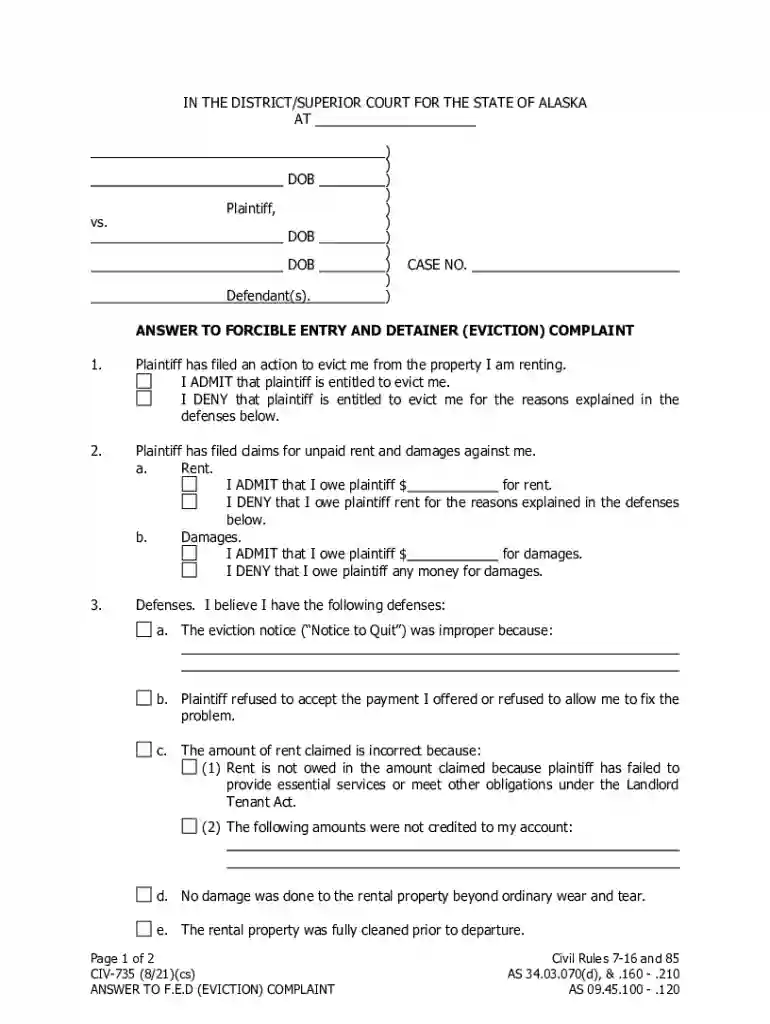
The "Answer to Forcible Entry and Detainer (eviction) Complaint" is a legal document filed by a defendant in response to an eviction notice initiated by a landlord or property owner. This document allows the tenant to present their defenses against the eviction, contest the landlord's claims, and assert any counterclaims they may have. It is crucial in protecting the tenant's rights and ensuring that the eviction process is conducted fairly and legally.
Key Elements of the Answer to Forcible Entry and Detainer (eviction) Complaint
When preparing an answer to an eviction complaint, attention must be given to several critical elements:
- Admission or Denial of Claims: The defendant should explicitly respond to each allegation in the complaint, indicating agreement or disagreement.
- Defenses: This section allows the tenant to present legal defenses such as breach of warranty of habitability, retaliatory eviction, or failure to follow proper eviction procedures.
- Counterclaims: The tenant can assert counterclaims if the landlord has violated any terms of the rental agreement or engaged in unlawful practices such as illegal entry or failure to return the security deposit.
- Request for Relief: The answer should include a statement of what the tenant seeks from the court, such as dismissal of the eviction or monetary compensation for damages.
Steps to Complete the Answer to Forcible Entry and Detainer (eviction) Complaint
Filing an answer involves several key steps:
- Review the Complaint: Carefully read the eviction notice to understand the allegations being made.
- Gather Evidence: Collect documents, photographs, and correspondence that support your case and counterclaims.
- Draft the Answer: Address each point in the eviction complaint, provide detailed defenses, and include any counterclaims.
- File the Answer: Submit the completed answer to the appropriate court by the deadline specified in the eviction notice.
- Serve the Answer: Provide a copy of the filed answer to the landlord or their legal representative.
Why Should You Answer to Forcible Entry and Detainer (eviction) Complaint
Responding to an eviction complaint offers several important benefits:
- Legal Rights: Filing an answer is essential to defending against an eviction and preserving your legal rights.
- Prevent Default Judgments: By responding, you avoid a default judgment which could lead to immediate loss of housing.
- Negotiate Settlements: A filed answer provides an opportunity to negotiate a settlement or payment plan with the landlord.
- Present Counterclaims: The answer is a chance to make counterclaims against the landlord for any grievances experienced.
State-Specific Rules for the Answer to Forcible Entry and Detainer (eviction) Complaint
Different states in the U.S. have specific rules and deadlines governing the filing of an answer:
- Alaska: The defendant must respond within a timeframe specified by state law, typically seven to twenty days after receiving the complaint.
- California and New York: Have unique requirements for the content and filing process of eviction-related documents.
- Texas and Florida: Provide specific defenses that tenants can use, emphasizing the importance of understanding regional regulations.
Penalties for Non-Compliance
Failing to respond to an eviction complaint can have serious consequences:
- Default Judgments: The court may rule in favor of the landlord, resulting in eviction without the tenant's side being heard.
- Loss of Housing: Immediate loss of rights to occupy the property and possible negative rental history implications.
- Monetary Damages: Potential financial liabilities for court costs and additional legal fees.
Form Submission Methods (Online / Mail / In-Person)
The process of filing an answer varies by state but generally includes:
- Online Filing: Some jurisdictions offer electronic filing systems for legal documents.
- Mail: Submitting physical copies via certified mail to ensure receipt by the court.
- In-Person: Delivering the documents directly to the court clerk's office, often providing the quickest processing time.
Examples of Using the Answer to Forcible Entry and Detainer (eviction) Complaint
Practical scenarios where the form plays a crucial role:
- Defense Against Unwarranted Eviction: A tenant uses documented repairs requests ignored by the landlord to contest an unjust eviction notice.
- Counterclaim for Damages: A tenant alleges illegal entry and seeks damages while responding to the eviction suit.
- Breach of Lease Terms: Using the answer to argue the landlord's breach of the lease as a defense against eviction.