






Definition and Purpose of the Fillable CIV-730 F E D Complaint (9-14)
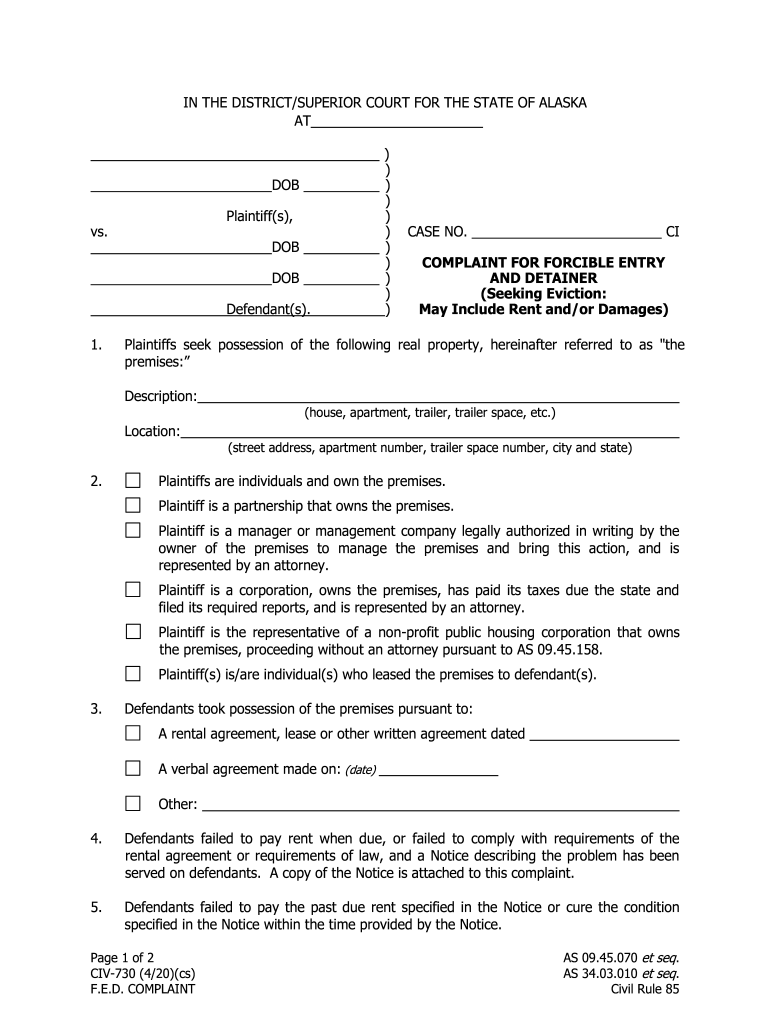
The Fillable CIV-730 F E D Complaint, officially known as the Forcible Entry and Detainer Complaint, is a legal form used in the District/Superior Court of Alaska. This document is a critical tool for landlords seeking to evict tenants who have failed to pay rent or violated rental agreements. The form provides a structured method for plaintiffs to outline their ownership of the property, summarize the defendants’ alleged non-compliance, and detail any unpaid rent or associated damages. By filing this document, the plaintiffs request a judgment for possession of the property, a writ of assistance, and the recovery of legal costs and attorney fees.
How to Use the Fillable CIV-730 F E D Complaint (9-14)
Filling Out the Form
- Gather Required Information: Ensure you have all necessary details, including the property address, tenant names, and details of the lease agreement.
- Complete the Sections:
- Title and Court Details: Fill in the court name and case number.
- Plaintiff and Defendant Information: Enter your details (landlord) and those of the tenants.
- Statement of Facts: Document the specifics of non-payment or lease violation.
- Relief Sought: Clearly state what you are requesting from the court.
Submission Process
- Review for Accuracy: Double-check all entries to prevent delays or rejections.
- Submit to Court: File the completed form with the appropriate court. You may do this in person, via mail, or through an online system if available.
How to Obtain the Fillable CIV-730 F E D Complaint (9-14)
This form can be obtained through multiple channels:
- Online Platforms: Many legal document websites offer downloadable versions of this form.
- Court Offices: Visit your local court's office for physical copies.
- Legal Assistance Providers: Certain legal aid organizations can provide these forms and may offer assistance in completion.
Steps to Complete the Fillable CIV-730 F E D Complaint (9-14)
Preparation Phase
- Understand the Form's Purpose: Familiarize yourself with why and how you are using the form.
- Gather Dates and Documentation: Collect all necessary related documents such as notices previously sent to the tenant.
Completion Phase
- Start with Plaintiff Information: Accurately fill in your personal and contact detail.
- Detail the Complaint: Provide a thorough account of incidents leading to the filing.
- Sign the Document: Ensure that you sign and date the form as required.
Final Steps
- Consult Legal Advice: Where possible, have a legal professional review the filled form.
- File the Form: Submit the form along with any additional documentation required.
Why You Should Use the Fillable CIV-730 F E D Complaint (9-14)
Using the Fillable CIV-730 F E D Complaint provides several benefits:
- Structured Legal Process: Ensures compliance with Alaska's legal standards for eviction procedures.
- Facilitates Dispute Resolution: Legally formalizes the eviction process, potentially expediting tenant removal.
- Documents Claims: Clearly details landlord claims and intentions for both records and legal scrutiny.
Who Typically Uses the Fillable CIV-730 F E D Complaint (9-14)


Targeted Users
- Landlords and Property Managers: Primarily used to handle tenant disputes legally.
- Legal Professionals: Attorneys may use this form when representing property owners in eviction cases.
- Court Officers: To process and file cases coming through the legal system.
Important Terms Related to Fillable CIV-730 F E D Complaint (9-14)
- Forcible Entry: Unlawful entering into a property without the owner’s consent.
- Detainer: Holding possession of property lawfully without permission of the rightful owner.
- Writ of Assistance: A court order authorizing law enforcement to ensure property turnover.
Legal Use of the Fillable CIV-730 F E D Complaint (9-14)
Compliance with Legal Standards
- Adheres to Alaska Law: Conforms with state-specific requirements for eviction notices.
- Provides Legal Grounds: Establishes legal justification for eviction, avoiding illegal self-help evictions.
Common Legal Scenarios
- Non-Payment of Rent: A frequent cause for filing, requiring clear indication of missed payments.
- Breach of Lease: Cases where tenants have violated terms like unauthorized occupancy or illegal activity.
By understanding these elements, landlords and legal professionals can effectively navigate the complexities of property law in Alaska. This form not only aids in dispute resolution but also strengthens the legal standing of the property owner in court proceedings.