






Definition & Meaning
The term "form online" refers to the processes and tools used for creating, editing, submitting, and managing forms through digital platforms. This approach streamlines traditional paper-based systems by enabling users to complete tasks electronically, often leading to increased efficiency and reduced errors. Forms online can encompass a wide range of applications, including tax documents, employment applications, surveys, and legal contracts. The primary advantage of using an online form lies in its accessibility and integration capabilities, which allow for seamless sharing, collaboration, and storage.
How to Use the Form Online
Using a form online typically involves a few straightforward steps that vary slightly depending on the platform in use. Most processes start by selecting the desired form template from the platform's library. Users can then customize the form to fit their specific needs, adding fields such as text boxes, checkboxes, and dropdown menus. Once completed, the form can be shared with others through email or embedded on websites for broader access. Participants can fill out the form using any device with internet connectivity, ensuring that the process is as inclusive and convenient as possible.
To facilitate easier data management, many platforms offer additional features, such as automated data collection and analysis tools. These tools can help users aggregate responses, generate reports, and extract insights to inform decision-making processes. Moreover, many platforms integrate with popular software like Google Workspace and Microsoft Office, which further enhances their usability.
How to Obtain the Form Online
Obtaining a form online can be achieved by visiting websites that specialize in document management and form creation, such as DocHub. Users can access forms via direct download or by using online editors. For specific forms, such as government-related documents, visiting the official website of the issuing body is often necessary. Here, users can download the required form in formats like PDF or DOC, which ensures that they receive the most current and officially recognized version.
Platforms like DocHub provide the added benefit of cloud storage integration. This feature allows users to import documents directly from services like Google Drive or Dropbox, streamlining the process and avoiding manual uploads. Once imported, users can utilize the platform's editing and customization tools to tailor the form to their needs.
Steps to Complete the Form Online
-
Access the Form: Open the online form through the platform hosting it, or import it from a cloud storage service.
-
Fill Out Required Information: Populate the fields with the necessary details. Online forms guide users by indicating mandatory fields with asterisks or different color codes to prevent incomplete submissions.
-
Review for Accuracy: Before submitting, review the information to ensure all entries are correct and complete.
-
Signatures and Validation: If required, use digital or electronic signatures to validate the form. Platforms like DocHub make this easy by allowing users to create legally binding signatures with a few clicks.
-
Submit or Share: Once completed, submit the form directly through the platform. Alternatively, it can be shared with others for further completion or approval through email or shared links.
Online platforms provide features like automatic reminders and notifications, ensuring timely submissions and revisions. Additionally, audit trails can be maintained to record submission and viewing history.
Why Should You Form Online
Opting to complete forms online offers several key benefits over traditional paper forms. The primary advantage is the significant time and cost savings associated with reducing paper usage. In addition, online forms minimize the risk of data entry errors through validation features such as required fields and predefined response options.
Environmentally, using forms online reduces paper waste and is aligned with eco-friendly initiatives. Organizations can also ensure compliance with digital record-keeping standards, improving audit readiness and safeguarding against data loss. Furthermore, online forms provide greater flexibility in terms of accessibility; users can complete forms using any internet-enabled device, promoting inclusivity.
Important Terms Related to Form Online
-
Digital Signature: An electronic form of a signature that is legally binding and can be used to sign documents electronically.
-
Form Fields: Various types of input fields in online forms, including text boxes, radio buttons, dropdowns, and signature fields, which users fill out with relevant data.
-
Cloud Integration: The ability to connect and use cloud-based services like Google Drive or Dropbox to store and retrieve forms seamlessly.
-
Data Validation: Processes that ensure the data entered in forms meet predefined conditions to reduce errors and enhance accuracy.
By understanding these terms, users can better navigate online forms, thus maximizing their utility and efficiency.
State-Specific Rules for the Form Online
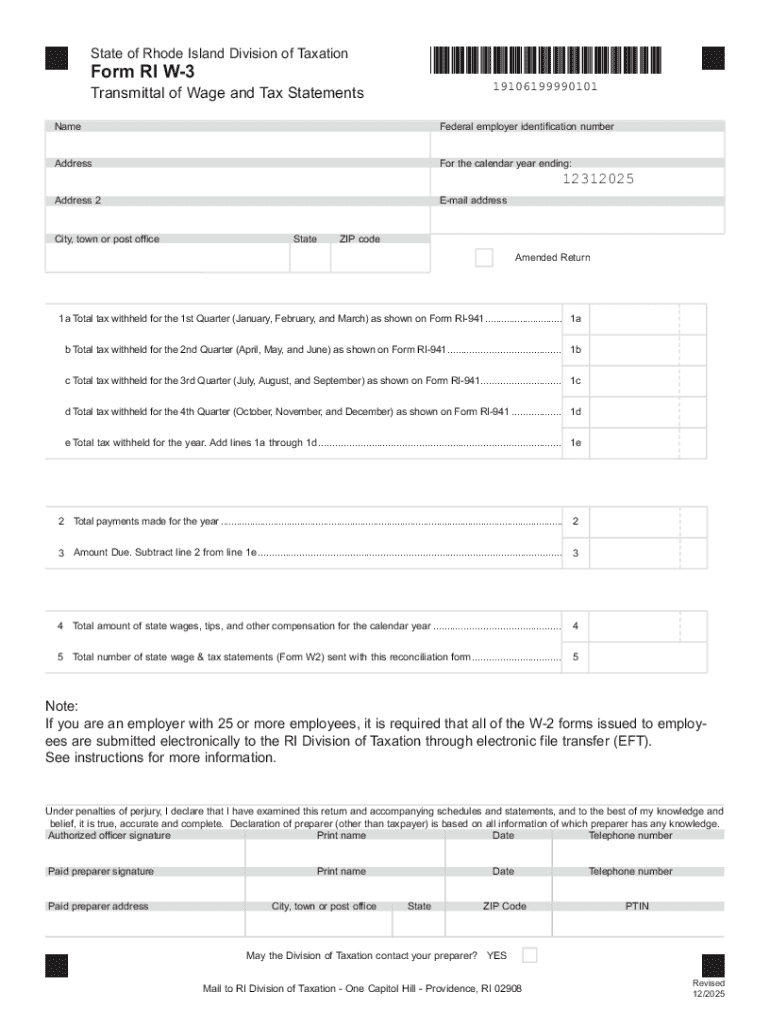
When dealing with forms online, especially those of a governmental nature such as tax-related forms, it's crucial to be aware that rules and requirements can vary significantly by state. Each state in the U.S. may have distinct regulations regarding mandatory information, submission procedures, and deadlines. For instance, a form such as the RI W-3 may require electronic submissions if the number of employees exceeds a certain threshold, which differs from state to state.
To ensure compliance, it's essential to consult the relevant state websites or official documents that outline the specific guidelines applicable to your situation. Many online platforms incorporate state-specific features or provide resources that can guide users through particular state requirements, further simplifying the process and reducing the risk of errors or non-compliance penalties.
Examples of Using the Form Online
Online forms serve a variety of purposes across different sectors. For businesses, online registration and feedback forms can enhance customer engagement by offering easy access to services and feedback channels. Educational institutions may use online forms for admissions or surveys, allowing students and parents to complete necessary paperwork without visiting in person.
Additionally, many governmental processes — such as applying for permits or completing tax returns — have transitioned to online platforms to improve service accessibility and reduce processing times. These examples highlight the versatility of online forms and their growing role in modern administrative and business operations.
Filing Deadlines / Important Dates
Understanding deadlines is critical when using forms online, particularly for time-sensitive submissions such as tax returns or official applications. Failing to meet a deadline can result in penalties or missed opportunities. Online platforms usually offer calendar integration features that allow users to set reminders and alerts for approaching deadlines.
For example, tax documents such as Form W-9 have specific submission dates that align with fiscal year requirements, and many organizations set internal deadlines well ahead of these to ensure compliance. Staying informed about these timelines through official guidelines or subscriptions to updates from relevant bodies can help prevent last-minute scrambles and ensure all obligations are met in a timely manner.