
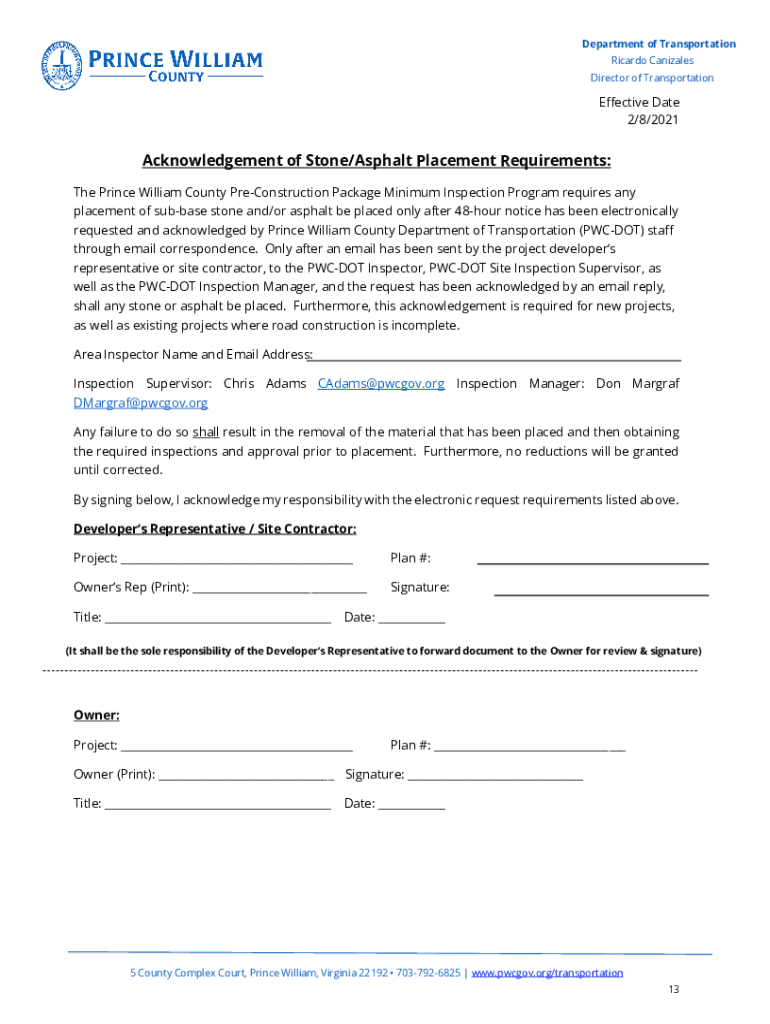







Definition and Purpose of the Pre-Construction Package FY26
The Pre-Construction Package FY26 is a comprehensive set of documents and guidelines aimed at developers and contractors involved in site development in Prince William County. It serves as a crucial framework that outlines the requirements and procedures necessary for gaining approvals and ensuring compliance throughout the construction process. This package includes various stipulations on site inspections, testing protocols, environmental management, and more, forming a foundational element for construction planning and execution.
- Inspection Requirements: Developers must follow detailed inspection schedules to meet regulatory compliance.
- Testing Policies: The package covers protocols for testing construction materials, such as stone and asphalt, ensuring quality and safety standards are met.
Steps to Obtain the Pre-Construction Package FY26
To begin utilizing the Pre-Construction Package FY26, developers need to follow a series of steps to officially acquire the documents and understand the compliance requirements. Obtaining the package involves navigating local governmental processes to ensure all elements are adhered to in a timely manner.
- Contact Local Authorities: Engage with Prince William County's development office to initiate the process.
- Submit Required Information: Provide necessary documentation about the proposed project to physical planning offices.
- Receive the Package: Upon verification, the pre-construction package will be issued, detailing all necessary inspection, testing, and compliance requirements.
Core Elements of the Pre-Construction Package FY26
The Pre-Construction Package FY26 comprises a range of crucial elements designed to ensure compliance and promote efficient site development. These elements form the backbone of the construction phase and include regulations, protocols, and guidelines specific to the region.
- Site Inspections: Mandated inspections at various project phases to ensure adherence to safety and quality standards.
- Testing for Materials: Specific protocols for testing critical construction materials like stone and asphalt.
- Noise Ordinances and Occupancy Requirements: Guidelines to manage noise pollution and ensure safe occupancy throughout construction.
Legal Compliance and Obligations
Understanding the legal framework surrounding the Pre-Construction Package FY26 is vital for developers and contractors. Compliance with these regulations is mandatory to avoid legal repercussions and ensure smooth project execution.
- Local Regulations: Adherence to Prince William County laws and guidelines is essential.
- Permits and Fees: Maintaining up-to-date forms and paying required fees is compulsory for all contractors.
Key Terminologies in the Pre-Construction Package FY26
Familiarizing oneself with the terms and language used within the Pre-Construction Package FY26 is essential for effective compliance and communication.
- VDOT Acceptance Processes: Involves obtaining approval from the Virginia Department of Transportation for site development plans.
- Bond Release Procedures: Steps to follow for releasing construction bonds upon completion of specific project phases.
Document Submission Methods
To effectively manage document submissions related to the Pre-Construction Package FY26, understanding the available methods is crucial. These methods ensure timely processing and compliance with all procedural requirements.
- Online Submissions: Secure portals allow electronic submission of forms and documents.
- In-Person Submissions: Local offices in Prince William County accept physical document submissions for those who prefer traditional methods.
Examples and Case Studies of Using the Pre-Construction Package FY26
Real-world examples and case studies provide insight into how developers can effectively utilize the Pre-Construction Package FY26 to streamline project management and ensure compliance.
- Case Study: Site Development in Prince William County: This case highlights successful management of inspections, material testing, and compliance checks by a local developer using the package.
- Scenario Analysis: Examining how developers manage phased constructions and VDOT processes to achieve seamless project progress.
Consequences of Non-Compliance
Failing to comply with the guidelines and requirements outlined in the Pre-Construction Package FY26 can lead to significant legal and financial repercussions for developers and contractors.
- Penalties and Fines: Non-adherence can result in monetary penalties and delays in project timelines.
- Project Delays: Projects may be halted until compliance is achieved, affecting timelines and budgets.
These blocks collectively offer a comprehensive understanding of the Pre-Construction Package FY26, providing developers and related stakeholders with the necessary guidance to navigate construction projects within Prince William County effectively.




