







Definition & Meaning
The Prince William County Preconstruction Package is a comprehensive document that outlines the necessary steps and requirements for developers and contractors before initiating construction projects within Prince William County. It includes site development inspection requirements, testing policies, general regulations, and environmental management procedures. Understanding the components and purpose of the Preconstruction Package is crucial for ensuring compliance with local regulations and standards throughout the construction process.
How to Use the Prince William County Preconstruction Package
Using the Prince William County Preconstruction Package involves understanding each section of the document and following the outlined procedures meticulously:
- Site Inspection Requirements: Prepare the site based on the inspection criteria detailed in the package to help facilitate smooth inspection processes.
- Testing Policies: Follow specified testing protocols for materials and safety to ensure compliance with local standards.
- Construction Phases: Adhere to the guidelines for phased construction to coordinate activities efficiently.
- Documentation Review: Ensure all forms and documentation are accurately completed and submitted as specified.
The package serves as a step-by-step guide, providing clarity and structure to preconstruction tasks, helping to prevent delays and legal issues.
Steps to Complete the Prince William County Preconstruction Package
-
Review All Requirements: Begin by thoroughly reading through the entire Preconstruction Package to familiarize yourself with each requirement and expectation.
-
Gather Necessary Documentation: Collect all required forms, permits, and supplementary documents needed for the submission.
-
Complete Site Assessments: Conduct necessary site assessments and document the findings as required.
-
Submit Inspection Requests: File requests for inspection in accordance with the timelines and procedures outlined in the package.
-
Fill Out Forms Accurately: Ensure each form is properly filled out, with particular attention to required fields and signatures.
-
Submit Completed Package: Deliver the completed Preconstruction Package and associated documents to the appropriate county office for review and approval.
Following these steps guarantees that all necessary procedures are met prior to commencing construction activities.
Key Elements of the Prince William County Preconstruction Package
The package consists of several critical elements that developers must address:
-
Inspection Requirements: Lists the criteria and timelines for site inspections.
-
Testing Standards: Details the approved testing procedures for construction materials.
-
Environmental Management: Guidelines for sustainable practices in site development.
-
Phased Construction Protocols: Instructions for submitting phased construction plans for approval.
-
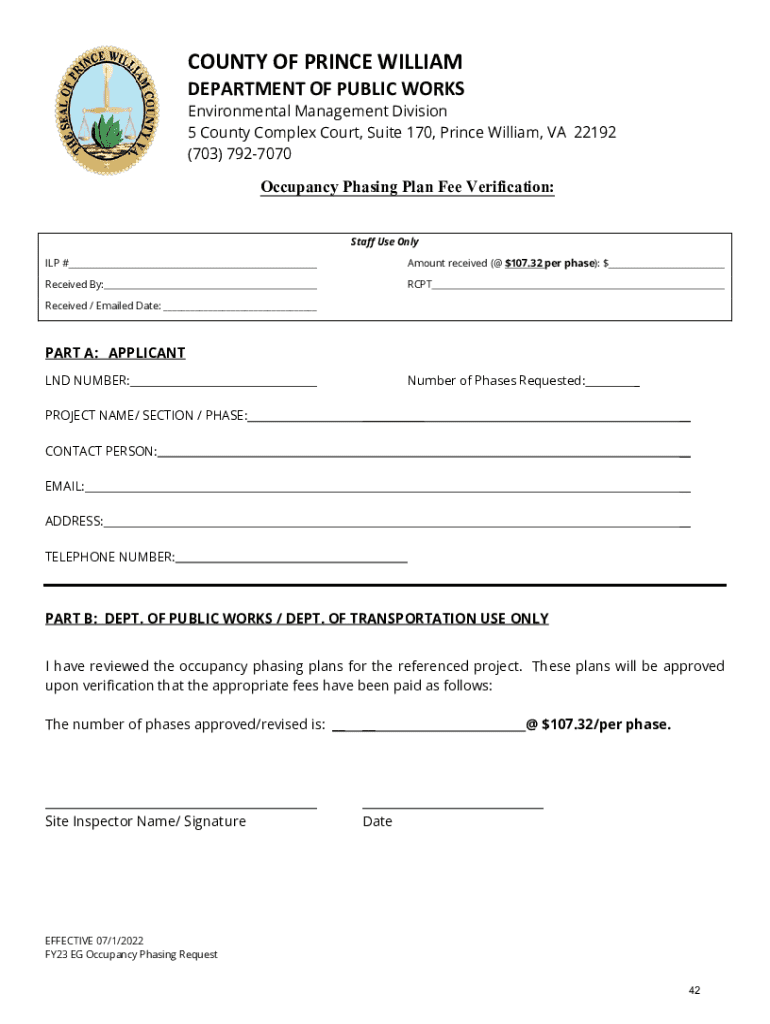
Compliance Forms and Fees: Specific forms and associated fees required for approvals related to site and construction activities.
These elements ensure comprehensive preparation and adherence to county regulations.
Legal Use of the Prince William County Preconstruction Package
The Preconstruction Package must be used legally to guide all preconstruction activities. It serves as an official document that provides the standards and restrictions developers must comply with:
-
Contracts and Agreements: Any contracts entered must adhere to the standards outlined within the package.
-
Regulatory Compliance: Ensure that all construction activities align with Prince William County's legal requirements.
Engaging with this package under these guidelines helps ensure legal protection and adherence to county regulations.
Who Typically Uses the Prince William County Preconstruction Package
The Preconstruction Package is predominantly used by:
-
Developers: To ensure site plans meet county requirements before breaking ground.
-
Contractors: To understand the necessary groundwork and testing requirements.
-
Engineers and Architects: For reference in design and planning stages to ensure plans meet regulatory standards.
This diverse use across different roles ensures a collaborative approach to meeting preconstruction requirements.


Examples of Using the Prince William County Preconstruction Package
-
Residential Development: A housing developer uses the package to complete site inspections and secure necessary approvals before construction.
-
Commercial Projects: A contractor references the environmental guidelines to ensure the minimization of ecological impact during site preparation.
-
Infrastructure Projects: A team building transportation infrastructure utilizes phased construction protocols to limit disruption in adjacent areas.
These examples illustrate the package's versatility across various construction projects, accommodating different needs and ensuring regulations are met.
Important Terms Related to Prince William County Preconstruction Package
Familiarity with specific terminology is essential:
-
Phased Construction: Refers to planning and executing construction in distinct stages to manage resources efficiently.
-
VDOT Acceptance: Procedures for securing approval from the Virginia Department of Transportation for projects that impact state-managed infrastructures.
-
Land Disturbance: Any activity that results in a change in the natural cover or topography, often requiring permits and scrutiny.
-
Occupancy Guidelines: Rules ensuring structures meet safety and habitability standards before use.
Understanding these terms helps in interpreting the requirements and directives of the Preconstruction Package accurately.
State-Specific Rules for the Prince William County Preconstruction Package
The package is aligned with state-specific rules and regulations, which often involve:
-
Local Zoning Laws: Requirements that affect project planning and design.
-
Virginia State Environmental Regulations: Standards for environmental compliance during construction.
-
Infrastructure Policies: State policies concerning the impact of new construction on existing infrastructure.
Adhering to these state-specific rules ensures comprehensive compliance, reducing the risk of penalties and project delays.




