






Definition & Meaning of Chapter 10 Smoking Prohibitions
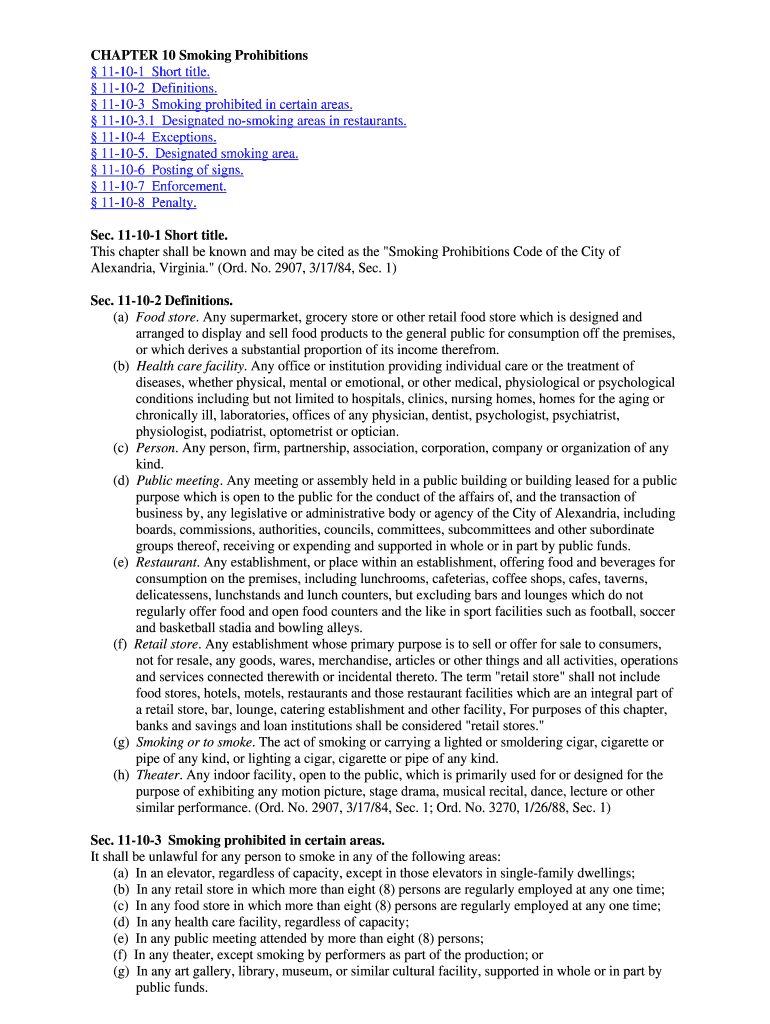
Chapter 10 Smoking Prohibitions refers to a section within municipal codes that establishes local regulations for smoking in different public and private areas. This chapter outlines where smoking is restricted or banned and defines key terms to clarify what constitutes smoking and where these prohibitions apply. The intention is to protect public health, reduce exposure to secondhand smoke, and maintain a smoke-free environment, especially in areas like retail establishments, healthcare facilities, and public gatherings.
How to Use the Chapter 10 Smoking Prohibitions
Understanding and using the Chapter 10 Smoking Prohibitions involves recognizing where and when smoking is not permitted. Businesses, property owners, and residents can use these regulations to guide policy creation for smoke-free zones. For example:
- Ensure compliance by posting visible "No Smoking" signs in prohibited areas.
- Identify designated smoking areas if applicable, to provide alternatives that comply with regulations.
- Educate employees, tenants, or clients on the prohibited zones and the rationale behind smoking restrictions.
Important Terms Related to Chapter 10 Smoking Prohibitions
An understanding of specific terms within Chapter 10 enhances comprehension and compliance. Key definitions include:
- Smoking: Defined as inhaling, exhaling, burning, or carrying any lighted cigarette, cigar, pipe, or other smoking equipment for tobacco or any other weed or plant.
- Public Areas: Locations where the public is allowed access, whether publicly or privately owned.
- Designated Smoking Area: Specific location where smoking is allowed within parameters set by the local ordinance.
Key Elements of the Chapter 10 Smoking Prohibitions
Chapter 10 establishes several critical components, which include:
- Locations where smoking is prohibited, such as inside retail locations, public gatherings, and within a specific distance from public building entrances.
- Requirements for placing clear, visible signage indicating smoking prohibitions.
- Exceptions to the prohibitions, which may include designated smoking areas or specific events.
Legal Use of the Chapter 10 Smoking Prohibitions
Legal provisions within Chapter 10 are intended to safeguard public health by restricting smoking in specific areas. Compliance with these legal stipulations is necessary to avoid penalties. Businesses and individuals should maintain up-to-date knowledge of local regulations to ensure adherence, which may involve consulting with legal professionals for interpretation and implementation.
Penalties for Non-Compliance with Chapter 10
Failing to adhere to the smoking prohibitions outlined in Chapter 10 can lead to several consequences, including:
- Fines or citations: Monetary penalties imposed for violations of the smoking bylaws.
- Legal action: Potential lawsuits or legal proceedings initiated against businesses or individuals failing to comply.
- Revocation of licenses or permits: For businesses, non-compliance might result in losing operating licenses if smoking regulations are repeatedly violated.
State-Specific Rules for the Chapter 10 Smoking Prohibitions
While Chapter 10 is often guided by local municipal codes, state-specific variations can affect enforcement and applicability. For example, some states may have more comprehensive clean air laws that supersede local ordinances, imposing stricter regulations. It's crucial to:
- Verify local vs. state regulations to ensure compliance.
- Stay informed about legislative changes that may impact current practices.
- Engage with local government resources or legal advisers for tailored guidance.
Examples of Using Chapter 10 Smoking Prohibitions
Practical application of Chapter 10 regulations can be seen in various scenarios:
- A restaurant establishes a clear non-smoking policy inside its venue, providing outdoor designated smoking areas compliant with local ordinances.
- Office buildings post detailed signage in entryways and corridors to ensure all individuals are aware of smoke-free operations within the premises.
- Public event organizers communicate prohibitions in promotional materials and on the grounds to maintain compliance with local smoking laws.
Steps to Complete Compliance with Chapter 10 Smoking Prohibitions
Achieving compliance involves several steps:
- Review local ordinances: Understand the specific requirements and prohibitions in the relevant Chapter 10 within your jurisdiction.
- Install appropriate signage: Place signs in conspicuous locations as mandated by the ordinance.
- Train staff: Equip employees with knowledge about the restrictions and their role in enforcement.
- Designate smoking zones: If applicable, establish areas where smoking is permitted, ensuring they meet the distance requirements from prohibited zones.
- Regular audits: Continuously evaluate compliance practices to ensure adherence to regulations and adjust as necessary.
Following these steps ensures alignment with the legal requirements and fosters a healthy environment for all stakeholders.