Definition and Meaning of an Installation Contract Template
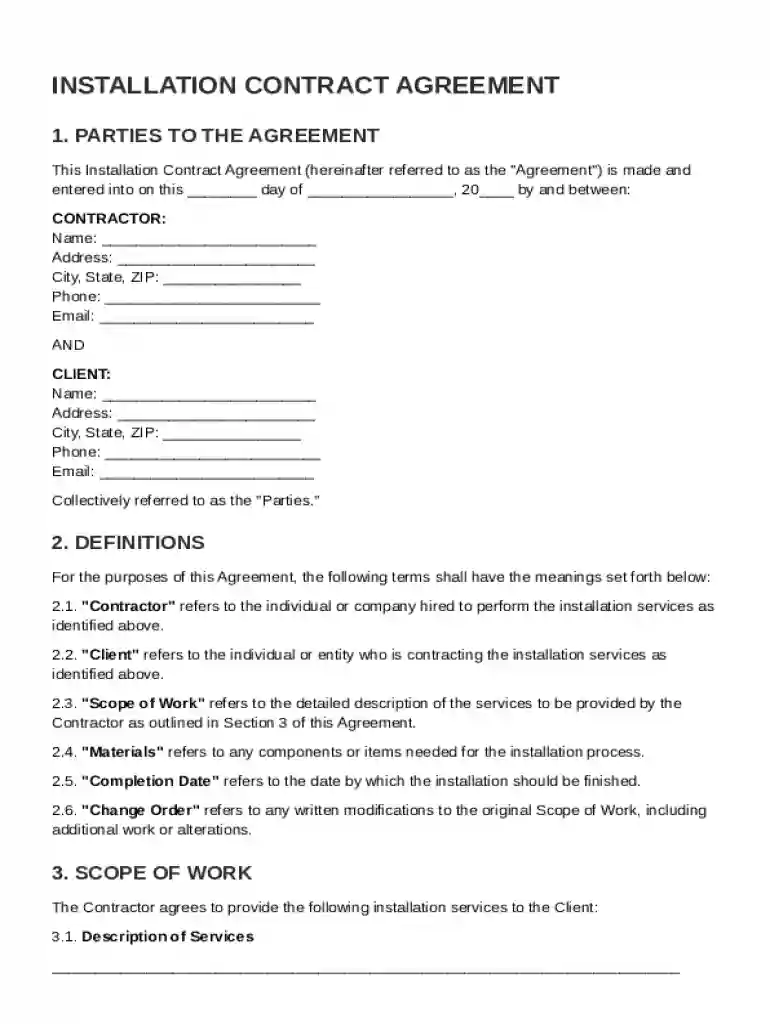
An Installation Contract Template serves as a comprehensive framework that outlines the terms and conditions between a contractor and a client regarding specific installation services. This legal document delineates responsibilities, expectations, and obligations of both parties, covering all essential elements such as scope of work, timelines, and financial arrangements. It functions as a vital point of reference throughout the project duration, ensuring clarity and mutual understanding, thereby minimizing potential disputes or misunderstandings.
Key Components Defined
- Scope of Work: Clearly outlines the tasks and deliverables expected from the contractor.
- Payment Terms: Details about the cost of services, payment schedule, and accepted payment methods.
- Timeline and Deadlines: Each party's timeline expectations for the start and completion of the installation work.
- Warranties and Guarantees: Specifies any warranties provided by the contractor regarding workmanship and materials.
The Installation Contract Template is engineered to protect both parties' interests by providing a standardized agreement that can be adapted as needed for specific installation services.
How to Use the Installation Contract Template
Steps for Efficient Use
- Review the Template: Ensure it matches the specific requirements and nature of the installation service.
- Customize Details: Modify sections to fit the particular agreement, including names, dates, tasks, and needs.
- Consult with Legal Counsel: Verify legal compliance and adequacy with an attorney, particularly concerning local laws.
- Joint Agreement: Both parties should thoroughly review the completed form to confirm all terms are agreeable.
- Execution: Officially sign the document, ensuring that copies are distributed to both the contractor and client.
Effective use of the template involves careful customization to mirror the actual project scope, ensuring every relevant detail is captured accurately for future referencing.
Steps to Complete the Installation Contract Template
Structured Completion Guide
- Gather Information: Collect all necessary details from both parties such as names, contact information, project location, and scope.
- Fill in Contract Details: Input involved parties' information, specific services to be performed, and other custom agreements.
- Define Payment Structure: Clearly articulate pricing terms, schedule of payments, and any deposits or retainers required.
- Set Timelines: Establish clear start and end dates, along with any important milestones or deadlines.
- Include Legal Clauses: Integrate relevant limitations, liability clauses, and dispute resolution methods for comprehensive protection.
- Final Review and Signatures: Conduct a thorough review and ensure that all parties agree to the terms before adding signatures.
Following these meticulous steps will help ensure that the contract is precise, comprehensive, and enforceable.
Key Elements of the Installation Contract Template
Critical Sections Explained
- Parties Involved: Defines all parties in the contract, establishing who the contractor and client are.
- Materials and Equipment: Details which party is responsible for supplying necessary materials and equipment for the job.
- Permits and Regulations: Arrangements concerning who will secure necessary permits and adhere to local regulations.
- Change Orders: Provision for modifying the original work scope agreement and how such changes will be negotiated and documented.
- Liability and Insurance: Outlines the insurance requirements for both parties covering property and personal liabilities.
These elements are essential for delineating responsibilities and mitigating risk in contractual agreements related to installation services.
Legal Use of the Installation Contract Template
This contract template must align with legal standards to be enforceable in a court of law. In the United States, it's imperative that these agreements comply with legal norms such as the Statute of Frauds, which requires certain contracts to be in writing.
Key Legal Considerations
- Compliance with Local Laws: Ensure the agreement reflects applicable state-specific laws and regulations.
- Clarity and Ambiguity: Use precise language to avoid vagueness that could render parts of the contract unenforceable.
- Capacity: Both parties should have the legal capacity to enter into the contract, meaning they are of sound mind and legal age.
Adhering to these legal principles safeguards the contract from potential invalidation or enforcement issues.
Important Terms Related to Installation Contracts
Glossary of Common Terms
- Indemnity Clause: A stipulation where one party agrees to compensate the other for any harms or losses.
- Force Majeure: A clause that frees parties from liability when an unforeseeable event prevents meeting contract obligations.
- Liquidated Damages: Pre-set damages agreed upon in the contract, payable if one party defaults.
Understanding these terms contributes to a comprehensive comprehension of the contract and ensures effective communication between parties.
Examples of Using the Installation Contract Template
Practical Scenarios
- Residential Installation: A homeowner contracts with a service provider to install a state-of-the-art HVAC system. The template outlines responsibilities, equipment supply, and eventual maintenance terms.
- Commercial Project: A retail franchise uses the template to onboard a contractor for installing a nationwide point-of-sale system, detailing work phases, expected outcomes, and specific customization needs.
These examples illustrate the versatility of the template in handling diverse installation tasks across various industries.

Who Typically Uses the Installation Contract Template
Common User Groups
- Contractors and Subcontractors: Utilize this template to formalize terms associated with service delivery.
- Project Managers: Apply the contract for managing vendor relationships in service installments.
- Clients: Home and business owners engaging service providers to perform specific installation tasks.
These user groups recognize the value of establishing clear contractual terms to expedite project execution and safeguard interests.