
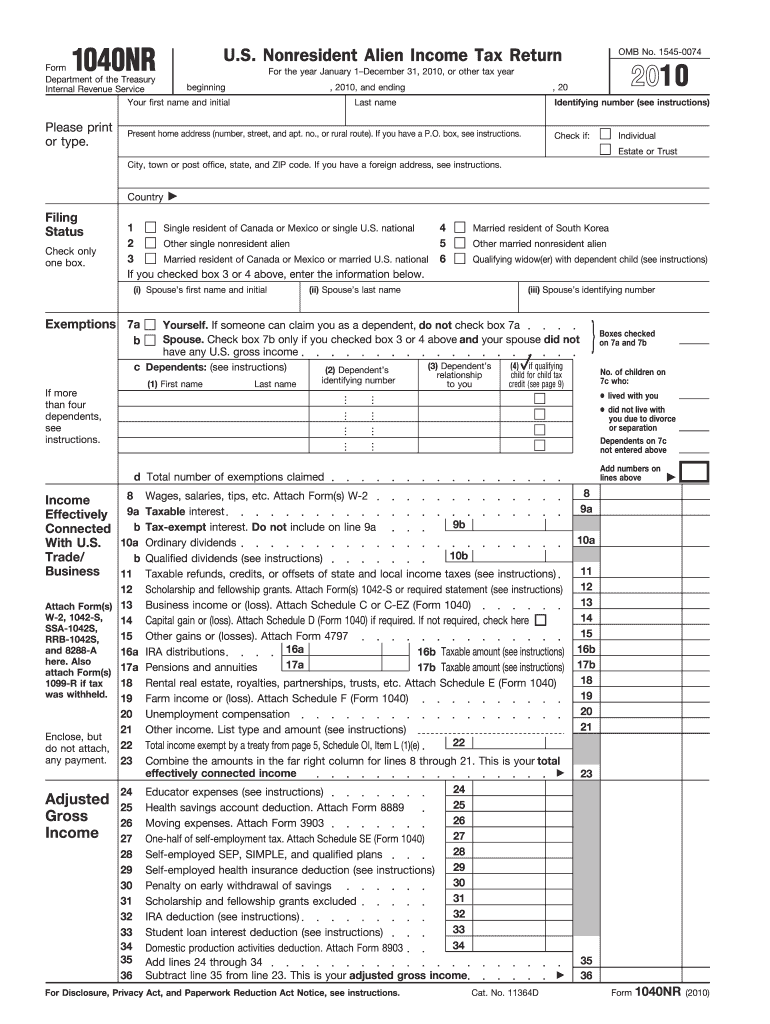







Definition & Meaning of the IRS 1040NR-EZ 2010 Form
The IRS 1040NR-EZ 2010 Form is a simplified version of the U.S. Nonresident Alien Income Tax Return. This form is specifically designed for nonresident aliens who have income from U.S. sources and need to report this income to the IRS. Key features include sections for personal information, income reporting, tax calculations, and declaration statements. This simplified form is ideal for individuals who meet specific eligibility criteria, allowing for a streamlined and less complex tax filing process.
Eligibility Criteria for the 1040NR-EZ Form
To qualify for using the 1040NR-EZ form, the taxpayer must meet certain conditions:
- Had no dependents and were single
- Did not claim any tax credits
- Had specific sources of U.S. income, such as wages or salaries
- Did not have any income exclusions from treaties These conditions help ensure the form remains straightforward and avoids the complexities of more comprehensive tax situations.


How to Obtain the IRS 1040NR-EZ 2010 Form
Obtaining the IRS 1040NR-EZ 2010 form involves several straightforward approaches, ensuring accessibility:
- Online Resources: The IRS website provides downloadable PDF versions of the form and accompanying instructions, which can be printed and filled out manually.
- Local IRS Offices: Physical copies may be available at IRS branches for those who prefer in-person collection.
- Request by Mail: Taxpayers can order forms via mail through the IRS’s form request services, offering convenience for those without reliable internet access.
Steps to Complete the IRS 1040NR-EZ 2010 Form
Completing the 1040NR-EZ form requires attention to detail and accurate information:
- Personal Information: Start by filling in your name, address, and identifying numbers.
- Report Income: Enter your income from wages, salaries, tips, and any other earnings specific to U.S. sources.
- Tax Computation: Use the tax tables provided to calculate your tax, based on your reported income and filing status.
- Sign and Date: Ensure you sign and date the form to validate the submission.
- Review and Attach Documents: Double-check for any errors, attach necessary documents, and prepare for submission.
Key Elements of the IRS 1040NR-EZ 2010 Form
The form comprises several essential sections tailored for accuracy and compliance:
- Identification Section: Ensures the precise identification of the filer.
- Income Section: Specific lines dedicated to outline different types of earned and passive income.
- Tax Calculation: Detailed instructions for computing taxation based on provided tax tables.
- Signature Block: A critical element validating the authenticity and correctness of the information submitted.
Who Typically Uses the IRS 1040NR-EZ 2010 Form?
The 1040NR-EZ form is primarily used by:
- Foreign students and scholars with U.S. taxable income
- Exchange visitors engaging in cultural programs who need simplified filing
- Short-term contract employees in the U.S. with straightforward income scenarios The form’s simplicity is advantageous for individuals with uncomplicated tax situations, directly addressing their basic filing requirements.

Important Terms Related to the IRS 1040NR-EZ 2010 Form
Understanding important terms is crucial for proper form completion:
- Nonresident Alien: A taxpayer who is not a U.S. citizen or resident but resides in the U.S. under specific visas.
- Tax Treaty Benefits: Agreements between the U.S. and certain countries allowing tax exemptions or reductions.
- Effectively Connected Income: Income associated directly with conducting business or having employment in the U.S.
Legal Use and Compliance
Adhering to legal standards while using the 1040NR-EZ form ensures compliance and mitigates audit risks:
- Accurate Reporting: Ensures all U.S.-sourced income is reported correctly.
- Documentation: Retain copies of filed forms and accompanying documentation for a minimum of three years.
- Consultation: Engage with tax professionals for any uncertainties regarding filing requirements or eligibility, which is essential for maintaining compliance with U.S. tax laws.
Penalties for Non-Compliance
Failing to comply with filing requirements can lead to penalties, including:
- Late Filing Penalties: Assessed if the form is not filed by the deadline without an approved extension.
- Underpayment Penalties: Occur if the taxpayer underestimates tax liabilities, leading to interest on unpaid amounts.
- Fines for Incorrect Information: Submission of incorrect or false data can result in additional fines and potential investigation by the IRS.
These sections provide a comprehensive overview of the IRS 1040NR-EZ 2010 form, offering valuable insights into functionalities, use cases, and compliance requirements to nonresidents filing U.S. taxes.




