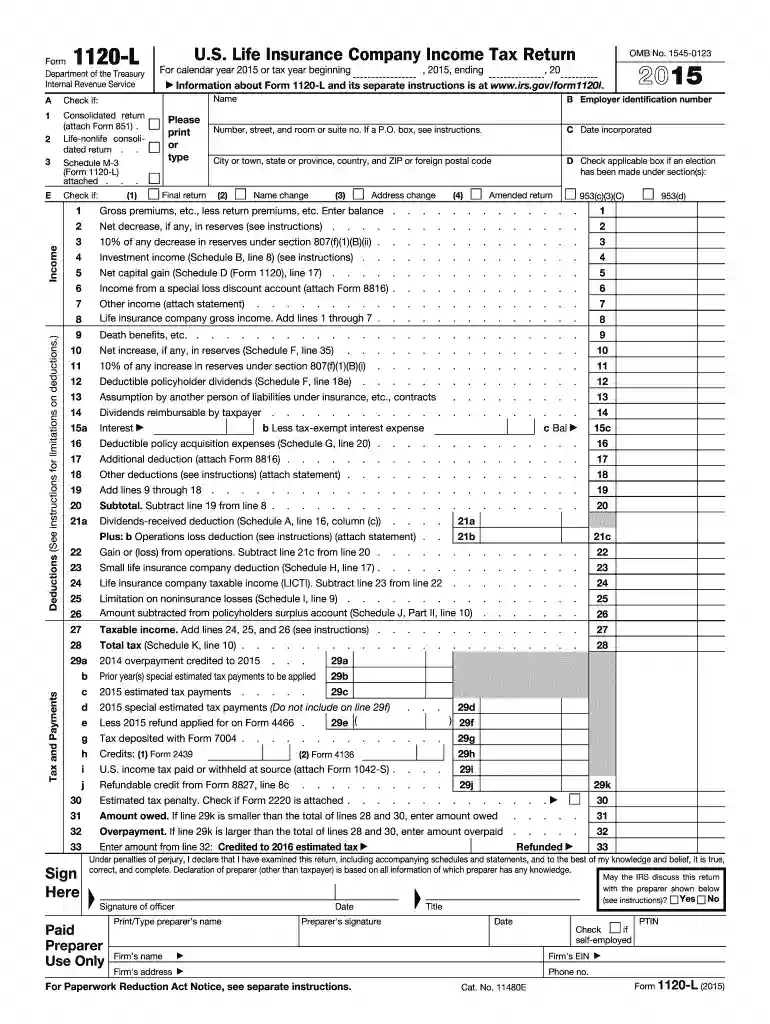
Definition and Meaning of Form 1120-L
Form 1120-L, known as the U.S. Life Insurance Company Income Tax Return, is designed specifically for life insurance companies to report their income, deductions, and tax obligations to the Internal Revenue Service (IRS). This form is essential for ensuring compliance with IRS regulations specific to the insurance sector and accurately reflects the financial particulars associated with the operation of life insurance companies.
Components of Form 1120-L
- Gross Premiums: This section details the total premiums collected by the insurance company during the tax year.
- Investment Income: Here, companies report income derived from investments such as stocks, bonds, and real estate.
- Reserves for Life Policies: Life insurers must declare their reserves, which are critical for estimating tax obligations.
- Policyholder Dividends: Information about dividends paid to policyholders is necessary for accurate tax computation.
Steps to Complete Form 1120-L 2015
Gathering Necessary Financial Data
- Collect Financial Statements: Obtain the year's profit and loss statements, balance sheets, and any relevant financial documentation.
- Compile Expense Documentation: Ensure all expense receipts and records are at hand, especially those related to underwriting and claim settlements.
Detailed Completion Process
- Start with Basic Information: Input the company's name, address, and Employer Identification Number (EIN).
- Input Income Details: Accurately enter figures for income categories, including gross premiums and investment income.
- Calculate Deductions: Deduct qualifying expenses such as reserves and policyholder dividends from gross income.
- Determine Tax Liability: Using available deductions, calculate the company’s total tax liability.
- Review and Sign: Double-check all entries for accuracy before signing and dating the form.
Who Typically Uses Form 1120-L
Primary Users
- Life Insurance Companies: Companies engaged in selling life insurance policies use Form 1120-L to report their tax information and fulfill their tax obligations.
- Specialized Accounting Firms: These firms often handle taxes for life insurance companies, given the complexity of the requisite financial data.
Scenarios and Examples
- Small vs. Large Insurers: Smaller insurers might have simpler financial structures, while larger companies may deal with complex investment portfolios requiring detailed reporting on Form 1120-L.
- Firm with Varied Policy Types: A company offering diverse life insurance products will need to carefully aggregate policyholder details across various lines.
Key Elements of Form 1120-L
Essential Sections to Complete
- Schedule A: Major elements include details on reserves for life policies and annuities.
- Schedule B: Focuses on compensation, dividends, and interest earned.
- Schedule F: Assesses segregated asset accounts and their tax implications.
Nuances in Completion
- Complex Reserve Calculations: Companies must follow IRS-provided methods to compute tax-deductible reserves accurately.
- Investment Portfolio Reports: Detailed investment reports are vital, especially for multi-national operations with global assets.
Filing Deadlines and Important Dates
Submission Timelines
- Annual Deadline: Typically due by March 15th for calendar-year-based tax reporting.
- Extensions: Life insurance companies may apply for a six-month extension, moving the deadline to September 15th. Form 7004 is required for extension requests.
Impact of Missing Deadlines
- Missing the deadline without filing for an extension can lead to significant penalties and interest charges imposed by the IRS.
Penalties for Non-Compliance
Types of Penalties
- Late Filing: A penalty is calculated as a percentage of the unpaid taxes, compounding monthly until rectified.
- Underreporting Income: Additional fines could be imposed for inaccurately reported income or deductions, which can further complicate financial liabilities.
Reduction and Mitigation
- Companies demonstrating reasonable cause for delays or inaccuracies may appeal for reduced penalties through documented explanations and correspondence with the IRS.
Getting Form 1120-L 2015
Access and Acquisition
- Direct Download: Available from the IRS website in PDF format; essential for electronic submissions.
- Professional Accounting Software: Tax preparation software like TurboTax and QuickBooks support import/export features and direct electronic filing of Form 1120-L.
State-Specific Rules for Form 1120-L 2015
Variations Across States
- Divergent Tax Codes: Each state may have unique tax treatment pertaining to income and reserves, necessitating tailored adjustments on Form 1120-L.
- State-specific Deductions and Credits: States with active insurance tax incentives will require careful documentation to claim these properly on the federal form.
Consult State Agencies
- Contact local taxation departments or consult region-specific tax professionals to ensure compliance with state regulations and optimize tax liabilities.