






Definition and Meaning of the Yoga Instructor Contract Template
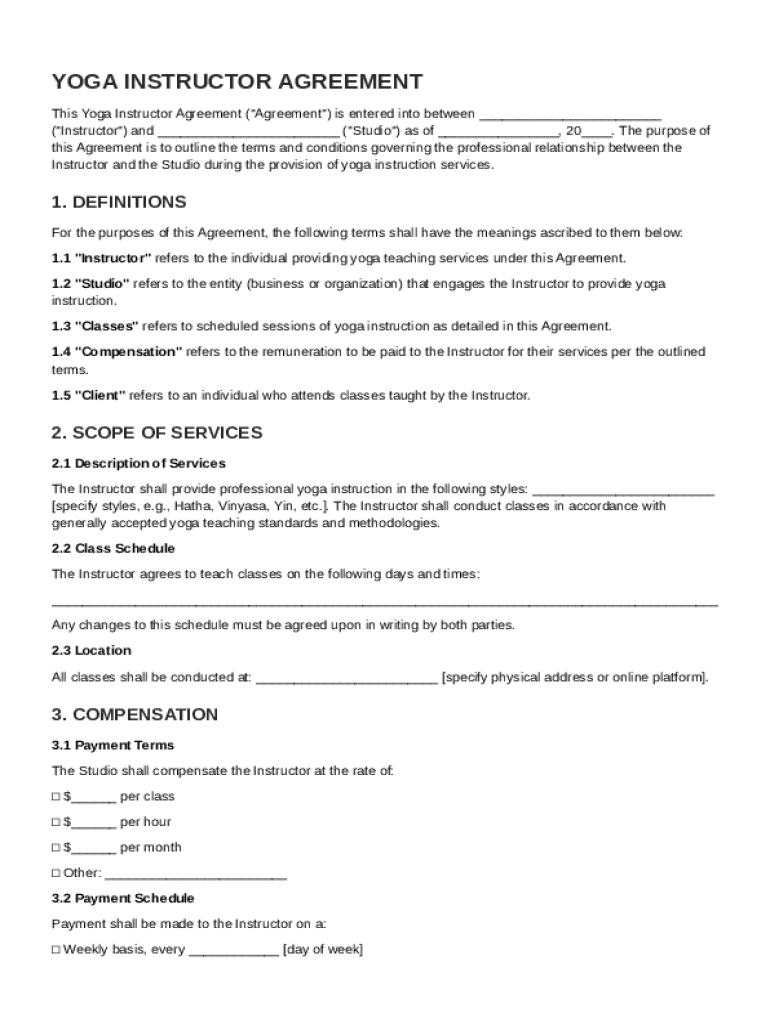
The Yoga Instructor Contract Template serves as a formal agreement that outlines the terms and conditions between a yoga instructor and a yoga studio or gym. This document establishes the scope of services, compensation arrangements, and the responsibilities of both parties involved. The primary purpose is to clarify the professional relationship and ensure that both the instructor and the hiring entity comply with relevant legal standards. By clearly defining roles and responsibilities, the template helps prevent misunderstandings and disputes that could arise from ambiguous verbal agreements. Typically, this contract also addresses issues such as liability, insurance requirements, confidentiality obligations, and the independent contractor status of the instructor.
How to Use the Yoga Instructor Contract Template
Utilizing the Yoga Instructor Contract Template entails customizing the document to fit the specific arrangements between the instructor and the organization. The first step is to input basic information, such as the names and contact details of the parties involved. This is followed by defining the scope of services, detailing the type and frequency of classes the instructor will conduct. Compensation details should be specified, including how payments will be calculated and delivered, whether hourly, per class, or on a monthly retainer basis. It is crucial to outline the responsibilities of both parties, addressing issues like class preparation, marketing duties, or facility maintenance. Lastly, the contract must be signed by both parties to formalize the agreement, preferably in the presence of a witness or notary for added legitimacy.
Key Elements of the Yoga Instructor Contract Template
The template incorporates several critical elements that are essential for a comprehensive agreement:
- Scope of Services: Clear description of the yoga classes, schedule, and any additional responsibilities such as workshops or trainings.
- Compensation: Detailed payment structure including rates, payment schedule, and any bonuses or incentives.
- Liability and Insurance: Requirements for liability insurance to protect against legal claims and stipulations on how liability is allocated between parties.
- Independent Contractor Status: Clarification that the instructor is not an employee but an independent contractor, impacting tax obligations and labor rights.
- Confidentiality and Non-Disclosure: Clauses that protect sensitive information, such as client lists or proprietary teaching methods.
- Termination Conditions: Terms under which the agreement can be terminated by either party, including notice periods and any severance arrangements.
Each element should be tailored to reflect the unique aspects and needs of the working relationship, ensuring that nothing is left ambiguous.
Steps to Complete the Yoga Instructor Contract Template
Completing the Yoga Instructor Contract Template involves several methodical steps to ensure accuracy and compliance:
- Information Gathering: Compile all relevant details about the instructor, studio, and the specifics of the agreed-upon services.
- Template Customization: Adjust the pre-existing clauses in the template to align with the unique terms of your agreement.
- Legal Review: Before finalizing, it is advisable to have a legal professional review the document to ensure compliance with applicable laws.
- Signing and Witnessing: Once both parties agree on the terms, sign the contract in the presence of a witness, securing an extra layer of authenticity.
- Distribution and Filing: Distribute signed copies to all parties and maintain a secure file for future reference.
Legal Use of the Yoga Instructor Contract Template
In the U.S., contracts like the Yoga Instructor Contract Template are governed by state laws, which determine their enforceability. It's imperative that the terms comply with all relevant legislation, including labor laws, tax obligations, and industry-specific regulations. For example, specifying the instructor's status as an independent contractor is crucial to avoid reclassification issues by tax authorities. Moreover, including a governing law clause specifies which state's laws will apply in case of a dispute, adding a layer of protection for both parties. Ensuring the document is legally binding helps both parties understand their rights and obligations, reducing the risk of legal disputes.
State-Specific Rules for the Yoga Instructor Contract Template
The enforceability and specific requirements of the Yoga Instructor Contract Template may vary based on state laws. For instance, states like California have stringent rules governing independent contractor classifications, and particular attention must be paid to ensure compliance with the “ABC test” when drafting contract terms. Other states may have specific mandates regarding non-compete clauses or the handling of confidentiality obligations. It's critical to adjust the template to adhere to these local ordinances, consulting with a legal professional who understands the nuances of state-specific regulations.
Who Typically Uses the Yoga Instructor Contract Template
The primary users of the Yoga Instructor Contract Template include yoga studios, fitness centers, and independent yoga instructors. It is particularly beneficial for small to medium-sized enterprises seeking to formalize their relationship with freelance or part-time instructors. While larger organizations may have personalized legal counsel to draft custom agreements, this template provides a cost-effective solution for those who need to quickly establish a professional contract. It is also valuable for instructors who provide services across multiple venues, allowing them to efficiently manage contractual obligations and maintain consistency in their professional dealings.


Important Terms Related to the Yoga Instructor Contract Template
Several critical terms featured in the Yoga Instructor Contract Template carry significant importance for interpreting the legal and operational aspects of the agreement:
- Independent Contractor: An individual who provides services to a business without being employed by it, impacting tax responsibilities and regulatory compliance.
- Compensation: Payment terms for services rendered, vital for financial clarity and ensuring both parties understand the value exchange.
- Confidentiality: Protects sensitive business information from being disclosed, maintaining competitive advantage and trust.
- Termination Conditions: Defines the circumstances under which the agreement may be prematurely ended, safeguarding both parties' interests.
- Non-Disclosure Agreement (NDA): A clause ensuring private information revealed during the professional relationship is not shared externally.
Understanding these terms is essential for anyone entering into such an agreement, ensuring all parties are fully aware of their rights and responsibilities.