
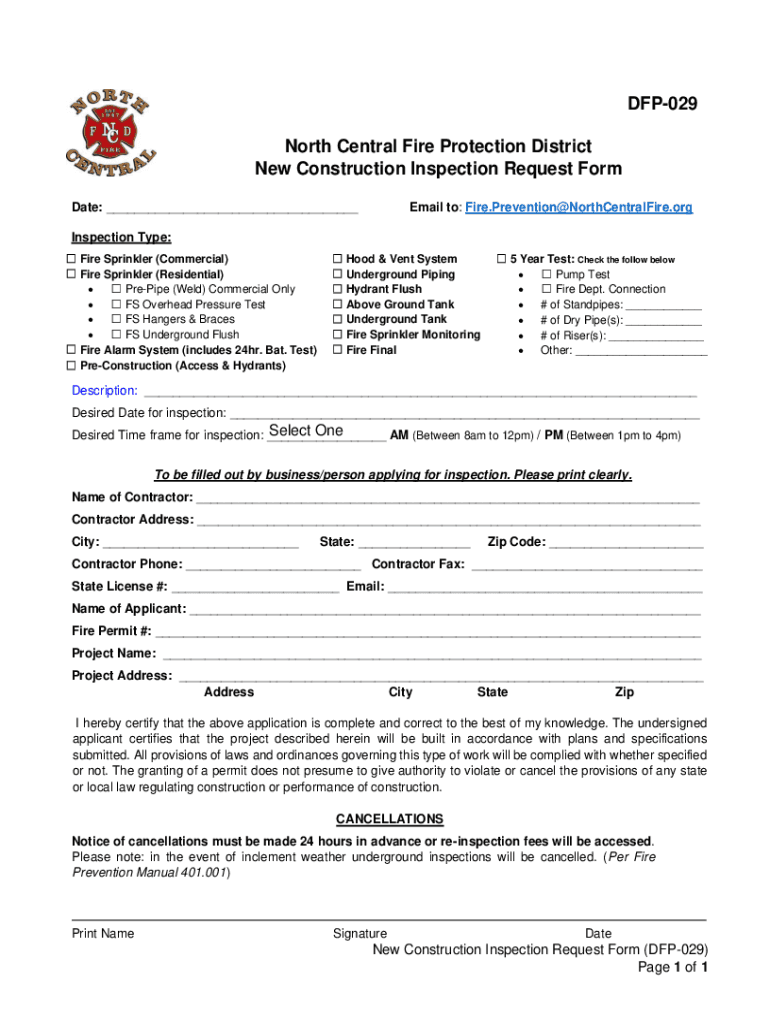







Definition and Purpose of the DFP-029 Form
The DFP-029 New Construction Inspection Request Form serves a crucial role in ensuring that new construction projects comply with safety standards and regulations. Used primarily within the North Central Fire Protection District, this form enables property owners and builders to request inspections at various stages of construction, ensuring that all safety and code requirements are met before a structure is occupied. This form is essential for adherence to legal standards, preventing potential penalties due to non-compliance.
How to Use the DFP-029 Form
To effectively utilize the DFP-029 form, users should begin by obtaining it from the relevant local authority or through the North Central Fire Protection District website. The form must be completed with accurate and detailed information about the construction project, including the location, type, and specific inspection needed. Clear instructions are provided on the form to guide applicants through the process. Once filled out, the form should be submitted via the preferred method — whether online, by mail, or in person — at the appropriate district office.
Steps to Complete the DFP-029 Form
-
Download or Obtain the Form: Access the form through the district's official website or request a paper copy from their office.
-
Fill Out Basic Information: Include details such as the property owner's name, contact information, and property address.
-
Specify Construction Details: Provide information on the type of construction, the stage of completion, and the specific inspections required.
-
Review Submission Requirements: Ensure all sections are complete and verify any supporting documentation that might be needed.
-
Submit the Form: Choose the submission method most convenient for you — online, mail, or in-person submission to the appropriate office.
-
Schedule the Inspection: Once your form is processed, coordinate with the assigned inspector to arrange a suitable time and date for the inspection.
Who Typically Uses the DFP-029 Form
The primary users of the DFP-029 form are builders, contractors, and property owners involved in new construction within the North Central Fire Protection District. These stakeholders are responsible for ensuring that all necessary inspections are conducted throughout the construction process to meet safety codes and regulations. Real estate developers and architects might also engage with this form as part of their roles in overseeing project compliance with legal standards.


Key Elements of the DFP-029 Form
- Contact Information: Names, addresses, and phone numbers for responsible parties.
- Construction Type and Details: Type of building, materials used, and construction stage.
- Inspection Requirements: Specific inspections needed, alongside timelines for each phase.
- Signatures and Declarations: Acknowledgement from the responsible parties accepting terms and policies noted on the form.
Penalties for Non-Compliance
Failing to complete or correctly file the DFP-029 form can result in serious repercussions. Penalties might include fines, project delays, or legal actions leading to the suspension of construction activities. Non-compliance may also result in the invalidation of insurance coverage for the property, highlighting the importance of adherence to procedural requirements.
Submission Methods for the DFP-029 Form
The DFP-029 form can be submitted through multiple channels to accommodate various preferences and situations:
- Online Submission: Completed forms can be uploaded to the district's digital portal, providing a fast and efficient method.
- Mail: Traditional mailing services are available for those who prefer or require paper documentation.
- In-Person: Hand delivery to the district office may be necessary for more complex projects requiring direct consultation with district officials.
Required Documents for Submission
When submitting the DFP-029 form, certain documents are often required to support the application:
- Construction Permits: Current permits for the work being completed.
- Site Plans: Detailed plans showing layout, utilities, and other relevant features.
- Proof of Ownership: Documentation verifying legal ownership of the property.
- Insurance Certificates: Proof of insurance covering the construction site and activities.




