







Definition & Meaning of the Commercial Film Policy 9-21-20
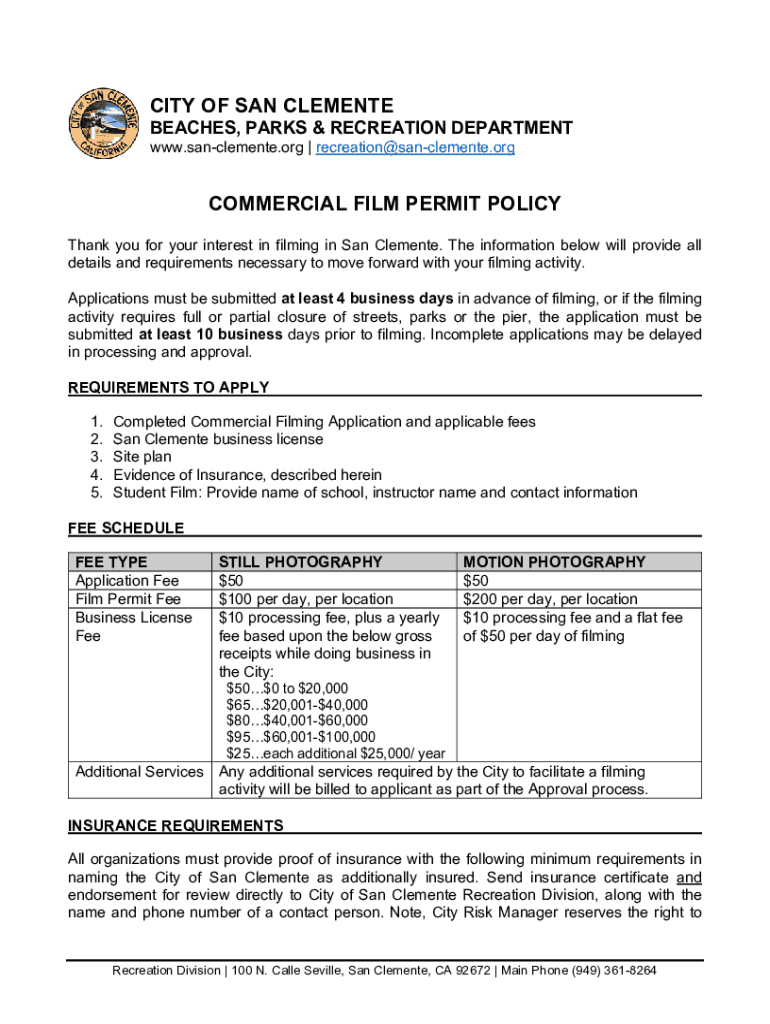
The "Commercial Film Policy 9-21-20 docx" is an official document that regulates commercial filming activities within San Clemente. It outlines the necessary steps to legally conduct film projects, including photography, in the area. This policy ensures filmmakers comply with local regulations, maintain safety, and manage community impact effectively.
Essential Components of the Policy
- Application Requirements: Filmmakers must submit applications in advance, providing detailed information about their projects.
- Fee Schedules: The policy outlines fees applicable for different types of filming activities, whether still or motion photography.
- Insurance Obligations: Proof of insurance is mandatory, detailing the required coverage filmmakers must maintain.
- Indemnification Clauses: Filmmakers need to agree to provisions that protect the locality from potential liabilities.
How to Use the Commercial Film Policy 9-21-20
Navigating the Commercial Film Policy involves understanding how to properly apply its guidelines to your filming activities. The following is a step-by-step guide on utilizing the policy effectively.
Steps to Follow
- Review the Policy Document: Thoroughly read the Commercial Film Policy to familiarize yourself with all requirements.
- Prepare Necessary Documentation: Gather all required paperwork, including site plans and insurance certificates.
- Complete the Application: Fill out the specified forms, ensuring all sections are accurately completed.
- Submit the Application: Depending on the policy instructions, submit your application either online, by mail, or in person.
- Adhere to Timeline: Ensure that you follow any timelines for submission stated in the policy to avoid delays.
Practical Example
For a commercial shoot in downtown San Clemente, a film company must submit the Commercial Film Policy application, including a detailed site plan that outlines filming locations and times to minimize public disruption.
Steps to Complete the Commercial Film Policy 9-21-20
Completing the policy document involves detailed preparation and an understanding of the procedural nuances involved in commercial filming approval.
Detailed Breakdown
-
Preparation:
- Assemble all necessary forms and attachments such as site plans, insurance documents, and business licenses.
- Check fee schedules and prepare payment as required.
-
Execution:
- Carefully fill out all sections ensuring accuracy in project details and contacts.
- Attach all supporting documents, ensuring that proof of insurance meets the stipulated coverage limits.
-
Finalization:
- Review the completed application for completeness and accuracy.
- Submit the application within the specified deadline to avoid processing delays.
Key Elements of the Commercial Film Policy 9-21-20
Understanding the core components of the policy is vital for smooth compliance and application process.
Main Features
- Site Plans: Detailed plans are crucial for fire and safety approvals.
- Insurance Details: Clear guidelines specify minimum coverage, typically including liability coverage.
- Permit Fees: Different fees for various activities are clearly itemized, with possible exemptions for educational purposes.
Example of Application
A film production intending to shoot a short documentary must provide detailed insurance information and site plans to demonstrate adherence to safety regulations.
State-Specific Rules Relating to the Commercial Film Policy 9-21-20
While the policy covers general practices, it's essential to recognize state-specific rules that could influence filming procedures.
Considerations for Filmmakers
- California-specific Regulations: Unique environmental and municipal codes that affect how and where you can film.
- Local Community Interaction: Guidelines for managing interactions with the public during filming.
Potential Variations
Adjustments might be necessary for filmmakers to align with state environmental protection laws, impacting site preparation and clean-up operations.
Examples of Using the Commercial Film Policy 9-21-20
Examining real-world applications of the policy highlights its relevance and utility.
Case Study Examples
- Feature Film Production: A full-length feature requires extensive documentation and permits due to the larger crew and impact.
- Commercial Advertisement: A short commercial requires only certain segments of the policy due to reduced filming time and personnel.
Required Documents for the Commercial Film Policy 9-21-20
To complete and submit the policy application, a number of documents are mandatory.
Documentation Checklist
- Site Plans: Comprehensive layouts of intended filming areas.
- Proof of Insurance: Demonstrating compliance with coverage requirements.
- Business Licenses: Necessary for all entities conducting filming operations.
Submissions Process
All documents must be current and reflect accurate information about the filming project, submitted as part of the application package.
Penalties for Non-Compliance with the Commercial Film Policy 9-21-20
Non-compliance can result in significant repercussions that filmmakers must understand.
Potential Consequences
- Fines: Monetary penalties for failing to adhere to permit requirements.
- Permit Revocation: Withdrawal of permission to film if the policy is breached.
- Legal Action: Potential lawsuits, especially if indemnity clauses are violated.
Preventive Measures
Following the policy diligently and consulting with city authorities can help prevent non-compliance and its associated penalties.
Conclusion on the Commercial Film Policy 9-21-20
While a concluding section is generally discouraged, summarizing the vital aspects above allows you to maintain a structured presentation without breaching the outlined constraints.




