




01. Edit your form online
Type text, add images, blackout confidential details, add comments, highlights and more.

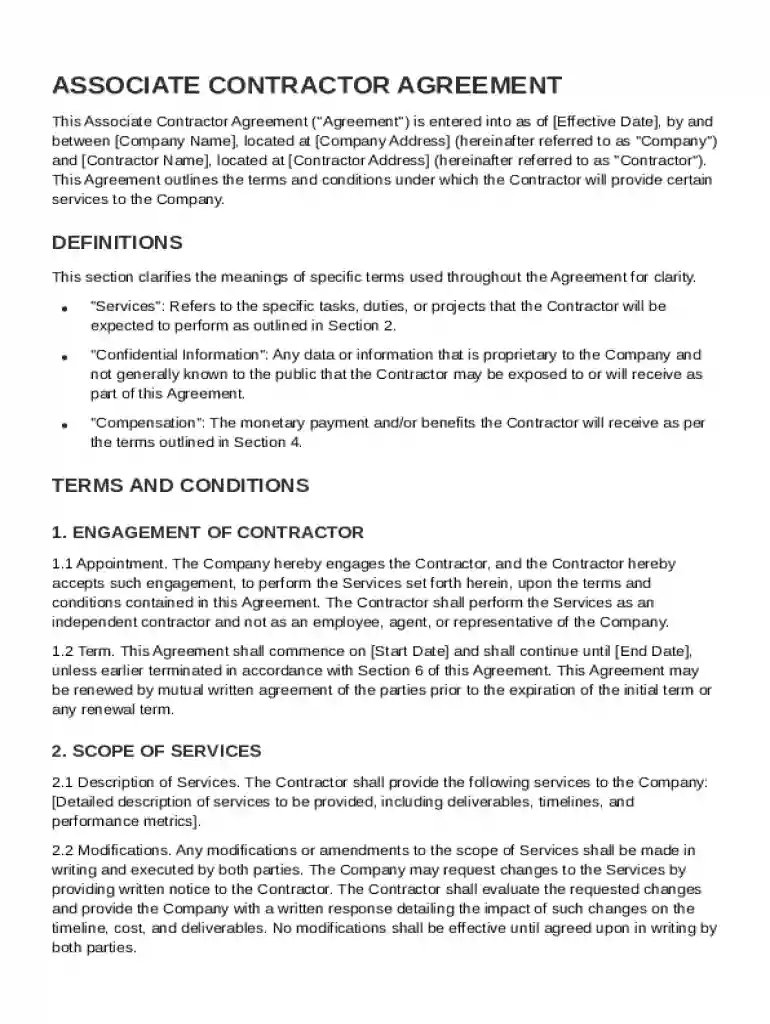
Type text, add images, blackout confidential details, add comments, highlights and more.

Draw your signature, type it, upload its image, or use your mobile device as a signature pad.

Send it via email, link, or fax. You can also download it, export it or print it out.
The Associate Contractor Agreement Template is a legal document that outlines the relationship and expectations between a contractor and the company employing their services. This agreement clarifies the terms under which contracted services will be provided, ensuring both parties are aligned on responsibilities and expectations. It defines essential components such as scope of services, payment arrangements, confidentiality requirements, and more. This legally binding contract helps mitigate misunderstandings and potential disputes by clearly articulating each party's roles and obligations.
The agreement typically includes several crucial elements:
These elements ensure that all necessary legal and operational details are comprehensively covered, providing stability and clarity to the business relationship.
Using the Associate Contractor Agreement Template is straightforward and involves a few critical steps:
Employing the template in this structured manner ensures that the agreement is both comprehensive and legally sound.
When utilizing the Associate Contractor Agreement Template, it is essential to consider several legal aspects:
Compliance with these legal considerations ensures that the agreement upholds both parties' legal rights and responsibilities.
Defining terms within the Associate Contractor Agreement is crucial for clarity and understanding. Common terms include:
By clearly defining these terms, the agreement prevents ambiguities that could lead to disputes or legal challenges down the line.
Businesses often use this type of agreement in various scenarios:
These examples illustrate the agreement's flexibility and utility in establishing working relationships in environments where independent contract work is prevalent.
To effectively complete the Associate Contractor Agreement Template, follow these steps:
Following a systematic approach ensures that the agreement is comprehensive and enforceable.
Various business types may require different considerations when using the Associate Contractor Agreement Template:
Recognizing how business type affects contract specifics can help businesses tailor the template to better suit their operational needs.
Laws governing contractor agreements can differ significantly from state to state in the U.S.:
Adjusting the template to accommodate these state-specific rules is essential to ensure compliance and prevent legal challenges related to jurisdictional discrepancies.
At DocHub, your data security is our priority. We follow HIPAA, SOC2, GDPR, and other standards, so you can work on your documents with confidence.


This Partner Agreement, consisting of this Cover Page and the attached Business Terms. (collectively, this Agreement) is made and entered into by and
The paragraphs below outline the general verbiage pertaining to Associate Contractor Agreements proposers can expect in a resultant expMath award. (a) Work
[ ] Contractor has the right to hire assistants as subcontractors or to use employees to provide the services required by this Agreement. [ ] Neither Contractor


