







Definition and Overview
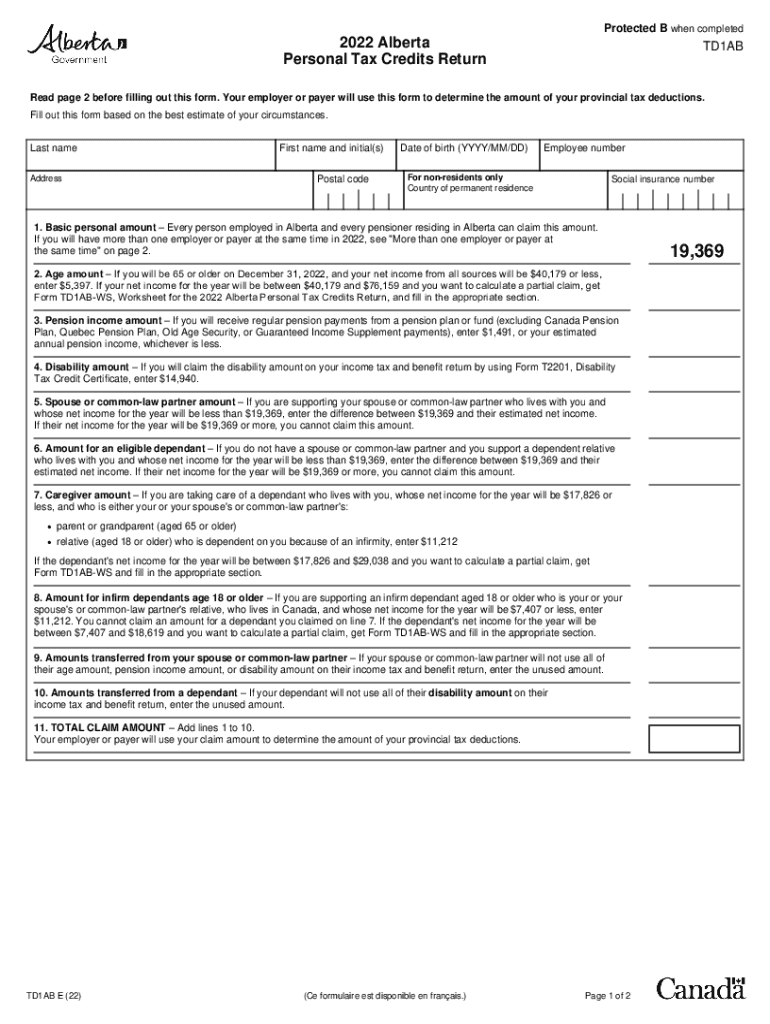
The TD1AB form, officially known as the Alberta Personal Tax Credits Return, is a critical document used by employees and pensioners in Alberta to determine provincial tax deductions. By completing this form, individuals can claim various personal tax credits that affect their taxable income. Key credits include the basic personal amount, age amount, disability amount, and caregiver amount. The purpose of the TD1AB form is to ensure accurate tax withholding by employers or pension administrators based on personal circumstances, thus avoiding over- or under-deduction of taxes throughout the year.
How to Obtain the TD1AB Form
Individuals can access the TD1AB form through several channels to ensure they have the most current version. The form is available on the official Government of Canada's website, where it can be downloaded as a PDF. Employers in Alberta might also provide the form to new hires as part of the onboarding process. Alternatively, individuals can visit local tax offices or contact the Alberta tax authorities to request a printed copy. Ensuring access to the latest version of the TD1AB form is crucial, as tax credits and thresholds may change annually.
Steps to Complete the TD1AB Form
-
Personal Information: Begin by filling out your personal details, including your name, address, and social insurance number.
-
Claiming Credits:
- Basic Personal Amount: Enter the base amount automatically eligible for tax credit, which applies to most individuals.
- Additional Credits: Indicate any additional credits applicable to your situation, such as the age amount or disability credits.
-
Calculating Total: Add up all applicable credits to determine your total claimable amount. This figure will influence your taxable income and the amount withheld by your employer.
-
Sign and Date: After thoroughly reviewing the completed form to ensure all information is correct, sign and date it to confirm the details provided.
Importance of the TD1AB Form
Filling out the TD1AB form correctly ensures the right amount of taxes is withheld from your income, reducing the likelihood of significant tax payments or refunds during tax season. The form also allows personalization of tax credits based on individual circumstances, making tax obligations fair and reflective of personal situations. Accurate tax deduction helps maintain cash flow and financial stability throughout the year, minimizing the risk of underpayment penalties or interest charged by the Canada Revenue Agency (CRA).
Who Typically Uses the TD1AB Form
This form is essential for employees and pensioners residing in Alberta who have tax deducted from their income. It is also crucial for individuals starting new jobs or those experiencing significant life changes, like marriage or a new qualifying dependent, that could alter their tax credit status. Employers are responsible for providing this form to employees, making it a common document to complete upon starting employment or when personal tax situations change.


Key Elements of the TD1AB Form
- Personal Information Section: Captures essential identifying details.
- Credit Calculation Worksheet: Guides users in computing their eligible credits based on personal circumstances.
- Signature Line: Certifies that the information provided is correct and complete.
- Instruction Section: Offers guidance on how to fill out the form, including examples and explanations for various credit claims.
Legal Use of the TD1AB Form
The TD1AB form must be completed accurately to comply with tax regulations set forth by the CRA. Legal compliance ensures both employees and employers fulfill their tax obligations. Misrepresenting information on the form can lead to penalties and increased scrutiny from tax authorities. Therefore, it is important to provide truthful and current information to avoid legal issues and potential fines.
Examples of Using the TD1AB Form
Consider an example of a married individual with two children in Alberta. By completing the TD1AB form, they can claim the basic personal amount, spouse or common-law partner amount if applicable, and the caregiver amount for any eligible dependents. This comprehensive claiming process reduces taxable income and ensures that the correct amount of tax is withheld from each paycheck. Financial planners and tax advisors often use examples like this to demonstrate the impact of personal tax credit claims on effective tax rates and annual tax liability.
Filing Deadlines and Important Dates
Completing the TD1AB form is typically required whenever an individual begins new employment, with the form submitted within a few weeks of employment commencement. It's necessary to update and resubmit the form any time there are changes in personal or financial circumstances that could affect tax credit eligibility. Annual review by the end of the calendar year or immediately following any significant life events ensures ongoing accuracy in tax filing.
Software Compatibility and Tools
While the TD1AB form can be completed manually, many taxpayers prefer utilizing tax software like TurboTax or QuickBooks for easier form management. These programs can guide users through the completion process, ensuring accuracy and compliance with CRA regulations. Compatible software often features built-in calculators to aid in determining credits, further simplifying the preparation of tax documents and ensuring all required fields are completed correctly.
Variations and Related Forms
The TD1AB form is specific to Alberta, but similar provincial and federal forms exist for other regions. The federal equivalent, the TD1 form, determines federal level tax deductions and is also required for a complete tax picture. Another version, the TD1ON form, serves Ontario residents. Taxpayers should ensure they have all necessary provincial and federal forms filled out to capture total credit eligibility and maintain compliance with Canadian tax laws.




