




Definition & Meaning
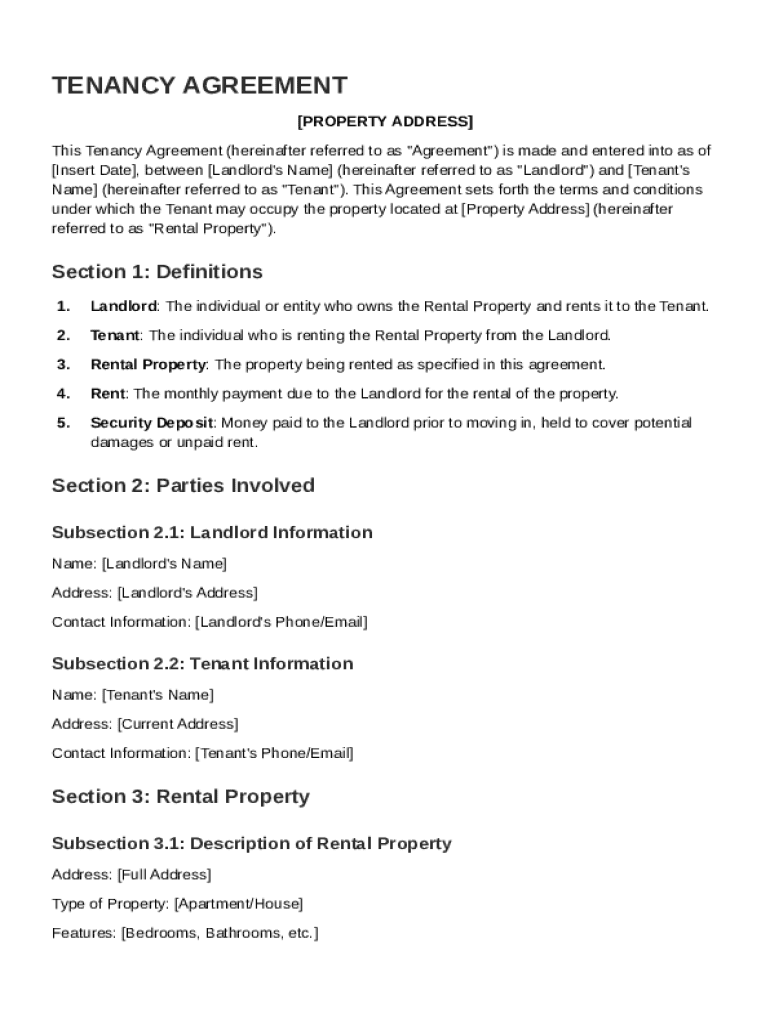
A Tenancy Contract Template outlines the legally binding agreement between a landlord and tenant regarding the rental of residential or commercial property. This document serves as a foundation for mutual understandings, detailing the rules and obligations that both parties must adhere to during the lease term. The template standardizes the essentials of a lease agreement, ensuring comprehensive coverage of crucial aspects such as the duration of tenancy, rent amount, security deposit guidelines, maintenance responsibilities, and terms under which the agreement can be terminated.
Key Elements
- Parties Involved: Identifies the landlord and tenant, their contact information, and any additional parties, like co-signers or property managers.
- Property Details: Describes the rental property, including its address and any included amenities or limitations.
- Lease Term: Specifies the start and end dates of the lease, along with renewal options.
- Rent Payment Terms: Outlines the monthly rent amount, due dates, and acceptable payment methods.
- Security Deposit: Details the amount, conditions for its return, and scenarios that might warrant deductions.
How to Use the Tenancy Contract Template
Utilizing the Tenancy Contract Template involves a straightforward process of customization to fit specific circumstances. Users should carefully input the relevant details and review all clauses to ensure they reflect the individual requirements and local legal standards.
- Customize Document Fields: Input the specific names, addresses, and terms applicable to the tenancy.
- Review Standard Clauses: Ensure the predefined clauses match the agreed terms.
- Add Additional Conditions: Include any extra stipulations, such as pet allowances or smoking policies, that may not be pre-set.
- Confirm Legal Compliance: Cross-check with local laws to ensure all terms comply with regional housing regulations.
Practical Example
Consider a rental scenario where a landlord offers a furnished apartment for a fixed term of one year. Using the Tenancy Contract Template, they enter the tenant's details, property specifics, rent amount, and security deposit, along with stipulations on furniture care and usage. This ensures both parties understand their obligations and rights concerning the furniture, providing clarity and preventing disputes.
Key Elements of the Tenancy Contract Template
A well-crafted Tenancy Contract Template is composed of several essential components that ensure a comprehensive agreement between the landlord and tenant. Each element plays a vital role in defining the terms of tenancy, safeguarding both parties' interests.
Major Sections
- Lease Duration and Renewal: Clearly establishes the beginning and end of the tenancy period, including conditions for renewal or extension.
- Responsibilities for Utilities and Maintenance: Assigns responsibility for paying utilities and maintaining the premises, outlining the extent of each party's duties.
- Termination Clauses: Describes scenarios that could lead to early termination, along with procedures for notifying and handling breaches.
Detailed Breakdown
- Miscellaneous Provisions: Covers varied items, such as subletting rights, parking access, or guest policies.
- Policies on Pets and Smoking: Specifies allowances, restrictions, or additional costs related to keeping pets or smoking on the premises.
- Legal Framework: Aligns with federal and state laws, ensuring enforceability and compliance with landlord-tenant regulations.
Steps to Complete the Tenancy Contract Template
Completing a Tenancy Contract Template involves precise input of information followed by a thorough review to ensure accuracy and compliance.
- Gather Required Information: Collect all pertinent details about the property, tenant, and lease terms.
- Input Details: Enter data into the respective sections of the template, ensuring accuracy.
- Review Terms and Conditions: Verify that the lease terms are accurately reflected and legally compliant.
- Signatures and Approvals: Obtain signatures from all parties involved to finalize the contract.
Practical Scenarios
A landlord in California prepares a tenancy contract for an apartment rental. They meticulously fill out the template with the tenant's name, property location, and terms specific to California state law, such as rent control measures and additional disclosures. Once signed, the contract becomes a legally binding document.
Legal Use of the Tenancy Contract Template
The legal effectiveness of the Tenancy Contract Template is contingent upon its adherence to applicable laws, providing protection and clarity to both landlord and tenant.
Compliance with Regulations
- Federal and State Laws: Ensure the template complies with the relevant housing codes and tenant protection laws in your jurisdiction.
- Local Ordinances: Adapt the template to reflect any local housing rules or rent conditions unique to the property's location.
State-Specific Rules for the Tenancy Contract Template
Rental agreements often feature nuances dictated by state-specific laws. The Tenancy Contract Template must adapt to these variations to remain legally binding and relevant.
Variation in Lease Provisions
- Rent Control Policies: Certain states or cities have rent control measures that limit increases in rent.
- Security Deposit Regulations: States like New York and California have distinct rules on how much can be charged and how deposits must be handled.
- Eviction Procedures: Variability in terms for lawful eviction, notice periods, and tenant rights demands precise adherence to state-specific practices.
Who Typically Uses the Tenancy Contract Template
A broad spectrum of individuals and entities benefit from using a Tenancy Contract Template to standardize lease agreements and ensure legal protection.


Primary Users
- Residential and Commercial Landlords: Simplify the process of crafting detailed lease agreements aligned with tenant expectations and legal standards.
- Property Management Companies: Utilize the template to handle the documentation needs across multiple properties efficiently.
- Real Estate Agents: Prepare lease agreements as part of their service offerings to clients in rental markets.
Important Terms Related to the Tenancy Contract Template
Understanding key terminology associated with the Tenancy Contract Template enhances clarity and helps avoid potential misunderstandings between landlords and tenants.
Glossary of Terms
- Lease Agreement: The formal document binding landlord and tenant to specific rental terms.
- Guarantor: An entity promising to fulfill the tenant's financial obligations if the tenant defaults.
- Breach of Contract: Occurs when either party fails to comply with the stipulations outlined, potentially leading to termination or legal proceedings.