






Definition & Meaning
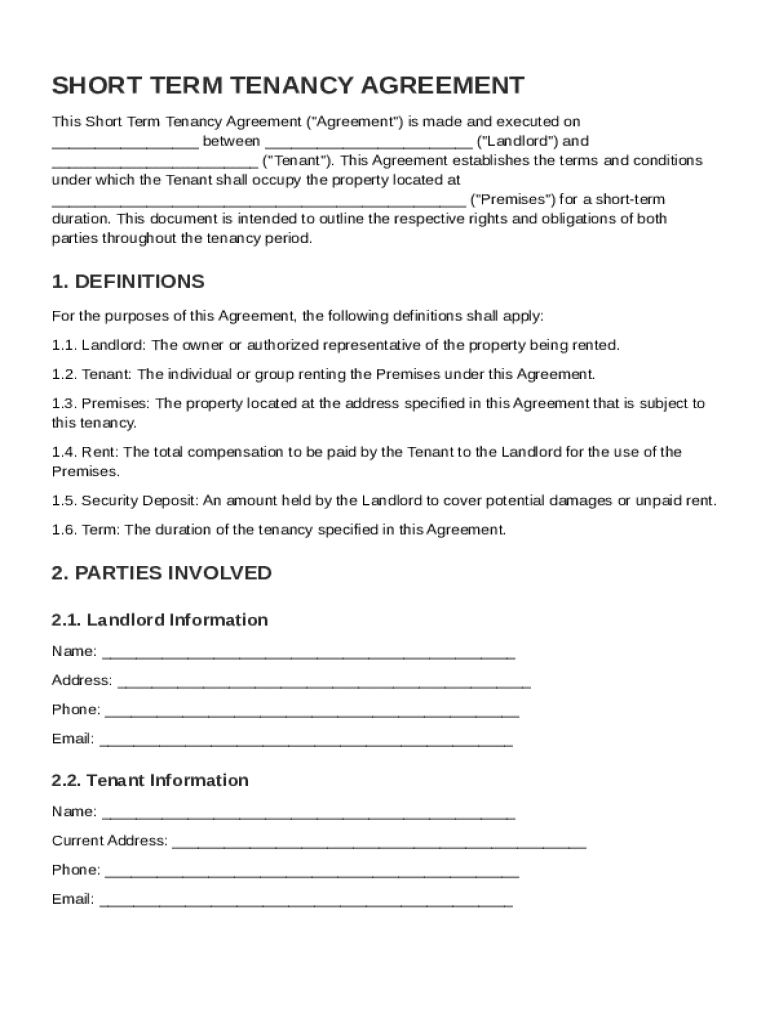
A Short Term Tenancy Agreement Template serves as a structured framework for landlords and tenants to formalize a temporary rental arrangement. This document outlines essential terms and conditions, including the lease duration, rent amount, and property duties, ensuring both parties are aware of their rights and obligations. By offering a standardized format, the template aids in mitigating potential disputes by clearly defining expectations.
Key Components Explained
- Lease Duration: Specifies the start and end dates of the rental period, typically ranging from one month to a year.
- Rent Payment Details: Provides clarity on the monthly rent amount, due dates, and acceptable payment methods.
- Security Deposits: Covers the amount required, conditions for refund, and any deductions for damages or unpaid rent.
Key Elements of the Short Term Tenancy Agreement Template
A comprehensive Short Term Tenancy Agreement Template includes various elements crucial for the smooth execution of the rental contract. These elements ensure that the agreement is legally binding and clearly communicates the expected conduct of both parties during the tenancy.
Detailed Breakdown of Elements
- Parties Involved: Identifies the landlord and tenant, alongside their contact information.
- Property Details: Describes the rental property, including address and any unique features or furnishings.
- Permitted Use: Defines acceptable uses of the property, such as residential purposes, and outlines restrictions like subletting or business operations.
- Maintenance Responsibilities: Splits upkeep tasks between landlord and tenant, detailing who handles repairs and property maintenance.
- Termination Clauses: Explains conditions under which the agreement can be ended early by either party.
How to Use the Short Term Tenancy Agreement Template
Utilizing a Short Term Tenancy Agreement Template effectively involves understanding its structure and knowing how to customize it to fit specific circumstances. This ensures that the agreement is aligned with both parties' expectations and local legal requirements.
Steps for Effective Usage
- Review the Template: Carefully read through the entire document to understand all sections and requirements.
- Customize Key Sections: Tailor the agreement to include specific details such as rent amount, lease duration, and property details.
- Include Additional Clauses: Add any extra provisions necessary for the unique context of the rental arrangement, such as pet policies or parking rules.
- Review with Both Parties: Have both landlord and tenant verify all details to ensure mutual understanding and agreement.
- Sign and Store Safely: Once finalized, both parties should sign the document, with each keeping a copy for their records.
Legal Use of the Short Term Tenancy Agreement Template
Ensuring the Short Term Tenancy Agreement Template is legally valid and enforceable involves compliance with applicable state and federal laws. The template should be used in a way that upholds both parties' legal rights and responsibilities.
Compliance Considerations
- State Laws: Verify that the agreement complies with local rental laws, including tenant rights and available recourse in case of disputes.
- Security Deposit Regulations: Adhere to state-specific rules regarding maximum deposit amounts, handling, and refund procedures.
- Disclosure Requirements: Ensure necessary disclosures, such as lead paint notices, are included where applicable.
Who Typically Uses the Short Term Tenancy Agreement Template
The Short Term Tenancy Agreement Template is a versatile tool used by different groups for temporary rental activities. Each group leverages the template according to their specific needs and situations.


Common Users
- Landlords: Utilize the template to streamline lease creation, ensuring consistent legal documentation for all tenants.
- Tenants: Often request a formalized agreement to secure their rights and responsibilities during the rental period.
- Property Managers: Use the template for efficient management of multiple rental properties and maintaining consistency across contracts.

Steps to Complete the Short Term Tenancy Agreement Template
Completing a Short Term Tenancy Agreement Template requires attention to detail to ensure all pertinent information is accurately captured. This process involves several key steps that both parties should follow.
Sequential Process
- Gather Essential Information: Collect necessary details about the property, landlord, tenant, and lease specifics.
- Fill Out the Template: Enter the collected information into the appropriate fields of the template.
- Verify Details: Double-check all entries for accuracy and completeness.
- Seek Legal Review: If uncertain, consult with a legal professional to review the agreement for legal soundness.
- Finalize and Sign: Have both parties sign the completed agreement and distribute copies for personal records.
Important Terms Related to Short Term Tenancy Agreement Template
Understanding specific terminology within the Short Term Tenancy Agreement Template is essential for both landlords and tenants. This knowledge helps in navigating and interpreting the agreement effectively.
Glossary of Key Terms
- Tenant: The individual or entity renting the property.
- Landlord: The owner or authorized agent renting out the property.
- Lease Agreement: A legal document outlining the terms of the rental.
- Rent: Payment made by the tenant for the use of the property, usually monthly.
- Security Deposit: Money held by the landlord as protection against potential lease breaches or property damage.
State-Specific Rules for the Short Term Tenancy Agreement Template
Rental agreements can vary significantly based on state-specific legislation and regulations. It is crucial for both landlords and tenants to be aware of these differences to ensure legal compliance.
Common State Differences
- Rent Control Laws: Some states have restrictions on how much rent can increase.
- Eviction Procedures: Varying state laws dictate the process and grounds for eviction.
- Tenant Rights: Specific states offer additional protections, such as mandatory notice periods or the right to withhold rent for uncompleted repairs.
By understanding and applying these detailed elements of the Short Term Tenancy Agreement Template, landlords and tenants can establish a clear and enforceable rental agreement tailored to their needs and legal obligations.