




01. Edit your 2002 709 online
Type text, add images, blackout confidential details, add comments, highlights and more.

Type text, add images, blackout confidential details, add comments, highlights and more.

Draw your signature, type it, upload its image, or use your mobile device as a signature pad.

Send 2002 form 709 via email, link, or fax. You can also download it, export it or print it out.
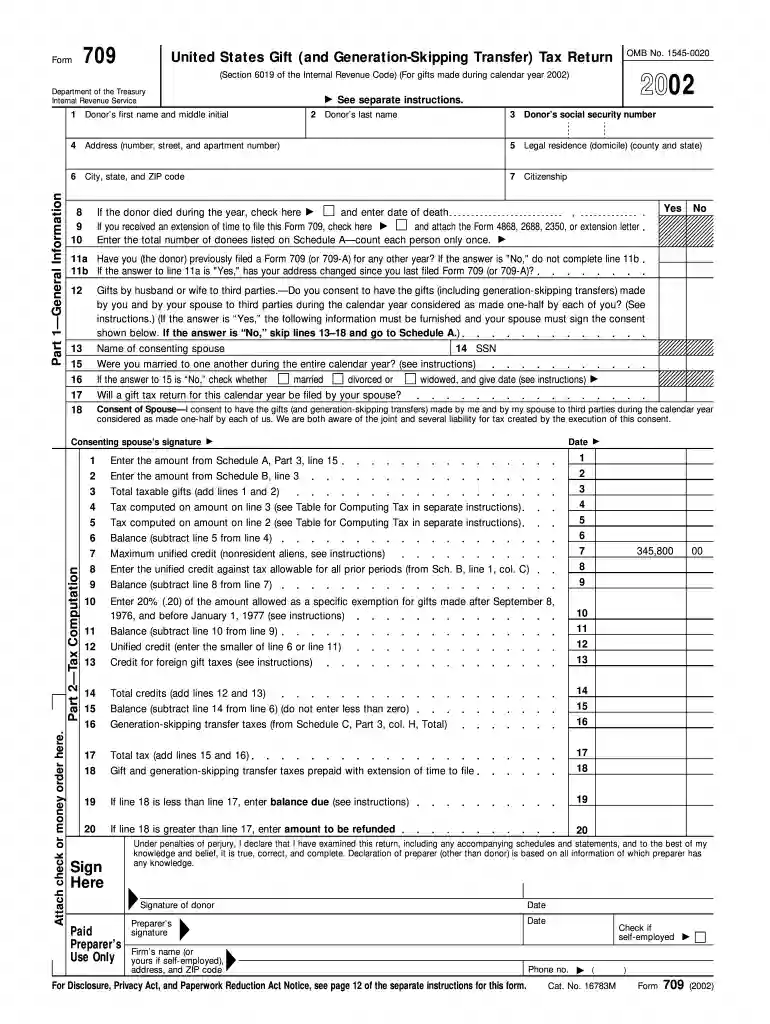
Form 709, also known as the United States Gift (and Generation-Skipping Transfer) Tax Return, is a tax form used to report gifts and calculate applicable gift taxes for the calendar year 2002. It is essential for donors who make significant gifts during the year as it helps in determining tax liabilities associated with these transfers. This form includes sections that gather general information about the donor, calculate taxes, and detail schedules for reporting taxable gifts and generation-skipping transfers. Understanding the components of Form 709 is crucial for accurate tax reporting and compliance.
Completing the 2002 Form 709 involves several steps:
Gather Required Information: Ensure you have all the necessary details about the gifts made, including recipient information and gift values.
Fill Out General Information: Provide your personal information, including name, address, and social security number.
Calculate Taxable Gifts: Use the detailed schedules to report the total value of all gifts. This determines the taxable amount.
Determine Tax Liability: Use the tax computation section to calculate taxes on the reported gifts, considering any applicable exclusions and deductions.
Complete the Signature Section: Ensure the form is signed and dated by the relevant parties before submission.
Following precise steps helps ensure accuracy and minimizes the risk of errors when completing Form 709.
The IRS provides detailed guidelines for completing Form 709. These instructions clarify how to assess the value of gifts and utilize exclusions and credits effectively. The IRS guidelines also specify eligibility criteria for filing, such as the types of gifts that must be reported and how to handle generation-skipping transfers. Adherence to these guidelines is crucial to ensure compliance with tax laws, avoiding complications or penalties.
Understanding key terms associated with Form 709 is vital for accurate completion:
Familiarity with these terms ensures clarity in understanding obligations and allowances under the tax code.
Form 709 is typically used by individuals who make significant gifts that exceed the annual exclusion threshold. This includes wealthy individuals aiming to transfer wealth to family or friends and those engaging in estate planning strategies involving generation-skipping transfers. Understanding who uses this form can aid in determining whether it applies to your situation and planning for any associated tax implications.


For the calendar year 2002, the deadline for filing Form 709 coincided with the federal income tax return filing date, typically April 15 of the following year. If you filed for an extension on your income tax return, the extension would apply to Form 709 as well. Meeting these critical deadlines is essential to avoid penalties and ensure timely tax compliance.
Consider the following scenarios that illustrate the use of Form 709:
These examples demonstrate the practical applications and necessity of Form 709 in various gifting situations.
Failing to file Form 709 on time or inaccurately reporting gifts can result in penalties. The IRS may impose fines and interest on unpaid taxes, creating additional financial burdens. Accurate and timely filing helps mitigate the risk of penalties and ensures compliance with federal tax obligations.
The legal use of Form 709 involves reporting gifts in compliance with tax laws. It enables individuals to transfer wealth within legal boundaries, leveraging exclusions and credits. Understanding legal obligations and appropriate use is critical to avoid potential legal issues and ensure all gifting activities align with federal regulations.
We've got more versions of the 2002 709 form. Select the right 2002 709 version from the list and start editing it straight away!
| Versions | Form popularity | Fillable & printable |
|---|---|---|
| 2025 | 4.3 Satisfied (24 Votes) | |
| 2024 | 4.2 Satisfied (58 Votes) | |
| 2023 | 4.4 Satisfied (50 Votes) | |
| 2022 | 4.9 Satisfied (46 Votes) | |
| 2021 | 4.9 Satisfied (24 Votes) | |
| 2020 | 4.3 Satisfied (180 Votes) | |
| 2019 | 4.3 Satisfied (183 Votes) | |
| 2018 | 4.3 Satisfied (183 Votes) | |
| 2017 | 4.2 Satisfied (54 Votes) | |
| 2016 | 4.4 Satisfied (60 Votes) | |
| 2015 | 4 Satisfied (25 Votes) | |
| 2014 | 4 Satisfied (38 Votes) | |
| 2013 | 4.3 Satisfied (55 Votes) | |
| 2012 | 4.1 Satisfied (59 Votes) | |
| 2011 | 4 Satisfied (41 Votes) |
At DocHub, your data security is our priority. We follow HIPAA, SOC2, GDPR, and other standards, so you can work on your documents with confidence.
Attach check or money order here. Form 709 (2002). For Disclosure, Privacy Act, and Paperwork Reduction Act Notice, see page 12 of theRead more
If you are filing this form solely to elect allocation. See the instructions for Line 5 property, whether tangible or intangible,.Read more


