






Definition & Meaning
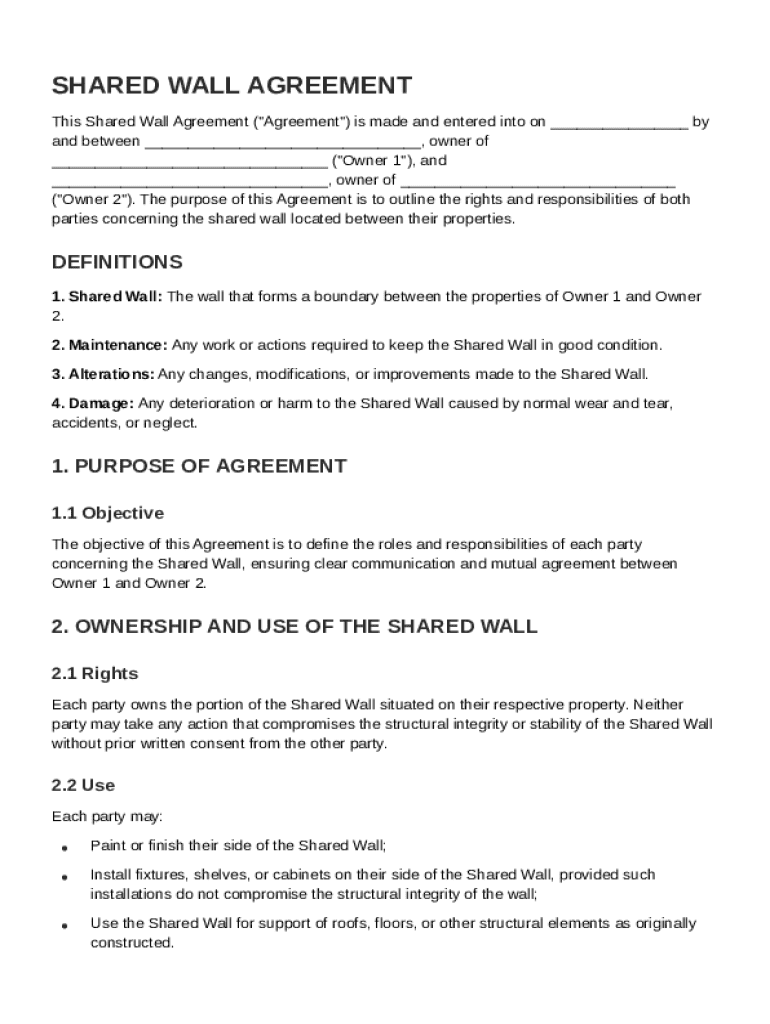
The "Shared Wall Agreement Template" is a critical legal document used by property owners who share a wall dividing their respective properties. This agreement helps outline the responsibilities and rights of each party, ensuring clear expectations are set for maintaining the shared wall, making modifications, and handling liabilities. By establishing a structured framework, property owners can prevent disputes and misunderstandings while adhering to legal standards.
The shared wall, sometimes called a party wall, can be anything from a structural partition in a townhouse to a dividing wall in neighboring commercial properties. This agreement captures legal obligations, allowing property owners to navigate shared concerns regarding such walls seamlessly.
Key Components
- Maintenance Obligations: Specifies each party's duties concerning routine maintenance, indicating who is responsible for repairs, and at what intervals inspections should occur.
- Alteration Approvals: Lays out procedures on how alterations to the shared wall should be proposed, reviewed, and approved.
- Liability Clauses: Details how damages to the wall are to be handled and which party is responsible for financial reparations.
- Dispute Resolution: Provides methods for resolving disagreements, whether through mediation, arbitration, or court proceedings.
How to Use the Shared Wall Agreement Template
Using the Shared Wall Agreement Template is straightforward with a few steps to follow for effective implementation. Begin by reviewing each section of the template to understand the terminology and conditions. This ensures all involved parties agree on the language and stipulations outlined.
Steps to Utilize
- Review Composition: Each section must be read thoroughly. Ensure all parties understand and agree on terms reflected in the maintenance duties, alteration permissions, and liability responsibilities.
- Customization: Modify boilerplate clauses to fit your unique situation, addressing any specific concerns or scenarios your property partnership may encounter.
- Consult Legal Assistance: Before finalization, it's beneficial to have a legal professional review the draft to validate its compliance with local laws and regulations.
- Execution: Once satisfied, all involved parties need to sign the document, making it a legally binding agreement.
Collaboration and Flexibility
Engaging with the other property owner collaboratively will ensure smoother agreement customization. Maintain transparency regarding interests or conditions you wish to alter within the template to foster a trust-based relationship.
Steps to Complete the Shared Wall Agreement Template
Completing the Shared Wall Agreement Template involves a systematic approach, ensuring thoroughness and mutual understanding. Follow the step-by-step guide to ensure completeness.
Step-by-Step Process
- Identify Key Parties: Clearly list the names and addresses of the property owners involved, along with contact information for smooth communication.
- Outline Property Details: Document specific information regarding the shared wall — dimensions, materials, and any existing legal designations.
- Define Maintenance Terms: Analyze and finalize terms regarding regular maintenance responsibilities, specifying frequency and cost-bearing obligations.
- Set Alteration Guidelines: Detail procedures for applying for and receiving approval for modifications, including timelines and documentation required.
- Establish Dispute Mechanisms: Select primary and secondary methods for dispute resolution, aligning with all parties’ preferences.
- Finalize and Review: Present the drafted agreement for final review. All parties should verify completeness before proceeding to sign.
Practical Considerations
- Seasonal Maintenance Adjustments: Consider incorporating seasonal adjustments to maintenance routines for weather conditions.
- Technology Integration: Leverage tools like DocHub for digital signing and real-time collaboration during the agreement drafting phase, enhancing efficiency.
Important Terms Related to Shared Wall Agreement Template
Understanding specific terminology is essential for interpreting this agreement accurately. These terms delineate responsibilities, guide legal action, and define rights under the agreement.
Essential Terms
- Party Wall: The wall shared between two properties, serving structural, privacy, or boundary functions.
- Easement: A legal right to cross or otherwise use another's land for a specified purpose, which in this case could involve access for wall maintenance.
- Indemnification: A clause ensuring one party covers damages or losses incurred by another party as described within the context of the shared wall.
- Encroachment: Refers to any building or expansion into an adjoining property owner’s space.
Legal Jargon Simplified
By familiarizing yourself with these terms, property owners can better navigate and negotiate the clauses within the agreement, reducing potential legal friction.
Key Elements of the Shared Wall Agreement Template
The effectiveness of a Shared Wall Agreement largely depends on its core elements. These elements form the backbone of the agreement's structure and enforceability.
Core Elements
- Identification Details: Comprehensive information about the involved parties and properties.
- Maintenance Protocols: Established routines for upkeep and any split responsibilities.
- Renovation and Alteration Clauses: Precise regulations for proposing and implementing changes.
- Liability Provisions: Specific conditions under which each party assumes liability for damages or structural failures.
Additional Considerations
- Termination Terms: Conditions under which the agreement can be voided or renegotiated.
- Modification Record: Provisions requiring written records of any structural modifications for future reference.
Including comprehensive and clear elements within the template guarantees the legitimacy and adherence to set expectations by both property owners.
Examples of Using the Shared Wall Agreement Template
Real-world use cases illustrate the application of the Shared Wall Agreement Template, offering insight into its practical benefits.
Case Studies
-
Residential Application: Two homeowners sharing an adjoining wall in a townhouse use the agreement to outline painting and maintenance schedules. The template helps prevent neighborly disputes by providing a clear maintenance schedule.
-
Commercial Properties: In a complex with conjoined retail spaces, shop owners outline clear terms for decorative enhancements. Using the template avoids inconvenience and liabilities during peak operational times.
Simulation Scenarios
Engaging in role-play scenarios with your neighbor or fellow property owner can expose potential pitfalls and areas of clarification within the agreement, leading to a more tailored final document.
Legal Use of the Shared Wall Agreement Template
In the U.S., legal compliance is a cornerstone of effective Shared Wall Agreements. Ensuring the agreement adheres to regional laws and frameworks is paramount.
Compliance Factors
- Local Building Codes: Verify your agreement aligns with local building, zoning, and safety codes.
- State Regulations: Some states may have specific statutes that address shared property and wall regulations, requiring custom clauses in your agreement.
- Federal Guidelines: While most laws are state-specific, national regulations, occasionally influence property agreements — consider federal mandates regarding property rights.
Expert Consultation
Legal consultation is indispensable when preparing your Shared Wall Agreement, allowing for tailored clauses and potential legal advice concerning specific regional laws affecting your property.