
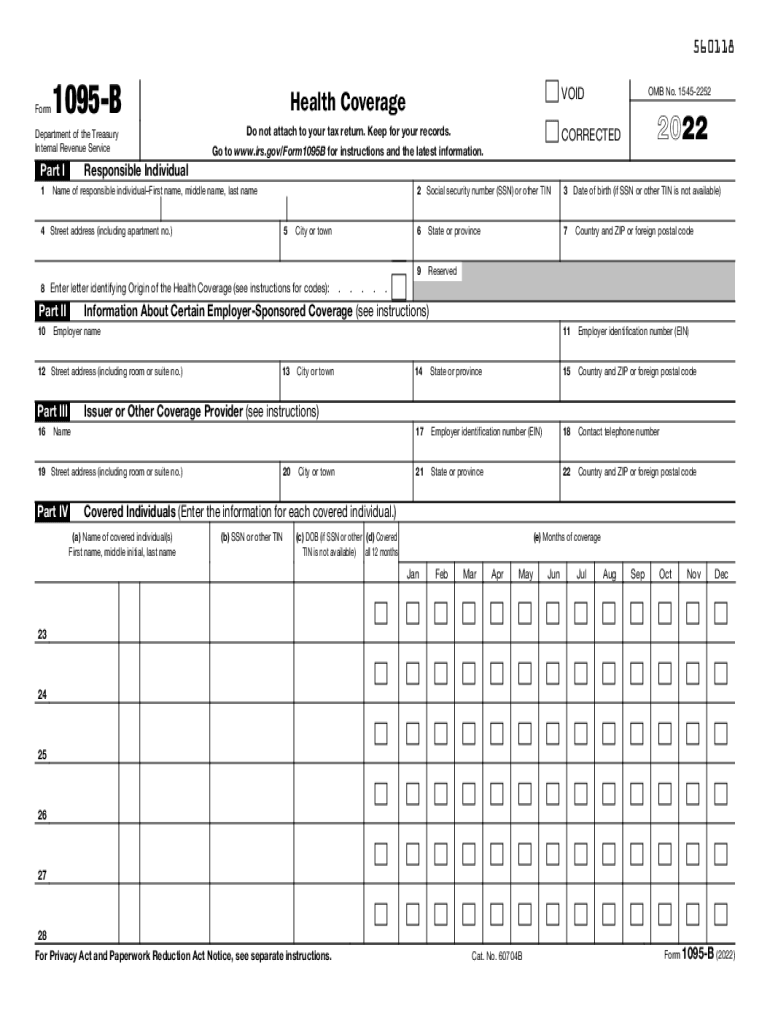







Defining Form 1095-B: Meaning and Purpose
Form 1095-B is an IRS tax document that records the provision of minimum essential health coverage to individuals and their families. This document helps verify that you and your dependents have paid for health insurance. While you do not attach Form 1095-B to your tax return, retaining it for personal records is advisable as it supports claims for certain tax credits and deductions.
Background and Context
- Minimum Essential Coverage: Required under the Affordable Care Act (ACA) to verify compliance with health insurance mandates.
- Record-keeping: Forms should be retained for personal documentation and potential audits.
Components Included
- Covered Individuals: Names and coverage specifics for each person in the household.
- Responsible Party: The individual primarily responsible for ensuring coverage.
Steps to Obtain Form 1095-B
Understanding how to acquire Form 1095-B2020.pdf is crucial for taxpayers. Generally, your health insurance issuer will provide this form, but there are specific steps to follow if you need to request it.
How to Access the Form
- Contact Your Provider: Reach out to your health insurance issuer by phone or email.
- Online Access: Some insurers offer the form through their customer portals.
- Request by Mail: If unavailable digitally, request a mailed copy from your provider.
Alternative Sources
- State Websites: For those with government-issued plans, state health departments might provide access to the form.
- IRS Resources: Review IRS guidance online for additional instructions.
Steps to Complete Form 1095-B
Completing Form 1095-B involves verifying the information provided and ensuring correctness.
Key Sections to Verify
- Part I: Responsible Individual: Ensure the correct taxpayer name and contact information.
- Part II: Employer Sponsored Coverage: Typically used when your employer provides insurance—verify if applicable.
- Part III: Issuer or Other Coverage Provider: Confirm your insurance company's details.
- Part IV: Covered Individuals: Check all family members are listed accurately with correct coverage months.
Who Uses Form 1095-B
The usage of Form 1095-B primarily targets specific groups who must demonstrate health coverage.
Common Users
- Individuals with Employer Coverage: Employees who have coverage through their employers.
- Self-Employed and Unemployed: Those purchasing their own insurance plans.
- Dependents: Families including children or elderly parents under a taxpayer's policy.


Legal Implications of Form 1095-B
While you do not file Form 1095-B with your tax returns, it plays a significant role legally and for audit protections.
Compliance and Verification
- Proof of Coverage: Essential for IRS verification processes.
- Audit Support: Provides evidence of compliance with federal health insurance mandates.
Important IRS Guidelines
The IRS provides specific directives regarding the use and handling of Form 1095-B.
Filing Instructions
- Retention: Keep the form for personal records.
- Contact IRS: Reach out for clarifications about health coverage tax implications.
Filing Deadlines and Important Dates
Understanding deadlines associated with Form 1095-B is crucial to maintain compliance.
Key Dates
- Form Issuance: Insurance providers generally send the form by January 31.
- Tax Filing: The form supports your filing (due usually in April) and should be referenced, though not filed with the IRS.
Examples of Form 1095-B Use Cases
Practical scenarios where Form 1095-B is utilized can clarify its purpose.
Typical Scenarios
- For Tax Returns: Provides a basis for tax credits and deductions related to health coverage.
- Audits: Used as evidence supporting health insurance compliance and minimizing penalties.
Understanding these facets of Form 1095-B ensures taxpayers maintain compliance with federal requirements, accurately document healthcare coverage, and strategically utilize the form's contents during tax preparation and audits.




