







Understanding Form 8889 for Health Savings Accounts (HSAs)
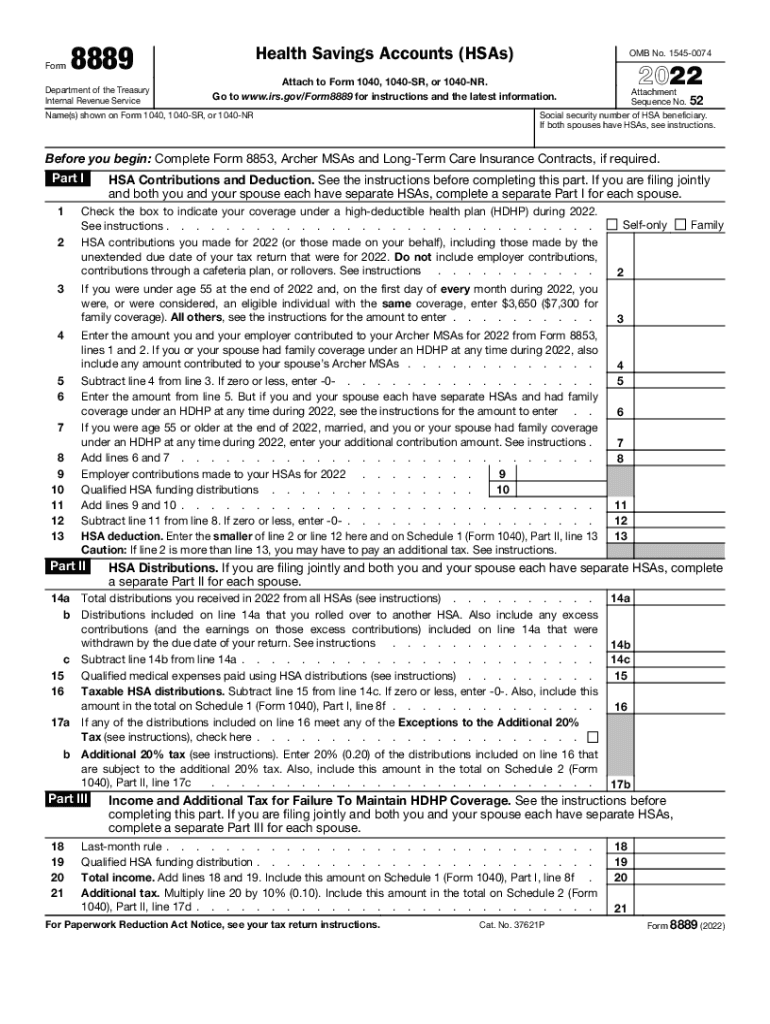
Form 8889 is a vital document for taxpayers in the United States who are beneficiaries of Health Savings Accounts (HSAs). This form is used to report HSA contributions, deductions, distributions, and any additional taxes incurred within the tax year. Taxpayers must file Form 8889 with Form 1040, 1040-SR, or 1040-NR if they have engaged with HSAs. The form ensures compliance with regulations set forth by the Internal Revenue Service (IRS).
How to Complete Form 8889
Filling out Form 8889 requires precise information about your HSA activity throughout the tax year. The form is divided into sections that require you to:
- Report Contributions: This section captures total contributions to your HSA, including those made by your employer, which must be reported on your W-2.
- Calculate Deductions: You will need to calculate any allowable deductions. Apply limits set by the IRS, which vary based on factors such as your type of coverage—self-only or family.
- Detail Distributions: Here, list every distribution from your HSA. Ensure all expenses are qualified medical expenses, as non-qualified expenses are subject to additional taxes.
- Assess Additional Taxes: If necessary, calculate any additional taxes on distributions not used for qualified medical expenses.
Key Elements of Form 8889
Form 8889 consists of several crucial elements that need careful attention:
- Part I: Concerns contributions and any deductions you might claim. It includes limits determined by your type of insurance coverage and age.
- Part II: Focuses on distributions from your HSA. It covers the nature and purpose of the expenses the funds were used for.
- Part III: Applies if you must include additional taxes on distributions not used for qualified medical expenses, including scenarios such as over-contributions.
Who Must File Form 8889?
Individuals with HSAs who file using Form 1040, 1040-SR, or 1040-NR typically need to complete Form 8889. This includes:
- HSA Account Holders: Any individual who has an HSA, regardless of whether or not contributions were made during the year.
- Taxpayers Receiving HSA Distributions: Anyone who received distributions from an HSA and needs to report this activity to ensure compliance.
- Those Claiming HSA Deductions: Individuals who wish to deduct HSA contributions as part of their tax filing.
Step-by-Step: Reporting HSA Contributions and Distributions
- Gather Your Information: Collect all statements from your HSA provider, and ensure you have records from your employer about any contributions made on your behalf.
- Complete Part I: Input the total contributions for the year and calculate any eligible deductions.
- Fill Out Part II: Ensure all distributions are documented, especially uninsured medical expenses.
- Calculate Part III (If Needed): If any part of the HSA was used for non-qualified expenses, include the additional tax calculations here.
Potential Penalties and Compliance
Failure to accurately file Form 8889 could lead to penalties:
- Excise Tax: Contributions exceeding IRS limits may incur an excise tax.
- Tax Penalties: Non-qualified distributions could result in taxable income, with penalties applied at 20% for non-qualified expenses.
- Inaccuracy or Fraud: Providing false information can lead to significant penalties, including legal consequences. Always ensure accuracy and honesty.
IRS Guidelines for Form 8889
According to IRS guidelines, staying aware of the following is critical:
- Contribution Limits: Annual limits are set by the IRS and vary based on individual versus family coverage. Additional catch-up contributions may be available for those over 55.
- Distribution Records: Keep meticulous records for all medical expenses paid from the HSA to verify they qualify.
- Compatibility with Tax Software: Form 8889 is supported by most tax software solutions like TurboTax and QuickBooks, facilitating ease of filing.
Digital vs. Paper Submission Options
Form 8889 can be filed both digitally and on paper:
- Digital Submission: Utilize tax software for electronic filing, which can simplify the process and reduce errors.
- Paper Filing: If filing on paper, ensure accuracy in handwriting and details, sending your documents to the correct IRS address specified.
Software Compatibility
Many taxpayers find digital tools invaluable when managing Form 8889:
- TurboTax and QuickBooks support Form 8889 seamlessly, providing step-by-step assistance and ensuring compliance with IRS rules.
- DocHub Integration: If utilizing digital management solutions, consider DocHub for annotations and form handling.
These components of Form 8889 highlight its importance in the accurate reporting of HSA activities. It's crucial to adhere to these instructions to ensure proper filing and compliance with U.S. tax regulations.




