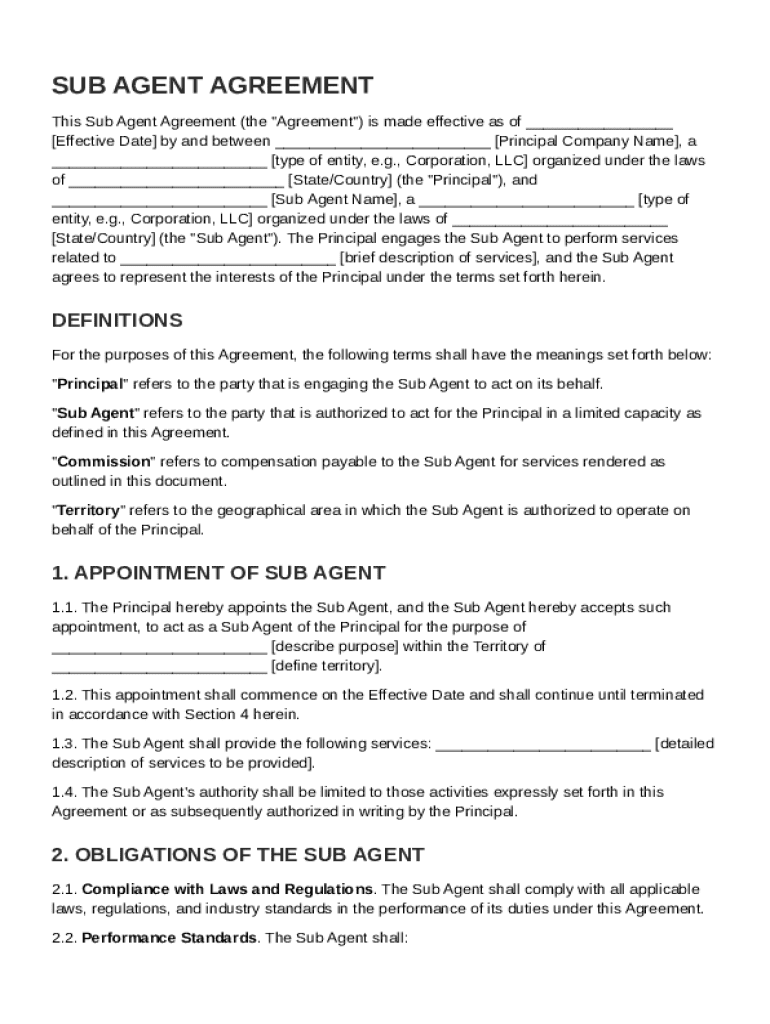







Definition and Purpose of the Sub Agent Agreement Template
The Sub Agent Agreement Template is a legal document that outlines the specific terms and conditions under which a Principal engages a Sub Agent to perform services on their behalf. This agreement clearly defines the roles, responsibilities, and obligations of both parties involved in the engagement. It includes critical aspects such as compliance with relevant laws and regulatory standards, performance expectations, compensation structures, and confidentiality commitments. Additionally, the agreement covers essential elements like the term of engagement, conditions for termination, indemnification clauses, and processes for resolving disputes. The Sub Agent Agreement serves as a formal contract, providing a comprehensive framework to govern the relationship between the Principal and Sub Agent, ensuring clarity and protection for both parties.
How to Use the Sub Agent Agreement Template
To effectively utilize the Sub Agent Agreement Template, it is essential to understand the step-by-step process involved in customizing the form to suit specific needs:
- Review the Template: Thoroughly examine the template to understand its structure, language, and sections.
- Customize Sections: Adapt sections to reflect the particular services provided, the parties involved, and specific requirements.
- Define Roles and Responsibilities: Clearly outline the tasks for both the Principal and Sub Agent, ensuring mutual understanding.
- Specify Legal and Compliance Requirements: Include relevant legal obligations and necessary compliance measures.
- Outline Compensation and Payment Terms: Determine how and when the Sub Agent will be compensated for their services.
- Set Confidentiality Policies: Ensure confidentiality clauses protect sensitive information.
- Finalize and Sign: Review completed document, ensure accuracy, and gather signatures.
Using this structured approach ensures that the tailored Sub Agent Agreement Template meets specific business goals and legal requirements, providing a well-defined framework for collaboration.
Steps to Complete the Sub Agent Agreement Template
Completing the Sub Agent Agreement Template involves specific actions to ensure that all pertinent details are accurately captured:
- Detail Personal Information: Include full names, addresses, and contact information of the Principal and Sub Agent.
- Define Scope of Work: Specify the tasks and responsibilities the Sub Agent will undertake.
- Set Duration of the Agreement: Clarify the time frame for which the agreement is valid, including commencement and termination dates.
- Establish Compensation Terms: Clearly state the payment structure, frequency, and method of compensation.
- Include Confidentiality and Non-Disclosure Clauses: Specify confidentiality obligations and procedures for handling sensitive information.
- Incorporate Dispute Resolution Mechanisms: Describe steps to resolve any disagreements or contract breaches.
- Get Legal Review: Have a legal professional review the agreement to ensure compliance with all applicable laws.
- Finalize Document: Make necessary revisions based on feedback and formally complete the document with signatures from all parties.
Following these steps will result in a thorough, legally binding agreement that satisfies the needs of all stakeholders involved.
Key Elements of the Sub Agent Agreement Template
Essential components within the Sub Agent Agreement Template include:
- Identification of Parties: Names and details of the Principal and Sub Agent.
- Scope of Services: Detailed description of services to be rendered by the Sub Agent.
- Terms of Engagement: Duration, renewal, and termination conditions of the agreement.
- Compensation Details: Payment structure, rates, intervals, and conditions.
- Confidentiality Obligations: Clauses to protect proprietary information.
- Legal Compliance and Obligations: Adherence to applicable laws and industry regulations.
- Indemnification Clauses: Provisions to safeguard against potential losses or damages arising from the agreement.
- Dispute Resolution Process: Steps for resolving disagreements or contract breaches.
- Signatures and Dates: Including all parties’ signatures and the date the agreement takes effect ensures legal validity.
Each element plays a critical role in framing the scope and responsibilities within the agreement, providing clarity and protection for everyone involved.
Legal Use and Compliance of the Sub Agent Agreement Template
The Sub Agent Agreement Template must be utilized within the confines of applicable legal standards to ensure enforceability and compliance. It is crucial to consider the following legal aspects:
- Regulatory Adherence: All terms should comply with local, state, and federal laws relevant to the services performed.
- Industry Standards: Follow specific industry guidelines and protocols to maintain professional compliance.
- Customary Practices: Reflect common practices in agreements to avoid potential disputes.
- Legal Clauses: Incorporate comprehensive legal clauses such as indemnification, confidentiality, and limitations of liability.
- Review by Legal Counsel: Consultation with legal experts ensures the agreement addresses all legal implications and follows best practices.
Adhering to these guidelines ensures that the agreement is both legally sound and aligned with regulatory frameworks.
Who Typically Uses the Sub Agent Agreement Template
Various entities and individuals might utilize the Sub Agent Agreement Template, including:
- Businesses: Corporations, partnerships, or sole proprietorships seeking to delegate tasks to third parties.
- Real Estate Agencies: Agencies hiring sub-agents to manage property sales or rentals.
- Insurance Companies: Engaging sub-agents to extend their market reach and service delivery.
- Marketing Firms: Employing sub-agents to execute campaigns or projects.
- Legal Professionals and Consultants: Working with sub-agents to provide specialized services.
- Logistics and Transportation Companies: Delegating certain operational tasks to sub-agents.
These users find the agreement essential for establishing clear expectations and formalizing relationships in a business context.