Definition and Meaning
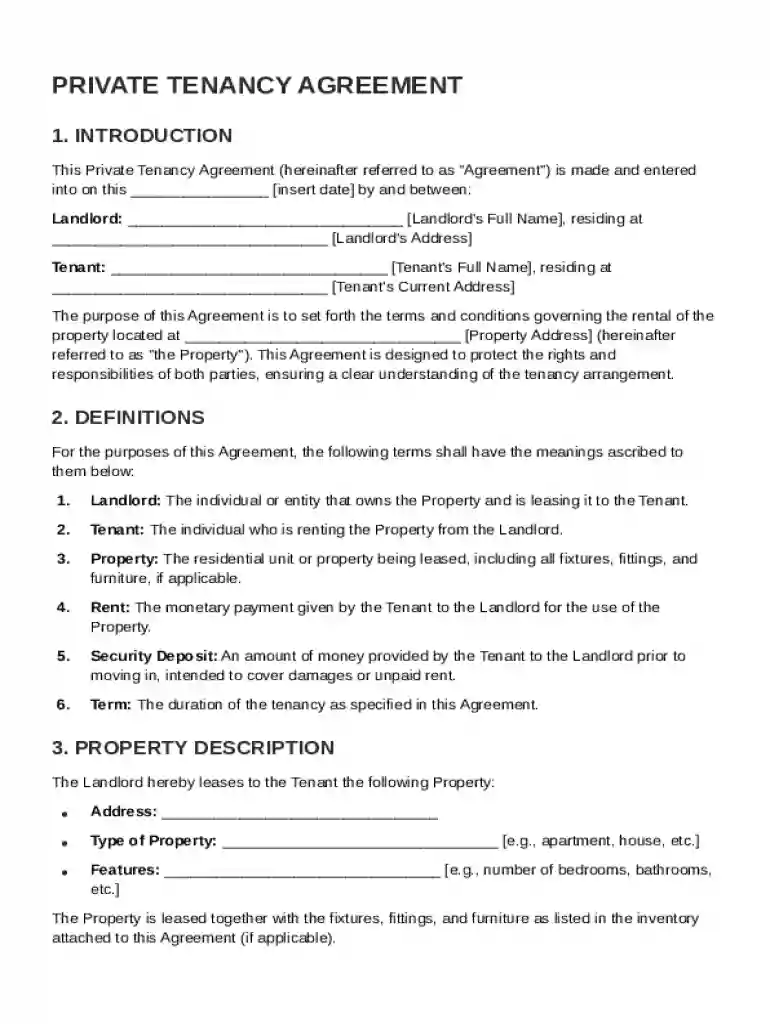
A Private Tenancy Agreement Template serves as a foundational legal document that sets the terms and conditions for the rental arrangement between a landlord and a tenant. Primarily used in residential contexts, this template captures crucial details such as rental agreements, responsibilities, and legal obligations of both parties. By defining terms like "landlord," "tenant," "property," and "lease term," the agreement provides clarity and prevents misunderstandings. It's designed to offer a clear framework that protects the foundational rights of the tenant, while also ensuring the landlord's interests are safeguarded. For instance, it includes specifications on rent payment schedules, security deposits, and the procedure for terminating the lease.
Key Elements of the Private Tenancy Agreement Template
When drafting a Private Tenancy Agreement Template, several core components need to be included to ensure comprehensiveness and clarity. These elements are critical for enforcing the agreement legally:
- Lease Term: Specifies the duration of the lease, which can be monthly, yearly, or for a specified period.
- Rent Details: Outlines the amount, due date, and acceptable methods of payment.
- Security Deposit: Details the security deposit amount, the conditions under which it is held, and the process for its return.
- Maintenance and Repairs: Defines who is responsible for maintenance tasks and repairs, including any shared responsibilities.
- Use of Property: States any restrictions on how the property may be used, such as prohibiting subletting or commercial activities.
- Termination Conditions: Outlines the process for early termination of the lease and any associated fees or notice requirements.
Steps to Complete the Private Tenancy Agreement Template
Creating a Private Tenancy Agreement involves several steps to ensure that all necessary information is captured accurately and comprehensively:
- Collect Necessary Information: Gather details related to the tenant, landlord, and the property being rented.
- Fill in Lease Details: Input specific details such as lease term, rent amount, and payment schedule into the template.
- Define Obligations: Clearly outline responsibilities of both parties, including maintenance duties and any restrictions.
- Specify Legal Compliance: Ensure that the agreement adheres to all applicable state and federal laws.
- Review and Sign: Both parties should review the agreement thoroughly before signing. Legal counsel might be advisable for additional validation.
- Distribution: Provide copies to all parties involved to ensure everyone has a record of the terms.
Important Terms Related to Private Tenancy Agreement Template
Understanding the terminology used within a Private Tenancy Agreement is vital for all parties involved. Some of the key terms include:
- Landlord: The property owner or their appointed agent who leases the property to the tenant.
- Tenant: The individual or group who rents the property from the landlord.
- Premises: The physical space or property that is being rented, including any appliances or fixtures.
- Default: A failure by either party to adhere to the terms specified in the agreement, which may lead to penalties.
- Covenant: A promise within the agreement, such as maintaining the property or paying rent on time.
Legal Use of the Private Tenancy Agreement Template
Ensuring the legal enforceability of a Private Tenancy Agreement is essential. It serves as a binding contract that can be upheld in court should disputes arise. Legal use of this document involves:
- Compliance with Local Laws: Confirm that the agreement adheres to state-specific rental laws and housing regulations.
- Dispute Resolution: Include a clause that outlines the procedure for handling legal disputes, such as mediation or arbitration.
- Tenant Rights: Ensure tenants are protected under the Fair Housing Act and other relevant legislation.
State-Specific Rules for the Private Tenancy Agreement Template
Rental agreements are subject to variations based on state statutes and local ordinances. State-specific rules that may impact the Private Tenancy Agreement Template include:
- Security Deposit Limits: Some states regulate the maximum amount that can be collected as a security deposit.
- Notice Requirements: Different states have varying requirements for notice periods regarding eviction or lease termination.
- Disclosure Obligations: States may mandate the disclosure of certain property conditions, like lead paint presence in older buildings.
Digital vs. Paper Version
The evolution of technology offers tenants and landlords the option between digital and paper versions of the Private Tenancy Agreement Template. Each format has its pros and cons:
- Digital Version: Offers easy storage, digital signing capabilities, and automated reminders for rent payments. It's accessible on various devices, reducing physical document handling.
- Paper Version: Provides a tangible record that can be physically signed and archived for those uncomfortable with digital formats. However, it may require manual updates and more extensive filing processes.