






Definition and Meaning
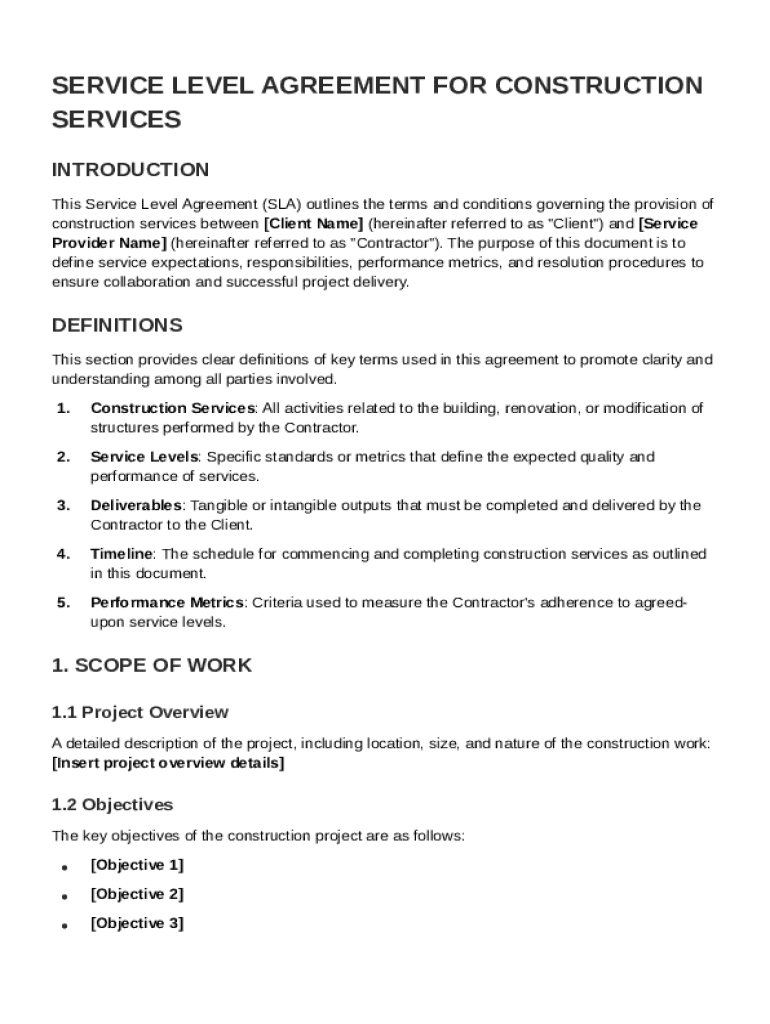
The "Service Level for Construction Agreement Template" is a structured document used primarily in the construction industry to establish the expectations and responsibilities of both parties involved in a construction project – typically the Client and the Contractor. Its main purpose is to outline the scope of work, define service levels, and set communication protocols, thereby ensuring a smooth and successful project delivery. It acts as a binding contract that lays out terms such as service delivery timelines, quality standards, payment terms, and issue resolution mechanisms. By formalizing these elements, the template ensures that both parties have a clear understanding of their obligations, reducing the likelihood of disputes.
Key Elements of the Service Level for Construction Agreement Template
The template comprises several critical components that collectively define the terms and conditions of the construction agreement. Key elements include:
- Scope of Work: Outlines the specific tasks and responsibilities to be performed by the contractor, including detailed project descriptions and deliverables.
- Service Levels: Specifies the standards and metrics by which the service will be measured, ensuring accountability and consistent performance.
- Payment Terms: Details the financial aspects of the agreement, including payment schedules, amounts, and conditions for release of funds.
- Issue Resolution Processes: Defines the mechanisms for resolving any disputes or issues that arise during the project, aiming for a fair and efficient resolution.
- Confidentiality Obligations: Establishes the requirements for protecting sensitive information shared between the parties during the project.
- Liability and Indemnification Clauses: Specifies each party's responsibilities towards potential risks and damages, and establishes rules for handling claims and liabilities.
How to Use the Service Level for Construction Agreement Template
Using the template effectively requires understanding its structure and how to adapt it to specific project needs. Here are the steps to utilize the template:
- Review the Template: Thoroughly read the entire document to understand its components and how they relate to your project.
- Customize Terms: Modify the template to fit the specific needs of your construction project, including adjusting the scope of work and service levels.
- Consult with Stakeholders: Engage relevant stakeholders, such as legal experts or project managers, to ensure the terms are appropriate and comprehensive.
- Agreement Finalization: Once all parties are satisfied with the terms, finalize the document and obtain necessary signatures to legally formalize the agreement.
Important Terms Related to the Template
Familiarity with certain key terms is crucial when working with the agreement template. Understanding them ensures clarity and precision in the documentation:
- Client: The party who commissions the construction project and agrees to pay for the services rendered.
- Contractor: The party responsible for executing the construction work as per the agreed terms.
- Subcontractor: Third-party entities hired by the contractor to perform specific tasks within the construction project.
- Change Order: A formal process involving modifications to the initial scope of work or service levels, typically requiring approval from both parties.
Examples of Using the Service Level for Construction Agreement Template
Several scenarios exemplify the practical application of this template, underscoring its utility across different project contexts:
- Residential Construction: A homeowner uses the template to hire a contractor for building a new house, detailing the timeline and quality standards expected.
- Commercial Projects: A business commissions a construction firm to renovate an office building, specifying deliverables and service levels in the template.
- Infrastructure Development: A government body employs the template for a large-scale infrastructure project, incorporating robust issue resolution and change management clauses.
Steps to Complete the Service Level for Construction Agreement Template
Completing the template accurately is crucial for it to serve its intended purpose:
- Input Project Details: Begin by entering key project information, such as project name, parties involved, and project start and end dates.
- Define Scope and Services: Clearly outline the work to be undertaken, including tasks, labor, and materials required.
- Establish Standards and Metrics: Detail the service levels, outlining measurable criteria to monitor and evaluate performance.
- Include Financial Terms: Specify payment schedules, any deposits required, and terms for partial payments.
- Outline Legal Clauses: Incorporate mandatory legal terms, including confidentiality and indemnification, ensuring compliance with applicable laws.
- Finalize and Sign: After reviewing and making necessary adjustments, finalize the document and execute it with signatures from both parties involved.
Legal Use of the Service Level for Construction Agreement Template
The template serves as a legally binding document that must comply with applicable laws and regulations. Understanding its legal components ensures proper usage:
- Governing Law: Specifies which jurisdiction's laws will govern the agreement, providing clarity on legal matters.
- Compliance Requirements: Includes statements ensuring compliance with state, federal, and local regulations regarding construction practices.
- Dispute Resolution: Outlines methods for resolving disagreements, potentially including mediation, arbitration, or litigation processes.
State-Specific Rules for the Service Level for Construction Agreement Template
Certain states may impose specific requirements or offer templates to comply with local regulations:
- California: May require additional environmental clauses due to state regulations on construction and emissions.
- New York: Offers guidance on union labor clauses that contractors might need to include in agreements.
- Texas: Includes specific insurance requirements for contractors working on residential or commercial projects.
Understanding these state-specific nuances ensures compliance with local laws and can influence the effectiveness of the agreement.