






Definition and Meaning of Form 656-B
Form 656-B, also known as the Form 656 Booklet Offer in Compromise, is a comprehensive guide provided by the IRS for taxpayers who wish to settle their tax liabilities for less than the full amount owed. This booklet includes the necessary forms, such as Form 433-A and Form 433-B, and outlines eligibility criteria, payment options, and taxpayer rights. By providing in-depth guidance on the Offer in Compromise (OIC) program, this form helps taxpayers navigate the complex process of negotiating a reduced tax liability.
How to Use the Form 656-B Offer in Compromise
Using Form 656-B involves a detailed understanding of its instructions for completing an Offer in Compromise. Taxpayers should:
- Review eligibility requirements to determine if they qualify for the OIC program.
- Gather necessary supporting documents, such as financial records and tax filings.
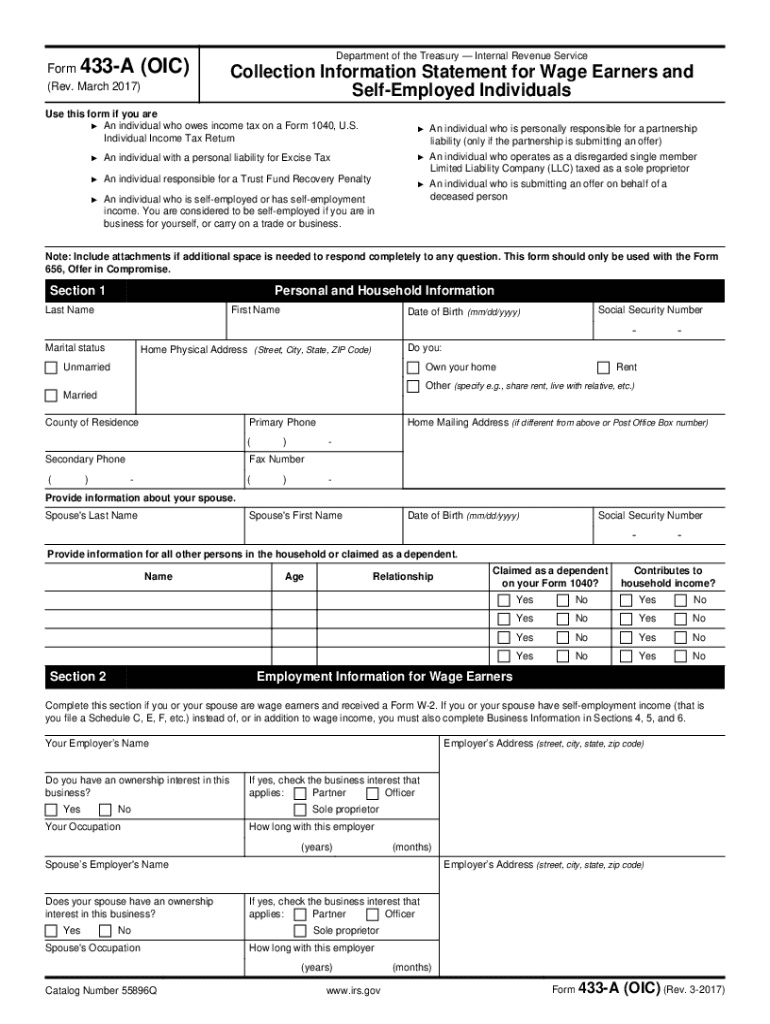
- Follow step-by-step instructions to fill out accompanying forms like Form 433-A (for individuals) or Form 433-B (for businesses).
- Calculate an appropriate offer amount based on their financial situation.
- Submit the completed forms and offer amount to the IRS, along with any required application fees.
- Await feedback from the IRS, who will review the application and either approve or deny the offer.
Steps to Complete Form 656-B
Filling out Form 656-B requires careful attention to detail:
- Review Eligibility: Confirm that all tax returns are filed and any required estimated tax payments are made.
- Complete Financial Disclosure: Use Form 433-A or Form 433-B to disclose complete financial information.
- Prepare Offer: Calculate a reasonable offer that reflects the taxpayer's ability to pay.
- Submit Forms and Fees: Assemble the application package including all required documentation and fees. Send it to the designated IRS address.
- Respond to IRS Requests: Be prepared to provide additional information if the IRS requests it during their review process.
Eligibility Criteria for Form 656-B
Eligibility for a Form 656-B Offer in Compromise requires meeting certain criteria:
- Current Tax Filing: All tax returns must be filed up to date.
- Estimated Payments: Any necessary estimated tax payments for the current year should be made.
- Financial Circumstances: The taxpayer must prove that they cannot pay the full tax liability.
- Payment Compliance: If self-employed, quarterly estimated tax payments must be current.
Examples of qualifying scenarios include significant and documented financial hardships or situations where paying the full tax would cause financial instability.


Key Elements of Form 656-B
Form 656-B contains several critical elements:
- Instructions: Offers a comprehensive guide on how to navigate the OIC program.
- Eligibility: Criteria to qualify for the offer.
- Forms: Includes related forms like 433-A or 433-B to disclose financial information.
- Payment Options: Details on payment methods, including lump sum or periodic payments.
- Taxpayer Rights: Information on rights when negotiating with the IRS.
These components are essential for ensuring that taxpayers submit a thorough and accurate offer.
Examples of Using Form 656-B
Form 656-B has practical applications in scenarios such as:
- Individual Tax Resolution: A taxpayer facing significant medical bills may use Form 656-B to propose an offer based on reduced income.
- Business Liabilities: A small business owner struggling with debt can use this form to negotiate a lower tax payment due to cash flow problems.
Each case must be supported by evidence of financial hardship to justify the offer amount.
IRS Guidelines for Form 656-B
The IRS provides specific guidelines for Form 656-B:
- Accuracy: Ensures all information is accurate and complete.
- Documentation: Requires comprehensive financial records.
- Timeframes: The review process typically takes several months.
Following these guidelines increases the likelihood of a successful offer acceptance.
Required Documents for Form 656-B
Applicants for Form 656-B need to prepare:
- Financial Statements: Current and accurate financial records of income, expenses, assets, and liabilities.
- Tax Filings: Copies of filed tax returns.
- Payment Proofs: Receipts for any prior tax payments or estimated taxes.
- Supporting Evidence: Documentation of special circumstances, like medical expenses or employment changes.
Having these documents ready ensures a complete and accurate application submission.