







Definition and Meaning
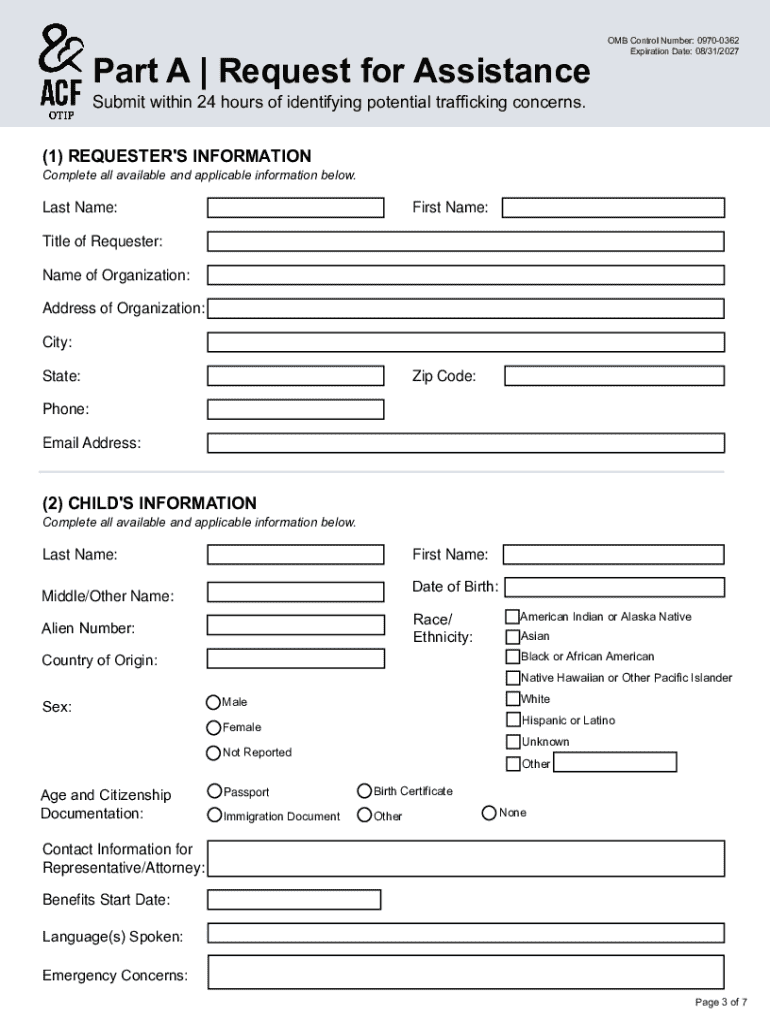
The "Request for Assistance for Child Victims of Human Trafficking Request for Assistance Form" serves as an official document to notify the U.S. Department of Health and Human Services (HHS) about foreign national minors identified as potential human trafficking victims. This form is part of the legislative requirements under the Trafficking Victims Protection Act, which mandates timely notification to facilitate immediate protection and assistance for these vulnerable individuals. It helps ensure that relevant authorities are informed to take necessary actions in safeguarding the children's welfare and rights.
How to Obtain the Request for Assistance Form
To obtain the Request for Assistance form, you may need to access the relevant government websites or contact the U.S. Department of Health and Human Services directly. Many agencies that work with trafficking victims, such as child welfare organizations or legal service providers, may also have copies of this form. For direct access, check the HHS official site, where these resources are frequently provided for public use.
Steps to Complete the Form
-
Personal Information: Begin by entering basic details about the minor, including name, age, and nationality.
-
Trafficking Concerns: Document the specific concerns or indicators of trafficking that prompted the request, making sure to include as many details as possible.
-
Contact Information: Provide contact details for the person submitting the form, as well as any other involved parties.
-
Consent and Verification: In some cases, additional consent or verification sections must be completed to ensure legal compliance and protect the child's identity.
Why Should You Use the Form
Filing this form is crucial for ensuring that child victims of human trafficking receive the necessary protections and services promptly. It allows agencies to coordinate resources and initiate interventions that can help safeguard and rehabilitate the affected minors. Using this formal process helps streamline the response from various stakeholders, offering a structured way to address the immediate and ongoing needs of trafficking victims.
Who Typically Uses the Request for Assistance Form
This form is predominantly used by social workers, law enforcement officers, and legal advocates who are involved in cases of suspected human trafficking. Child welfare organizations and non-profits that specialize in supporting trafficking victims also utilize this form to ensure that children receive appropriate care and protection under the law.


Key Elements of the Request for Assistance Form
- Identifying Information: Essential details for identifying the minor, such as date of birth and country of origin.
- Trafficking Indicators: Documented evidence or observations that support the suspicion of trafficking.
- Submitter's Details: Information about the individual or organization submitting the form, including affiliations and contact data.
- Legal Declarations: Sections for confirming consent and acknowledging the confidentiality and sensitivity of the information provided.
Legal Use of the Request for Assistance Form
Legally, the form is used to fulfill obligations under United States federal law, specifically the Trafficking Victims Protection Act. Submitting the form triggers a review process that can result in eligibility letters for benefits and protection measures tailored to the needs of each victim. Maintenance of confidentiality and proper handling of personal information is a legal requirement throughout this process.
Eligibility Criteria
To be eligible for assistance using this form, the individual in question must be a foreign national minor suspected of being a victim of human trafficking. It is also essential that the case meets certain indicators or criteria established by the U.S. Department of Health and Human Services, aligning with federal laws designed to protect trafficking victims.

Steps in the Application Process and Approval Time
-
Submission: Complete and submit the form through the designated channels, whether online or via mail.
-
Review: Upon receipt, the form undergoes a review process by the U.S. Department of Health and Human Services.
-
Evaluation: The details provided are evaluated to determine eligibility for assistance and protection services.
-
Approval: If approved, eligibility letters are issued, detailing the benefits and support available to the child victim. The timeline for approval can vary based on case specifics and workload.
State-Specific Rules for the Form
While the core requirements of the form are mandated at the federal level, certain states may have additional rules or protocols for processing and responding to human trafficking cases. Local agencies may provide supplementary guidelines to ensure the welfare and protection of trafficking victims are aligned with both federal and state policies.
Important Terms Related to the Form
Understanding certain key terms is crucial when dealing with this form:
- Minor: Refers to any individual under the age of 18.
- Victim of Trafficking: A person who has been exploited through force, fraud, or coercion for purposes such as forced labor or sexual exploitation.
- Protection Act: Refers to the Trafficking Victims Protection Act, which outlines legal frameworks for the protection of trafficking victims in the U.S.
Form Submission Methods
The form can be submitted through various methods:
- Online: Certain government platforms allow for electronic submission.
- Mail: Physical forms can be mailed to designated addresses provided by the HHS or other relevant bodies.
- In-Person: Some agencies may accept in-person submissions, particularly in urgent cases requiring immediate action.
This comprehensive coverage of the "Request for Assistance for Child Victims of Human Trafficking Request for Assistance Form" ensures that readers have a clear and detailed understanding of its purpose, usage, and submission process, central to aiding vulnerable minors in the U.S.


