
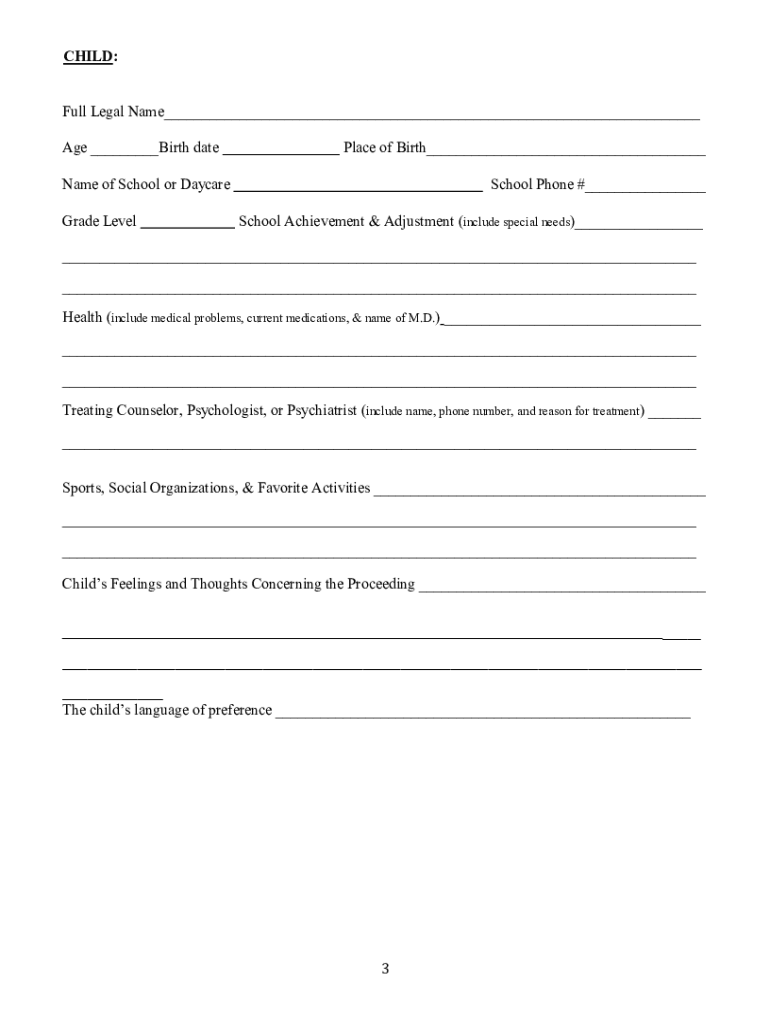







Definition and Meaning of Family Court Services
Family Court Services refers to a specialized division within the family court system designed to provide support and assistance in cases involving family law matters. These services typically include evaluation, mediation, and coordination of services for families going through custody disputes, divorce, or other family-related legal issues. The goal is to ensure the best interests of children are prioritized and to facilitate cooperative solutions among family members. Family Court Services play a crucial role in creating stable plans that address the needs of all parties involved.
How to Use Family Court Services
To utilize Family Court Services, individuals typically begin by contacting their local family court or visiting its website for guidance. Often, these services are initiated through a court order or recommendation from a judge or family law attorney. Participation may involve attending mediation sessions, undergoing evaluations, or completing parenting classes. The focus is on fostering amicable agreements that serve all family members' interests, especially children. Family Court Services often provide resources and referrals to additional support, such as counseling or parenting programs.
Steps to Complete Family Court Services
- Court Referral or Self-Initiation: Engage Family Court Services through a court order or by requesting assistance directly.
- Scheduling Sessions: Arrange appointments for mediation or evaluation with court-appointed professionals.
- Attending Meetings: Participate in scheduled sessions, providing necessary documentation and information required by mediators or evaluators.
- Completing Recommendations: Follow through with any proposed agreements or action plans developed during Family Court Services sessions.
- Monitoring and Adjustment: Adhere to monitoring schedules and be open to adjustment of agreements as family dynamics or circumstances change.
Key Elements of Family Court Services
- Mediation: Structured discussions facilitated by a neutral third-party to help parties reach mutual agreements.
- Evaluation: Assessments conducted by social workers or psychologists to provide recommendations for custody or visitation.
- Parenting Coordination: Ongoing support to implement and maintain parenting plans.
- Investigation: In-depth analysis in cases of abuse or neglect allegations to provide court with detailed reports.
- Education Programs: Courses aimed at educating parents on managing their new roles post-separation.
Important Terms Related to Family Court Services
- Custody Evaluation: A detailed analysis by experts to determine the optimal living arrangements for a child.
- Parenting Plan: A document outlining how parents will raise their child post-divorce or separation.
- Mediation Agreement: A written agreement resulting from mediation, which may become legally binding.
- Child Support Guidelines: Standards set by jurisdictions to calculate fair support obligations from non-custodial parents.
- Court-Appointed Guardian: An individual assigned by the court to represent the child’s best interests in contentious cases.
Legal Use of Family Court Services
Family Court Services are legally established under state laws to assist in resolving family disputes within the judicial system. They provide legal frameworks for enforcing agreements and protecting the rights of all parties involved. Professionals working within these services operate under strict legal and ethical codes to ensure fairness and impartiality. Engaging with Family Court Services can affect court outcomes, making compliance and honesty critical in benefiting from these programs.
Required Documents for Family Court Services
- Parenting Plans: Proposed custody arrangements and schedules.
- Financial Statements: Documentation of income, expenses, and assets.
- Personal Information: Identifying information for all family members involved.
- Court Orders: Previously issued legal directives concerning family matters.
- Consent Forms: Signed agreements to participate in evaluations or mediation.
Examples of Using Family Court Services
Consider a family going through a contentious divorce with disagreements over child custody. Family Court Services may facilitate mediation, enabling both parents to negotiate a shared custody plan. Alternatively, in cases where one parent is alleged to be unfit, a custody evaluation conducted by Family Court Services can provide the necessary insights to guide judicial decisions. Such services ensure that disputes are resolved in a family-centered and non-adversarial manner.
State-Specific Rules for Family Court Services
Family Court Services differ across states due to varying laws and procedures. For instance, California requires mandatory mediation in custody disputes, while other states might recommend, but not mandate, mediation. Some states have specific protocols for child interviews during custody evaluations or have differing requirements for filing mediation agreements. Understanding these variations allows individuals to navigate their state’s systems effectively and make informed decisions.
Penalties for Non-Compliance with Family Court Services
Failure to comply with court-mandated Family Court Services can result in significant penalties. These may include:
- Court Sanctions: Fines or increased legal oversight.
- Loss of Custody or Visitation Rights: Non-compliance can negatively impact custody decisions.
- Modification of Orders: Existing custody or support orders may be altered unfavorably.
- Contempt of Court: Legal repercussions for disregarding court directives or obligations.
All parties are advised to adhere strictly to Family Court Services orders to safeguard their rights and maintain positive relations in family legal matters.




