







Understanding Vehicle Registration Documents
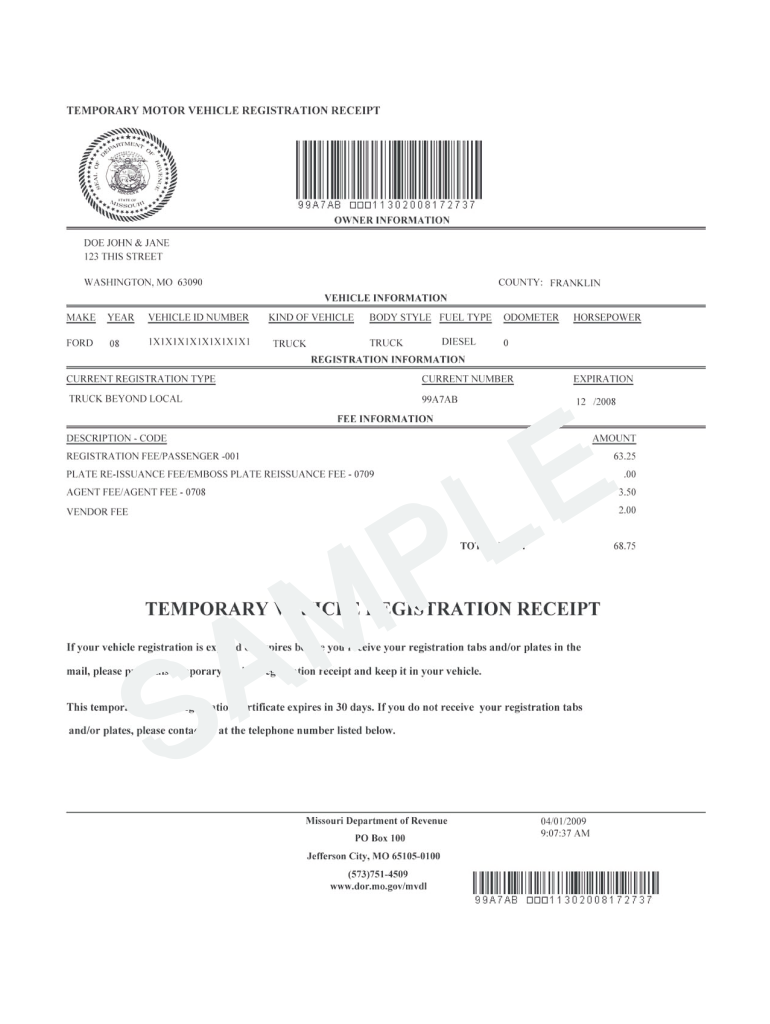
Vehicle registration is a legal requirement for drivers in the United States, and understanding what this document looks like is essential for vehicle owners. Registration documents serve as proof of ownership and may vary by state.
Details on Vehicle Registration Format
Vehicle registration documents often include critical information such as:
- Vehicle Identification Number (VIN): This unique code identifies the vehicle.
- Make and Model: The brand and type of the vehicle.
- Year of Manufacture: Specifies the year the vehicle was produced.
- Owner's Information: Typically includes the owner's name and address.
- Plate Number: A unique number assigned to the vehicle's license plate.
- Registration Expiration Date: Indicates the date when the registration needs to be renewed.
Visual Features of Missouri Vehicle Registration
In Missouri, vehicle registration documents typically feature the following characteristics:
- Official State Seal: The document usually displays Missouri's state seal to verify authenticity.
- Security Features: Watermarks or specialized inks may be present to prevent forgery.
- Easy-to-Read Layout: Information is organized logically, usually in sections clearly delineating vehicle and owner information.
- Color Coding: Certain sections may include color coding for ease of identification.
Example Format of Missouri Vehicle Registration
Here is a breakdown of what a Missouri vehicle registration might look like:
- Header: "Missouri Department of Revenue"
- Title Section: "Vehicle Registration"
- Vehicle Information Section:
- VIN: 1HGCM82633A123456
- Make: Honda
- Model: Accord
- Year: 2003
- Owner Information Section:
- Owner Name: John Doe
- Address: 123 Main St, St. Louis, MO 63101
- Registration Details:
- Plate Number: ABC1234
- Expiration Date: 12/31/2023
Additional Aspects of Vehicle Registration Documentation
Government-issued vehicle registrations also contain relevant legal terminology and identifiers, which serve to protect both the owner and the state. Other important notes about vehicle registration documents include:
- Renewal Information: Most registration documents will include instructions on renewing the registration, including important deadlines.
- Fees and Tax Information: It may provide information about taxes paid at registration, which could vary based on vehicle value, age, and locality.
- Compliance Requirements: The document usually outlines any legal obligations regarding insurance and emissions tests.
Understanding Variations in Vehicle Registration
While the core elements of vehicle registration remain consistent, variations may exist between states. These differences may include the design, required information, and regulations surrounding registration:
- Alaska vs. Missouri: While both may require similar key details like VIN and owner's name, the layout and additional features like emissions testing proof will differ.
- Interstate Differences: Registration processes can vary significantly, including how and where to submit applications, process timelines, and modes of payment for fees.
Importance of Keeping Registration Documents Updated
Maintaining current vehicle registration is critical for legal operation on public roads. Key points include:
- Avoiding Penalties: Failure to register or renew on time may lead to fines or legal trouble.
- Proof of Ownership: Updated registrations help prove ownership, especially in transactions involving the sale or transfer of the vehicle.
Accurate understanding of vehicle registration documents provides drivers valuable knowledge about what to expect, how to maintain their vehicle’s compliance with state laws, and the consequences of neglecting this vital responsibility.




