
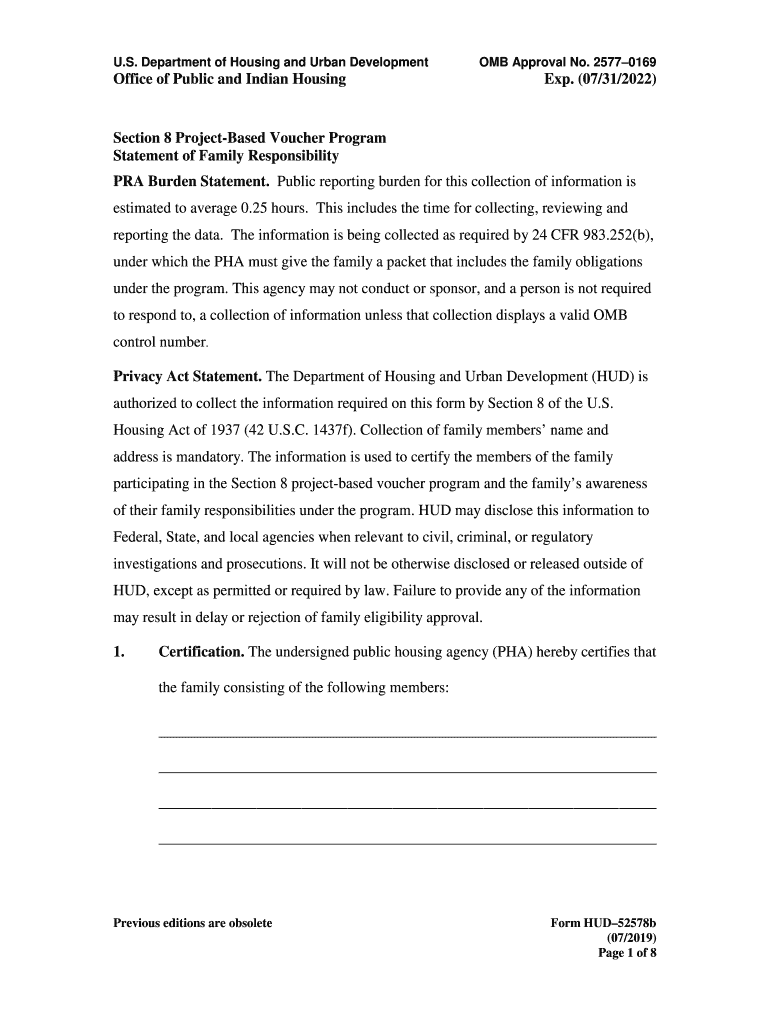







Definition & Meaning
The "Section 8 Project-Based Voucher Program Statement of Family" is a document that outlines the roles and responsibilities of families participating in the Section 8 Project-Based Voucher Program, a part of the U.S. Department of Housing and Urban Development (HUD). This program aims to provide housing assistance to low-income families by subsidizing their rent in privately owned rental housing. The document serves as an acknowledgment and acceptance of these roles and responsibilities, detailing what families need to fulfill in order to maintain their eligibility for housing assistance.
Eligibility Criteria
Families must meet certain eligibility criteria to participate in the Section 8 Project-Based Voucher Program. These include income limits, which are typically set at 50% of the area median income, family size, and citizenship or eligible immigrant status. Additionally, families are required to pass a criminal background check and sign the "Statement of Family," agreeing to the specified terms and conditions. These criteria ensure that assistance is directed to those who are most in need and who are committed to complying with the program's regulations.


Steps to Complete the Section 8 Project-Based Voucher Program Statement of Family
- Review Eligibility: Before completing the statement, families must ensure they meet all eligibility criteria.
- Complete Personal Information: Fill out the personal information section, which typically includes family size, income details, and current housing situation.
- Acknowledge Program Rules: Carefully read through and acknowledge the program's rules and regulations, including any stipulations related to rent payment and property maintenance.
- Sign and Date the Document: Ensure all adult family members sign and date the statement, showcasing their agreement and understanding of the document.
- Submit to Relevant Housing Authority: Submit the completed form to the Housing Authority managing your case, either online, via mail, or in person, depending on their submission preferences.
How to Obtain the Section 8 Project-Based Voucher Program Statement of Family
The statement can be obtained from local Housing Authorities participating in the Section 8 program. Families can visit the Housing Authority's office, request the document via mail, or download it from their official website. It is essential to ensure that you have the most current version of the form to meet all necessary compliance requirements.
Key Elements of the Section 8 Project-Based Voucher Program Statement of Family
- Personal Information: Includes names, ages, and social security numbers of all family members.
- Income Reporting: Families must disclose all sources of income and financial assets.
- Acknowledgement of Responsibilities: Details responsibilities regarding payment of rent and notification of changes in income or family composition.
- Compliance with Regulations: Requirements such as maintaining the property and adhering to occupancy rules.
Important Terms Related to Section 8 Project-Based Voucher Program Statement of Family
Understanding specific terms used within the document is crucial:
- "Voucher": A subsidy paid directly to landlords on behalf of the participating family.
- "Head of Household": The primary adult responsible for managing the voucher and complying with program rules.
- "Annual Recertification": A yearly process to re-verify family eligibility and income details.
Legal Use of the Section 8 Project-Based Voucher Program Statement of Family
This document has significant legal implications. By signing, the family agrees to comply with all established rules and regulations. Non-compliance can lead to penalties, including the termination of housing assistance. The statement also stands as a legal affidavit, and any falsification of information can result in severe consequences, including potential legal action.
Penalties for Non-Compliance
Families failing to adhere to the terms in the Section 8 Project-Based Voucher Program Statement of Family can face penalties such as:
- Termination from the Program: Loss of housing assistance benefits.
- Repayment: Requirement to repay any improperly received benefits.
- Legal Action: Potential for civil or criminal charges if fraud or intentional misrepresentation is involved.




