




01. Edit your red cross parental consent form online
Type text, add images, blackout confidential details, add comments, highlights and more.

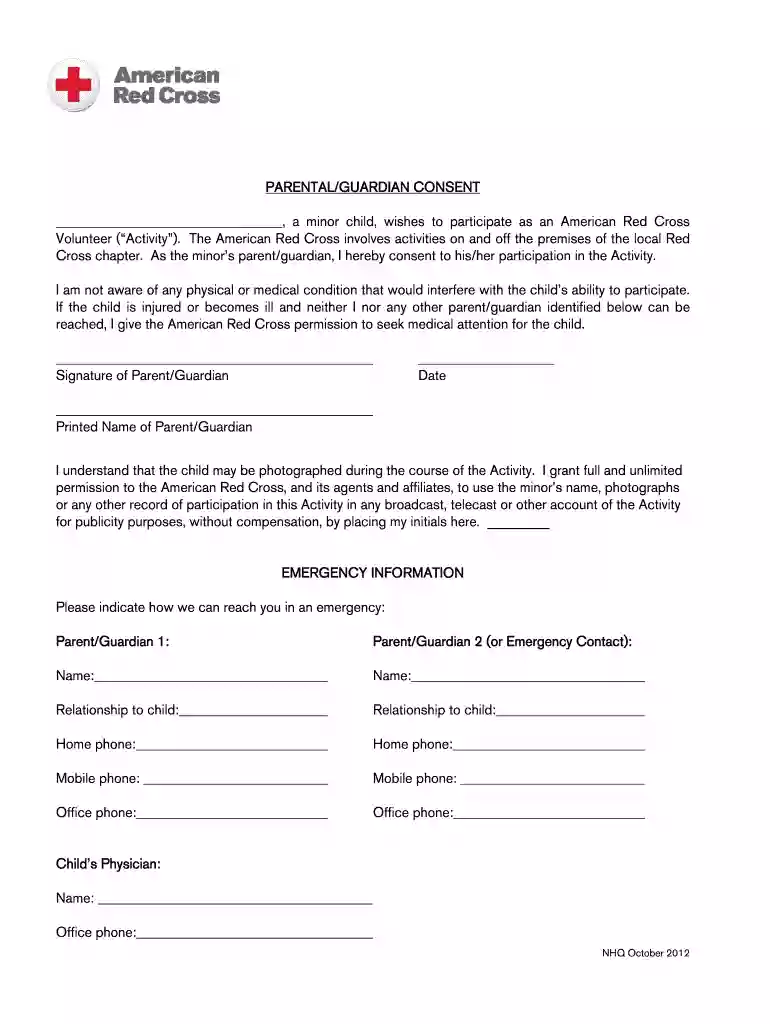
Type text, add images, blackout confidential details, add comments, highlights and more.

Draw your signature, type it, upload its image, or use your mobile device as a signature pad.

Send red cross permission slip via email, link, or fax. You can also download it, export it or print it out.
The American Red Cross parental consent form is a legally binding document that grants permission for a minor child to participate in various activities organized by the American Red Cross. This form is crucial for ensuring that parental or guardian approval is obtained, especially when minors are involved in volunteer opportunities, blood donation drives, or similar initiatives.
Key components of the form generally include:
Consent for Participation: This section indicates that the parent or guardian allows their child to engage in specified activities.
Medical Acknowledgment: Parents must disclose any medical conditions that may affect the child's participation.
Emergency Medical Permission: This grants authority for medical professionals to provide aid in case of injury or illness during the activity.
Publicity Release: Allows the Red Cross to use the child's name and photographs for promotional purposes.
By securing this consent, the American Red Cross ensures that the legal rights and responsibilities regarding the child's participation are clearly defined.
To ensure proper completion of the American Red Cross parental consent form, follow these key steps:
Obtain the Form: Access the American Red Cross parental consent form through their official website or from an authorized local chapter.
Fill Out Parent/Guardian Information: Include the name, address, and contact information of the parent or guardian providing consent.
Provide Minor’s Details: Include the minor's name, date of birth, and any relevant identification information.
Acknowledge Medical Information: Parents must fill out any pertinent medical conditions or allergies the minor may have.
Emergency Contact Information: Provide details of an individual who can be contacted in case of an emergency.
Review Permissions: Carefully read through the consent, medical acknowledgment, and publicity release sections, ensuring all instances of consent are properly checked.
Date and Sign the Form: Finally, the parent or guardian should date and sign the form to validate it.
This organized approach helps ensure that the form is completed accurately and can be processed without delays.
Using the American Red Cross parental consent form is straightforward. Here are the key ways in which it is utilized:
Volunteer programs: For minors wishing to volunteer with the Red Cross, the form serves to confirm that parents approve of their participation.
Blood donation events: The American Red Cross requires parental consent for minors aged sixteen and older to donate blood. The form specifies that the parent has been informed about the donation process and has given permission.
Educational programs: Minors enrolled in educational initiatives led by the Red Cross need this consent to participate in activities that may occur off-campus or require specific medical permissions.
Publicity: The form allows the Red Cross to publicly share information about the minor, which may include photographs or success stories in newsletters and local media.
By understanding how to properly utilize this form, parents can ensure their children can safely participate in Red Cross activities.
It is essential to familiarize oneself with the terminology associated with the American Red Cross parental consent form:
Consent: A legal agreement required from a parent or guardian permitting a minor's participation in activities.
Minor: An individual under the age of eighteen who requires parental consent for participation in various activities.
Emergency Medical Treatment: Authorization for healthcare providers to administer medical care in emergencies involving the minor.
Publicity Release: Permission granted to the Red Cross to utilize the minor's likeness and name in promotional materials.
Volunteering: Participation in services or programs without monetary compensation, often involving social responsibility and community service.
Understanding these terms enhances comprehension of the parental consent form and aids in effective communication regarding its use.
The legal use of the American Red Cross parental consent form is grounded in its ability to provide official acknowledgment of parental approval. Some important legal considerations include:
Enforceability: The form is designed to be legally binding, protecting both the minor and the organization by ensuring that informed consent is obtained.
Liability Protection: By securing parental consent, the American Red Cross limits its liability and ensures that parents are aware of the potential risks involved in activities.
Health and Safety Regulations: The form adheres to federal and state laws governing the welfare of minors, ensuring compliance with regulations related to volunteer activities and medical care.
Documentation in Case of Emergencies: Involving medical acknowledgment enables health care providers to act swiftly in emergencies, ensuring that treatment aligns with the child's health needs.
This emphasis on legal utility underscores the necessity of completing the parental consent form accurately and timely.
Understanding the key elements of the American Red Cross parental consent form is crucial for clarity and compliance:
Consent Statement: A clear declaration of the parent's approval for the minor's participation in specific activities.
Medical History Section: Parents disclose any allergies or medical conditions, ensuring the safety of the child during activities.
Authorization for Treatment: An explicit grant of permission for healthcare professionals to provide emergency care.
Publicity Consent: A section where parents can consent to or decline the use of their child's image and story for promotional purposes.
Contact Information: Essential details for parents or guardians and emergency contacts to facilitate communication.
By familiarizing oneself with these elements, parents can better prepare for completing the consent process and ensure all necessary permissions are obtained.
Real-life scenarios of utilizing the American Red Cross parental consent form demonstrate its application in various contexts:
Youth Volunteering: A sixteen-year-old wishes to volunteer for a local blood drive organized by the Red Cross. The parent completes the consent form, permitting their child to participate while acknowledging potential risks and medical concerns.
School Programs: During a school field trip to a Red Cross training session, parents are required to sign the consent form. This authorization covers participation, acknowledges any health conditions, and allows for emergency treatment if necessary.
Blood Donation Drives: For a minor who wishes to donate blood, the parent must complete the consent form before the event. This process not only grants permission but also serves to inform the parent of the eligibility criteria and health guidelines.
These examples illustrate the form’s importance in various child-friendly, community-centered activities organized by the American Red Cross.
We've got more versions of the red cross parental consent form form. Select the right red cross parental consent form version from the list and start editing it straight away!
| Versions | Form popularity | Fillable & printable |
|---|---|---|
| 2012 | 4.8 Satisfied (143 Votes) |
At DocHub, your data security is our priority. We follow HIPAA, SOC2, GDPR, and other standards, so you can work on your documents with confidence.
IMPORTANT: This guidance document was developed for use on the web. Please review the following disclaimers before using the PDF version of the web-basedRead more
In giving consent for your son, daughter, or ward to donate blood, you have two options: 1. You may consent to whole blood donation only, or. 2. You may consentRead more


