






Definition & Meaning
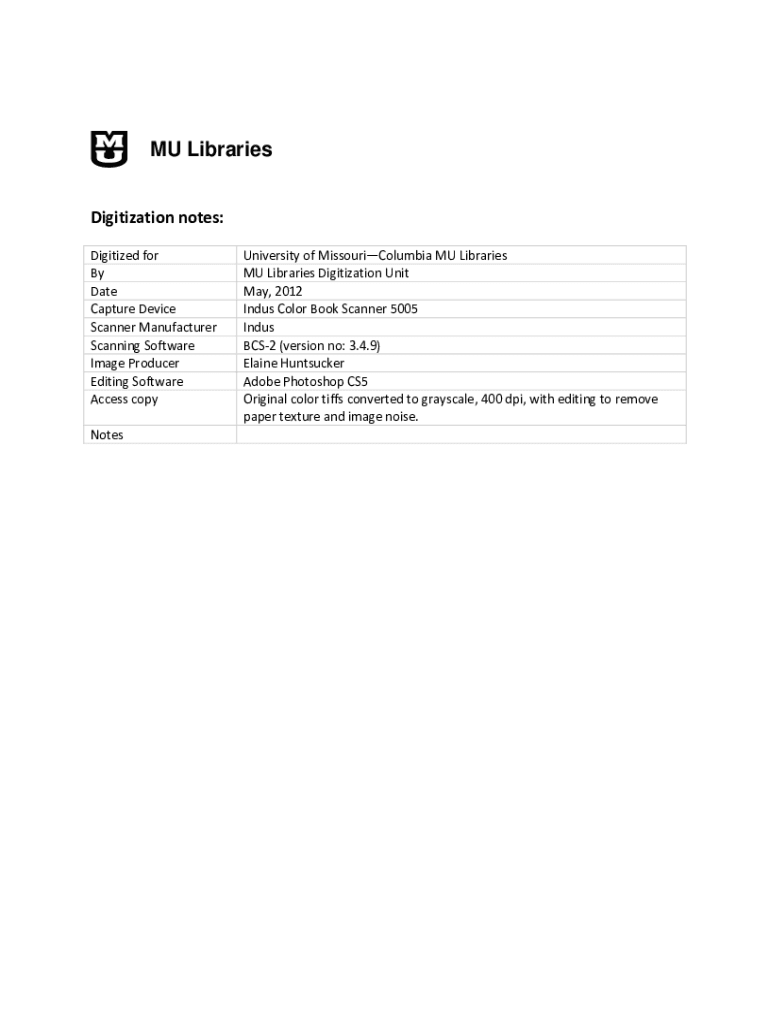
MU Libraries - MOspace refers to the University of Missouri's institutional repository, dedicated to preserving and providing open access to the scholarly work of the university's students, faculty, and staff. MOspace serves as a digital repository, offering an organized platform to store and share research materials, enabling greater accessibility and visibility in the academic community.
MOspace embraces a wide range of academic content, including journal articles, theses, dissertations, and technical reports. Its primary aim is to increase the reach and impact of the university's scholarly output by making it freely accessible to the global research community. This democratization of access aligns with the principles of open science, fostering a culture of collaboration and shared knowledge.
How to Use the MU Libraries - MOspace
Engaging with MOspace is straightforward, ensuring that users can efficiently navigate and utilize the repository. Researchers can conduct searches using keywords, author names, or specific titles to locate relevant materials. Once an item of interest is identified, users can view and download the complete text directly from the repository.
Faculty and students who wish to contribute their research to MOspace must adhere to specific guidelines and submission procedures. They are encouraged to consult with library staff to ensure proper metadata tagging, which enhances the discoverability of their work. Contributors can benefit from increased citation counts and academic recognition, as their research becomes accessible to a broader audience.
Steps to Complete the MU Libraries - MOspace Submission
-
Prepare Your Manuscript:
- Ensure your document is in the correct format, typically PDF, and that it adheres to any stylistic or formatting guidelines specific to your department or journal.
-
Metadata Preparation:
- Gather key information about your research, such as title, abstract, keywords, author names, affiliations, and funding sources. Accurate metadata enhances discoverability.
-
Rights and Permissions:
- Verify that you have the necessary permissions to share your work, especially if it has been previously published. Consult your publisher's policies on open access deposits.
-
Submission Process:
- Access the MOspace submission portal. You'll need to create an account or log in with existing credentials. Follow the prompts to submit your manuscript, upload any supplementary files, and input the prepared metadata.
-
Review and Approval:
- Library staff will review your submission for completeness and compliance with MOspace policies. You may be contacted for amendments if necessary.
-
Finalization:
- Once approved, your work will be officially published in MOspace, with a persistent URL provided for citation purposes.
Key Elements of the MU Libraries - MOspace
MOspace is structured to encompass several crucial elements that support efficient information retrieval and resource management.
-
Persistent Identifiers: Each item in MOspace is assigned a unique identifier which ensures long-term access and makes citation and referencing straightforward.
-
Comprehensive Metadata: Thorough metadata tagging covers various aspects of a work, facilitating precise searches and aiding in the automated indexing by search engines.
-
Open Access Compliance: MOspace supports the principles of open access, ensuring that resources are freely accessible without subscription barriers or paywalls.
-
Community Engagement: The platform encourages contributions from all university divisions, supporting diverse scholarly outputs that reflect the academic richness of the institution.
-
Enhanced Visibility: By making research accessible to a global audience, MOspace increases exposure and potential impact, which can lead to higher citation rates and academic recognition.
Legal Use of the MU Libraries - MOspace
Contributions to MOspace must comply with copyright laws and institutional policies regarding intellectual property. Researchers are responsible for ensuring that their submissions do not violate any third-party rights. It is crucial to assess whether the work can be shared openly based on licensing agreements or publisher restrictions.
Authors can choose to attach specific licenses to their work in MOspace, such as Creative Commons licenses, to delineate allowable uses by others. These licenses help clarify how content may be reused, ensuring both legal compliance and creative dissemination.
Digital vs. Paper Version
MU Libraries - MOspace predominantly serves digital content, reflecting the transition to online platforms in academia. The digital format offers numerous advantages, such as ease of access, preservation, and the ability to reach a wider audience at a lower cost compared to traditional paper copies.
Although primarily digital, some historical or rare documents may still originate in print. These represent a smaller portion of the repository, and efforts are typically made to digitize such materials for consistency and accessibility within MOspace.
Software Compatibility
Given its digital nature, MOspace's compatibility with general document management software is strong. Documents can typically be accessed and viewed using open-source tools and standard software available on most devices. Popular programs like Adobe Reader for PDFs and typical web browsers can easily handle the content from MOspace with minimal compatibility issues.
For researchers looking to manage extensive bibliographies, MOspace items can be integrated into reference management software like Zotero or Mendeley, supporting organized citation and reference tracking.
Integration with Broader University Initiatives
MOspace plays a strategic role in supporting the University's mission to disseminate knowledge and support research excellence. By providing a centralized archive for scholarly materials, the repository strengthens academic collaboration across departments and with external partners.
Through its integration with other library resources and university systems, MOspace also aids in research data management. It collaborates with initiatives to enhance digital scholarship and improve access to research data, aligning with best practices in data stewardship and open research.