






Definition & Meaning of PeopleDepartment of Hydrology and Atmospheric Sciences
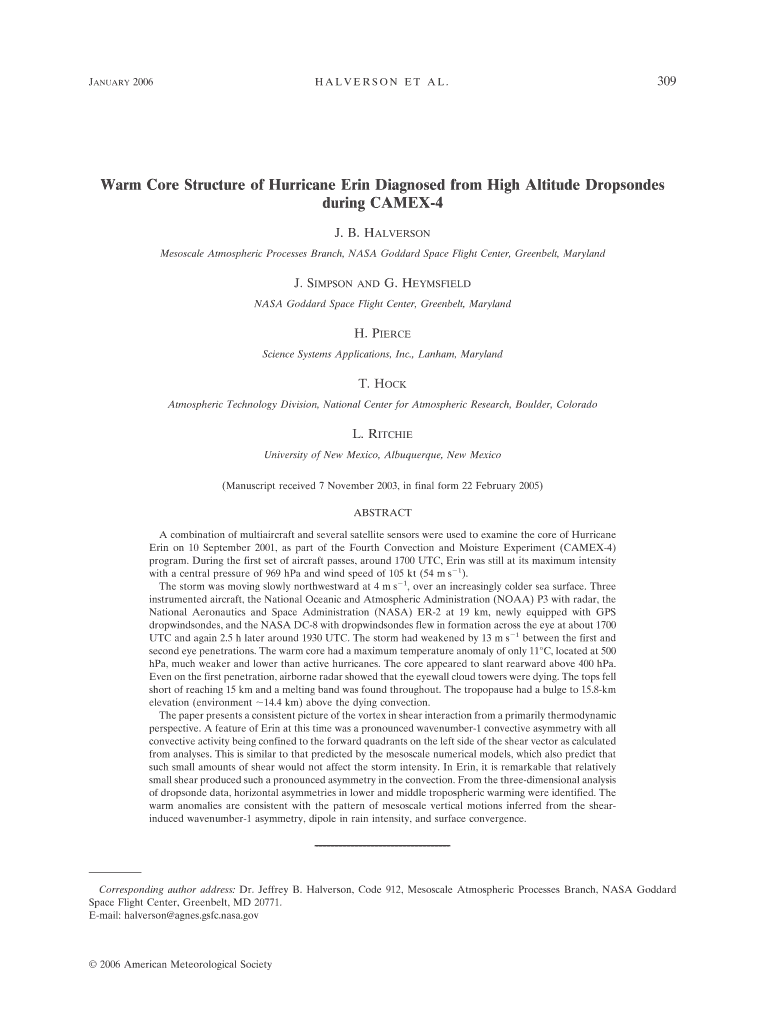
The term "PeopleDepartment of Hydrology and Atmospheric Sciences" likely refers to a specific department within a university or research institution that focuses on the study of water systems and atmospheric phenomena. This department combines disciplines such as meteorology, climatology, and environmental science to understand weather patterns, climate change, and the hydrological cycle. It serves as an academic and research hub for students, faculty, and researchers interested in these fields, offering undergraduate and graduate programs, as well as conducting significant research projects.
Key Elements of PeopleDepartment of Hydrology and Atmospheric Sciences
Academic Programs
- Undergraduate Degrees: Offer courses in atmospheric sciences, meteorology, and hydrology, preparing students for careers in environmental sciences or further academic study.
- Graduate Programs: Provide advanced training and research opportunities in specialized areas such as climate modeling, water resource management, and atmospheric chemistry.
Research Initiatives
- Engage in projects that address critical issues like water scarcity, flood prediction, and air quality.
- Utilize state-of-the-art technology and data collection methods, including satellites, drones, and computer modeling.
Collaboration and Partnerships
- Work with governmental agencies such as NOAA and NASA.
- Collaborate with international scientific communities to enhance global understanding of climate and hydrology.
How to Use the PeopleDepartment of Hydrology and Atmospheric Sciences
Educational Pathways
- Enroll in relevant degree programs to gain foundational and advanced knowledge in hydrology and atmospheric sciences.
- Participate in workshops, seminars, and fieldwork offered by the department to enhance practical skills.
Research Engagement
- Join research groups or projects to apply theoretical knowledge to real-world challenges.
- Contribute to published studies and papers to share findings with the broader scientific community.
Career Development
- Utilize the department's resources for internships and job placements in related fields like environmental consulting, governmental environmental agencies, or private sector firms focusing on sustainability and climate solutions.
Steps to Complete the PeopleDepartment of Hydrology and Atmospheric Sciences Program
-
Admission Process:
- Apply to undergraduate or graduate programs through the university's admissions portal by submitting necessary documents like transcripts, recommendation letters, and personal statements.
-
Coursework Completion:
- Fulfill required coursework in areas such as meteorology, hydrology, and climate science. Choose electives that align with your career goals or research interests.
-
Research or Thesis Requirement:
- Conduct original research or complete a thesis under the guidance of a faculty advisor. This may include data collection, field studies, or laboratory work.
-
Program Conclusion:
- Complete any comprehensive exams or final projects. Ensure all academic requirements are met for graduation.
Who Typically Uses the PeopleDepartment of Hydrology and Atmospheric Sciences


Prospective Students
- Individuals interested in pursuing a career in atmospheric or environmental sciences.
- Those looking to engage in research that addresses global environmental challenges.
Researchers and Academics
- Professionals seeking collaborative opportunities for research projects in hydrology and atmospheric sciences.
- Academics aiming to publish findings in peer-reviewed journals.
Government and Industry Professionals
- Employees from governmental agencies like the EPA or private companies dealing with environmental impact assessments may seek expertise from the department.
Important Terms Related to PeopleDepartment of Hydrology and Atmospheric Sciences
Hydrology
- The study of water movement, distribution, and quality in relation to the Earth's surface.
Meteorology
- The science of atmospheric phenomena, including weather processes and forecasting.
Climate Change
- Long-term alterations in temperature, precipitation, wind patterns, and other aspects of the Earth's climate system.
State-Specific Rules for Research and Application
Licensing and Permits
- Some states may require specific permits for conducting environmental or atmospheric research, particularly if it involves fieldwork in restricted areas or ecosystems.
Data Use and Sharing Regulations
- Researchers must comply with state and national laws regarding the collection, use, and dissemination of environmental data, ensuring privacy and ethical standards are met.
Examples of Using the PeopleDepartment of Hydrology and Atmospheric Sciences
- Case Study: Coastal Flooding Analysis: Researchers may conduct studies on the impacts of storm surges on coastal communities, using data to develop more effective flood prediction and management strategies.
- Climate Modeling Project: Students and faculty might work together on creating models to predict the effects of global warming on regional climates, assisting policymakers in planning for future climate scenarios.
Digital vs. Paper Version of Course Materials
- The department may offer digital access to textbooks, research articles, and lecture materials, supporting a sustainable approach to learning.
- Students might choose between traditional paper-based materials or digital options based on personal preference and learning style, ensuring accessibility and convenience.
Application Process & Approval Time
- Undergraduate Admission: Typically involves submission of high school transcripts, standardized test scores, and personal essays. Decision times may vary depending on the institution's admission cycle.
- Graduate Admission: Requires submission of undergraduate transcripts, a statement of purpose, and recommendation letters. Some programs might also require GRE scores or proof of research experience.
Eligibility Criteria for Program Enrollment
- Undergraduate Programs: Generally require a high school diploma or equivalent, with a strong background in math and science.
- Graduate Programs: Usually necessitate completion of a related undergraduate degree, along with any specific prerequisites outlined by the program.

Versions or Alternatives to PeopleDepartment of Hydrology and Atmospheric Sciences
- Similar departments may go by different names, such as the Department of Environmental Science, Earth Sciences Department, or School of Natural Resources.
- Some universities might offer interdisciplinary programs combining hydrology and atmospheric sciences with other fields like environmental policy or oceanography, catering to broader academic interests.